
Description
Deye 6kW Hybrid Inverter: Complete Specs, Features and Price Guide for Nigeria
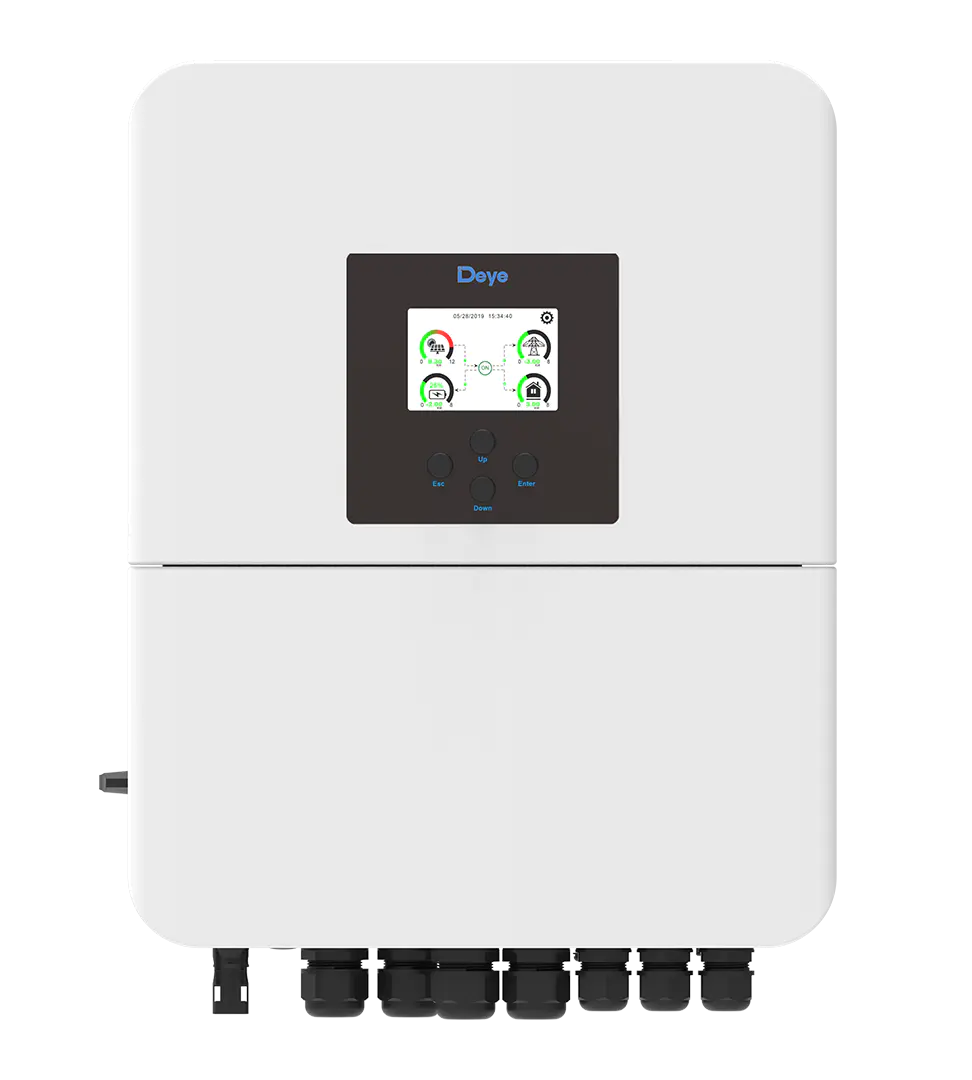
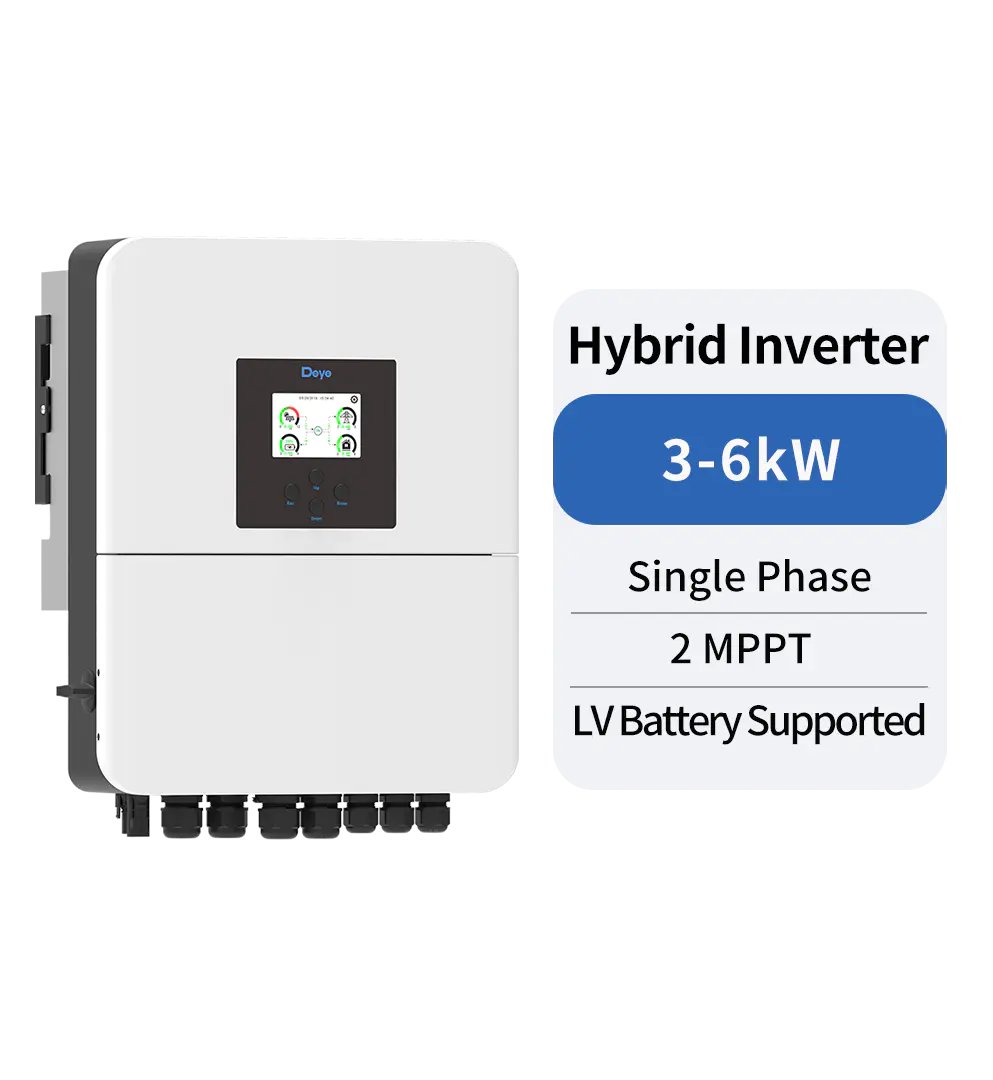
We install a lot of hybrid inverters across Lagos, and the Deye 6kW hybrid inverter, model SUN-6K-SG04LP1-EU-SM2, is one we keep coming back to for a simple reason. It does the job of three separate devices at once.
It takes power from your solar panels, your battery bank, the utility grid, and a backup generator, then decides, in real time, which source to draw from and which to charge.
That decision-making happens automatically, without you standing over a changeover switch during another blackout.
This guide walks through everything the Deye 6kW hybrid inverter actually does, what its full specification sheet means in plain language, which batteries it pairs with, and what you should expect to pay for one in Nigeria in 2026.
What the Deye 6kW Hybrid Inverter Actually Does
At its core, the Deye 6kW hybrid inverter is a single-phase energy management hub rated for 6,000W of continuous AC output.
It sits between your solar panels, your battery bank, the grid, and, where you have one, a generator, and it routes power between all four sources based on what’s available and what you’ve told it to prioritise.
For a typical Lagos home, that means the inverter draws from solar during the day, tops up the battery with any surplus, switches to battery power the moment grid supply drops, and can even trigger your generator automatically if the battery runs low during an extended outage.
You are not manually flipping switches. The unit handles the sequencing on its own.
Key Features Explained
Powerful Output With Serious Surge Handling
The inverter delivers 6,000W of continuous pure sine wave output, and it can handle a surge of up to 12,000W, twice its rated output, for 10 seconds. That surge window matters more than most buyers realise.
A refrigerator compressor, a borehole pump, or a split-unit air conditioner can draw three to five times its running wattage for a fraction of a second at startup. Undersized inverters trip or shut down at that exact moment. This one is built to absorb it.
Rapid Battery Cycling at Up to 140A
The Deye 6kW hybrid inverter charges and discharges at up to 140A continuously. In practical terms, that means your battery bank recharges faster during the short windows when grid power is actually available, a real advantage in parts of Nigeria where supply comes back for an hour or two at unpredictable times rather than running reliably through the day.
Works With Lithium or Lead-Acid, Automatically
This inverter supports both 48V LiFePO4 lithium-ion batteries and traditional deep-cycle lead-acid banks, and it communicates with lithium batteries automatically through BMS (Battery Management System) protocols.
That means the inverter reads the battery’s actual state of charge and health directly from the battery itself, rather than guessing based on voltage alone, which is how older inverters manage lead-acid banks.
If you’re weighing which chemistry to pair it with, our guide on lithium vs tubular batteries in Nigeria breaks down the real cost and lifespan difference in detail.
Dual MPPT Trackers for Maximum Solar Harvest
The unit includes two independent MPPT (Maximum Power Point Tracking) trackers, each capable of over 99 percent tracking efficiency. In simple terms, this lets you wire two separate strings of solar panels, facing different directions on your roof, for example, and each string is optimised independently.
If one side of your roof catches morning sun and the other catches afternoon sun, dual MPPT means neither string drags down the other’s output.
Programmable Energy Scheduling
You can set up to six time-of-use periods, telling the inverter exactly when to charge from the grid, when to prioritise solar, and when to hold battery power in reserve.
This is particularly useful if your utility has off-peak pricing windows, or if you simply want the battery topped up before your household’s peak evening usage begins.
Automated Generator and Grid Integration
The inverter supports automatic generator autostart sequencing. If your battery drops below a set threshold during an outage, and you have a compatible generator wired in, the system can start the generator itself, charge the battery, and shut it down again once the job is done.
This is what we mean when we call it a genuine fuel-saver rather than just a battery charger. It runs the generator only when needed, not on a fixed schedule.
Parallel Expansion Up to 16 Units
As your power needs grow, you can connect up to 16 of these inverters in parallel, scaling total capacity well beyond a single household’s needs into small commercial territory, whether you’re running the system in a single-phase or building out a three-phase configuration.
AC Coupling for Existing Solar Setups
If you already have a grid-tied solar system without battery storage, this inverter supports AC coupling, meaning you can add battery backup to your existing setup without tearing out and rewiring your current panels. This is a genuinely useful retrofit path for homes that installed solar years ago, before battery storage was as affordable as it is now.
Built for Nigerian Conditions
The unit uses fanless, natural convection cooling, so it runs near-silently indoors, and it’s housed in an IP65 weatherproof enclosure, meaning it can be mounted outdoors or in a non-climate-controlled space without dust or moisture becoming a concern.
At 19kg and a compact 376 x 470 x 241.5mm footprint, one technician can mount it on a wall without additional lifting equipment.
Remote Monitoring and Connectivity
One detail we point out to every customer considering this inverter is how much visibility it gives you into your own system.
The unit supports a range of monitoring dongles, including Wi-Fi, 4G, GPRS, LAN, and Bluetooth, so you can check your solar generation, battery status, and load consumption from a phone app, whether you’re in the next room or travelling abroad.
For direct integration with a battery’s BMS, the inverter also carries RS485, RS232, and CAN communication ports, the physical interfaces that allow closed-loop communication between the inverter and a lithium battery.
This is the same protocol support we look for when confirming battery compatibility in our guide on complete solar system packages in Nigeria, since a mismatch here is one of the most common causes of an underperforming system.
Safety Features and International Certifications
Safety on a device managing multiple high-current power sources simultaneously is not optional, and this inverter is built with several layers of protection.
| Protection type | What it does |
|---|---|
| DC disconnect switch | Allows safe isolation of the solar array during maintenance |
| Insulation impedance monitoring | Detects insulation faults before they become a safety hazard |
| Residual current detection (RCD) | Trips the circuit if current leakage is detected, protecting against electric shock |
| Optional AFCI | Arc fault circuit interruption, detects dangerous arcing faults in DC wiring |
| Overvoltage and thermal protection | Shuts down safely if voltage or temperature exceeds safe limits |
| DC reverse polarity protection | Prevents damage from incorrect wiring during installation |
The inverter is certified to VDE-AR-N 4105, Germany’s technical connection standard for generation equipment on low-voltage networks, EN 50549, the European standard for connecting generating plants to distribution networks, and G99, the UK’s requirements for connecting generation equipment in parallel with public distribution networks.
These certifications exist because grid operators need generation equipment feeding back into their networks to behave predictably and safely, and an inverter certified against all three has been independently tested against some of the strictest grid interconnection standards in the world.
In Nigeria, any installation using this inverter should still be carried out by technicians who understand NEMSA’s technical standards for electrical installations, since local certification and inspection requirements apply regardless of the equipment’s international credentials.
Who This Inverter Is Best For
The 6kW rating places this inverter comfortably above the standard 5kVA bracket we cover in our 5kVA solar system cost guide, making it a strong fit for larger family homes, homes running two air conditioning units, or a small office with a heavier daytime load than a typical 3-bedroom flat.
If your household runs a fridge, multiple TVs, several fans, lighting throughout the home, a borehole pump, and one to two AC units, this inverter gives you meaningful headroom over a standard 5kVA setup without stepping all the way up to a full commercial-scale system.
For businesses or larger residential compounds needing to scale beyond a single unit’s capacity, the parallel expansion feature means you don’t need to replace the inverter later.
You add a second or third unit alongside the first as your load grows.
Compatible Batteries
Because this inverter communicates directly with lithium batteries through its BMS ports, we typically pair it with one of the following, depending on the household’s backup duration needs:
| Battery | Capacity | Best fit |
|---|---|---|
| Deye 5.1kWh Lithium-Ion Battery | 5.1kWh | Standard homes needing overnight backup |
| Deye 7.6kWh High Voltage Battery | 7.6kWh | Homes with heavier evening AC use |
| HiTHIUM HeroEE 16 Lithium-Ion Battery | 16kWh | Larger homes or small offices needing extended runtime |
Each of these operates within the inverter’s 40V to 60V battery voltage range and communicates over the same RS485/CAN protocols the inverter supports natively.
How This Compares to a Standard Non-Hybrid Inverter
A lot of the older inverters still sold across Nigeria are transformer-based units without true hybrid functionality. They can charge a battery and switch to it when the grid drops, but they generally lack solar MPPT input entirely, meaning you’d need a separate charge controller wired in alongside the inverter if you wanted to add solar panels later.
The Deye 6kW hybrid inverter handles solar charging, battery management, grid switching, and generator integration inside one unit, which simplifies both the installation and the long-term maintenance picture considerably.
It also matters for anyone planning to add solar capacity in stages rather than all at once. A household that installs this inverter with just a battery bank today, planning to add panels in a year once budget allows, doesn’t need to buy or rewire anything extra when that day comes.
The MPPT inputs are already there, ready to accept panels the moment you’re ready to connect them. That kind of built-in flexibility is exactly what separates a genuine hybrid inverter from a basic backup unit wearing the same “inverter” label in a market where terminology isn’t always used consistently.
Common Installation Mistakes to Avoid
We’ve walked into more than a few homes to troubleshoot a Deye 6kW hybrid inverter that wasn’t performing as expected, and the root cause is almost always one of the same handful of issues, none of which relate to the inverter itself being faulty.
The most frequent mistake is leaving the battery profile on a generic or default setting rather than selecting the correct chemistry, lithium or lead-acid, during commissioning.
This single setting affects the charging voltage curve and current limits the inverter applies, and getting it wrong either undercharges the battery or, over time, stresses it unnecessarily.
A close second is skipping the RS485 or CAN communication link entirely, treating the battery as a simple voltage source rather than enabling the closed-loop BMS communication the inverter is fully capable of.
Without that link, you lose accurate state-of-charge reporting and some of the protective coordination between battery and inverter.
The third common issue is oversizing or undersizing the solar array relative to the inverter’s 8,000W maximum PV input.
Wiring in significantly more panel capacity than the inverter can accept wastes money on unused generation potential, while undersizing leaves the dual MPPT trackers running well below their capability.
A properly matched array, ideally close to the 8,000W ceiling for a household aiming to maximise solar contribution, gets the most value out of every naira spent on panels.
Price and What’s Included
The Deye 6kW hybrid inverter is priced competitively for its output class in the Nigerian market, and we always quote it alongside the specific battery and panel configuration a household actually needs, rather than as an isolated unit price that doesn’t reflect what you’ll actually spend to get the system running.
Every unit we sell comes with the manufacturer’s 5-year warranty, and our installation service includes correct battery profile configuration, communication port setup, and a full system test before handover.
For an accurate, itemised quote covering the inverter, a matched battery bank, and installation for your specific home or office, reach out to our team directly rather than relying on a generic online price.
Get Your Deye 6kW Hybrid Inverter Installed Correctly
A hybrid inverter this capable is only as good as its installation. We size the battery pairing, confirm communication protocol compatibility, and configure the time-of-use scheduling around your actual household routine, not a default factory setting.
Contact Mindseye Solar for a free consultation, or view the full product listing and current pricing on our Deye 6kW hybrid inverter product page.
Call/WhatsApp: 0814 596 4127 Visit: mindseyesolar.com