
Description
LiFePO4 Battery in Nigeria: HiTHIUM HeroEE 16 for ₦2,650,000
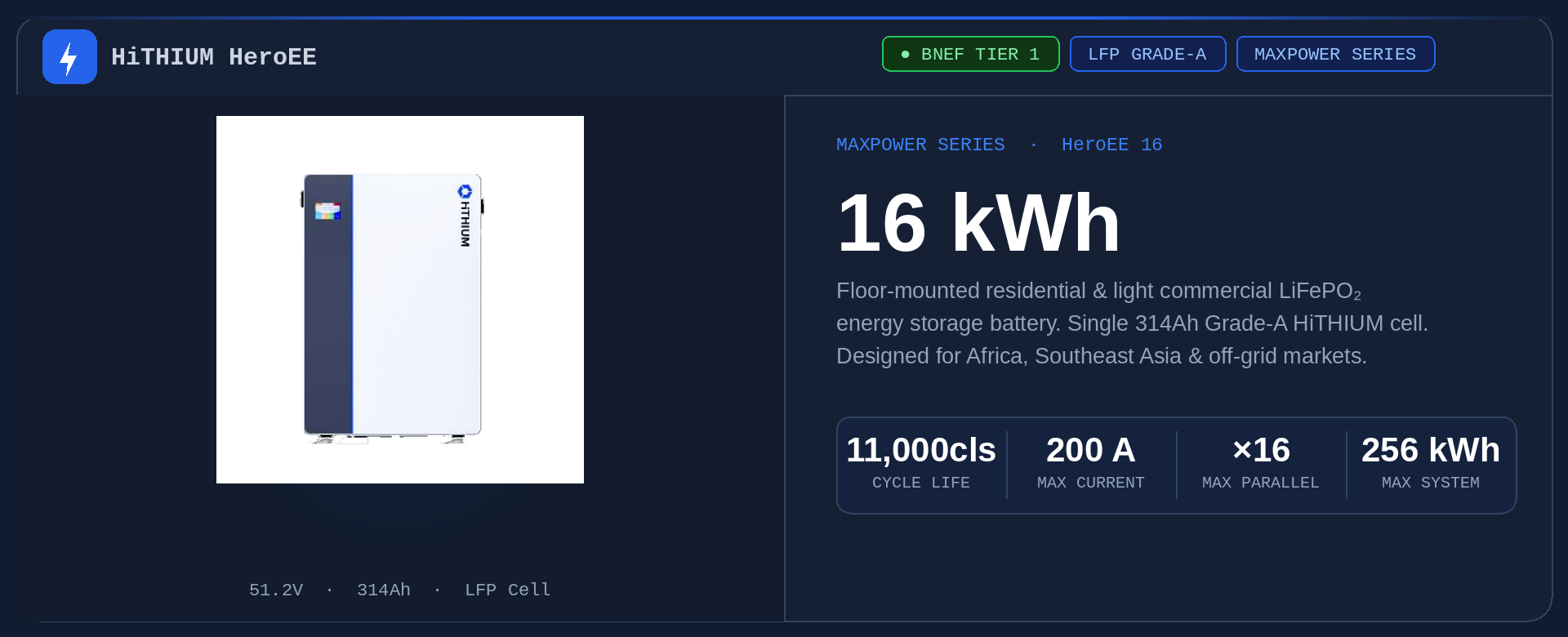
Quick answer: LiFePO4 stands for lithium iron phosphate, the safest and longest-lasting lithium chemistry sold today. The HiTHIUM HeroEE 16 is a 16.08kWh LiFePO4 battery pack that costs ₦2,650,000 at Mindseye Solar, down from ₦2,800,000.
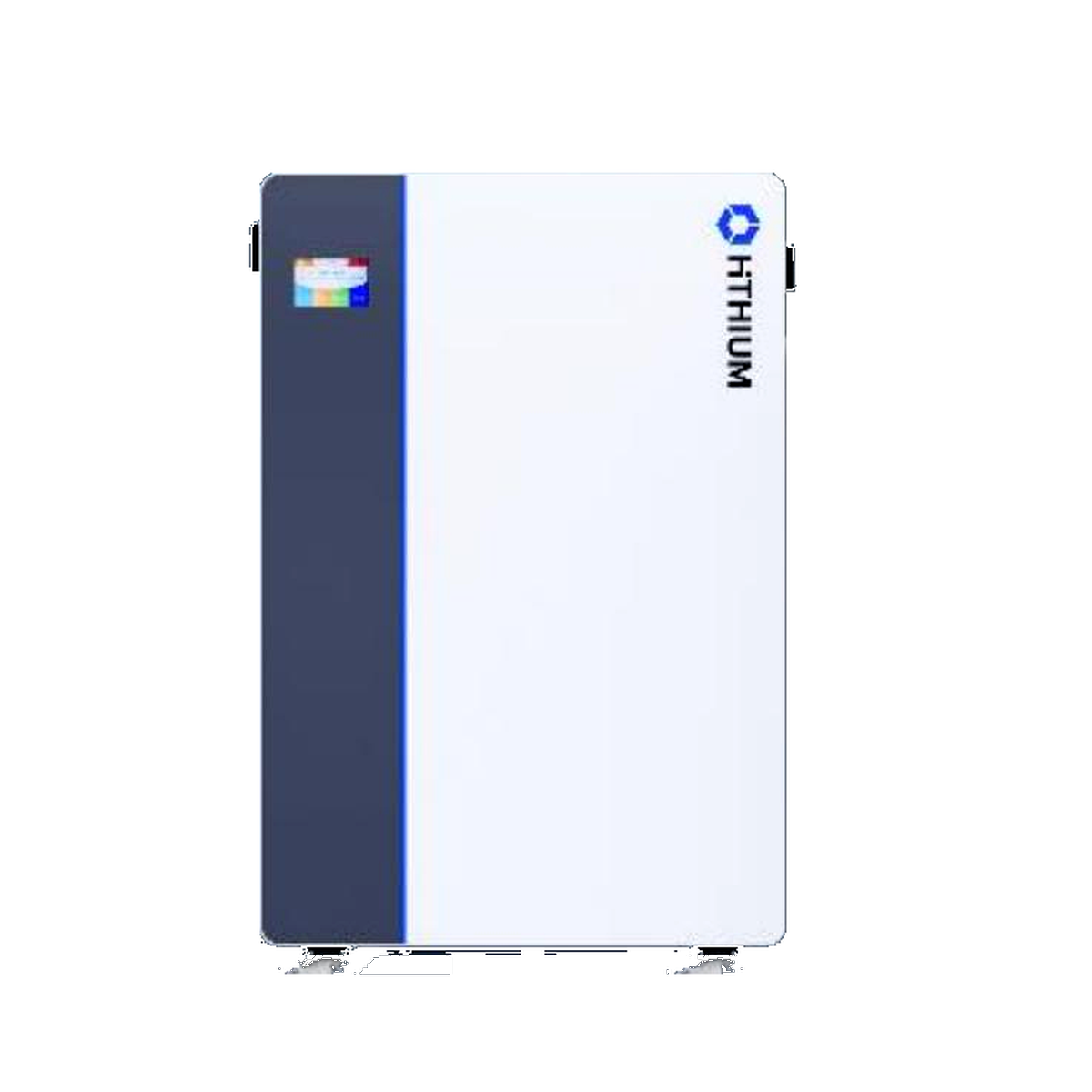
It runs at 51.2V, holds 314Ah, and weighs about 110kg. A 10-year warranty backs it, and you can link up to 16 units for 256kWh of storage.
This chemistry is now the standard choice for serious solar backup in Nigeria. It replaces older lead-acid and older lithium chemistries, lasting longer and resisting heat better.
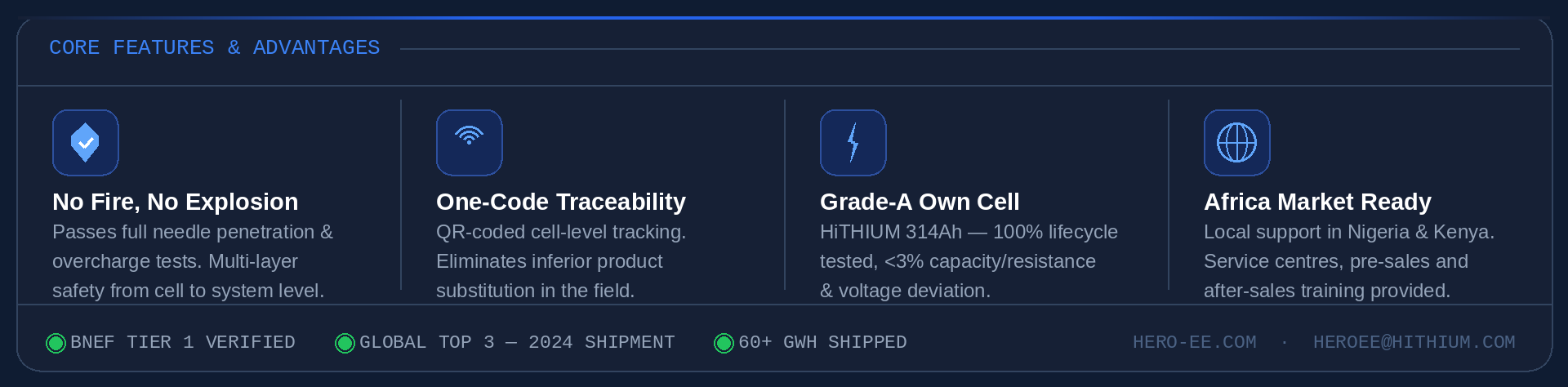
We stock the HeroEE 16 because HiTHIUM builds it with Grade-A cells. It also carries a 10-year promise most brands will not match.
Here is what many homeowners tell us. They bought a small battery first, and it ran out of power before the generator would have needed refuelling anyway. A large battery bank like this one removes that guesswork for a normal family home.
This guide explains what LiFePO4 actually is and why it suits Nigerian conditions. It also shows what the HeroEE 16 can run in a real household. Every figure comes from the product listing or a named source.
What LiFePO4 Actually Is
LiFePO4 is short for lithium iron phosphate, one of several chemistries inside the broader lithium-ion family. Other common types include lithium cobalt oxide and nickel manganese cobalt, both used in phones and laptops.
Battery University rates LiFePO4 as one of the safest lithium chemistries available. Its thermal runaway point sits near 270 degrees Celsius. That is far above what a phone or laptop battery can withstand before failing.
Why This Chemistry Suits Nigerian Heat and Power Cuts
Lagos, Abuja, and Port Harcourt all see ambient temperatures that stress ordinary batteries. LiFePO4 handles that heat with less capacity loss than lead-acid or older lithium types.
Frequent power cuts also mean batteries cycle through charge and discharge more often than in stable grid countries. LiFePO4 tolerates deep, repeated cycling far better than lead-acid. That is why it has become the default choice for hybrid and off-grid solar systems here.
How It Compares With Other Battery Chemistries
| Chemistry | Typical cycle life | Thermal safety | Common use |
|---|---|---|---|
| LiFePO4 | 2,000 and higher | Very safe, stable even fully charged | Solar storage, EVs, marine |
| Lead-acid | 500 to 1,000 | Moderate, needs ventilation | Older UPS and inverter setups |
| Lithium cobalt oxide | 500 to 1,000 | Lower, more heat sensitive | Phones, laptops |
| Nickel manganese cobalt | 1,000 to 2,000 | Moderate | Power tools, some EVs |
This table draws on chemistry data from Battery University’s guide to lithium-ion types. Real-world cycle life depends on depth of discharge and temperature, so treat these as general ranges.
HiTHIUM HeroEE 16 Specifications
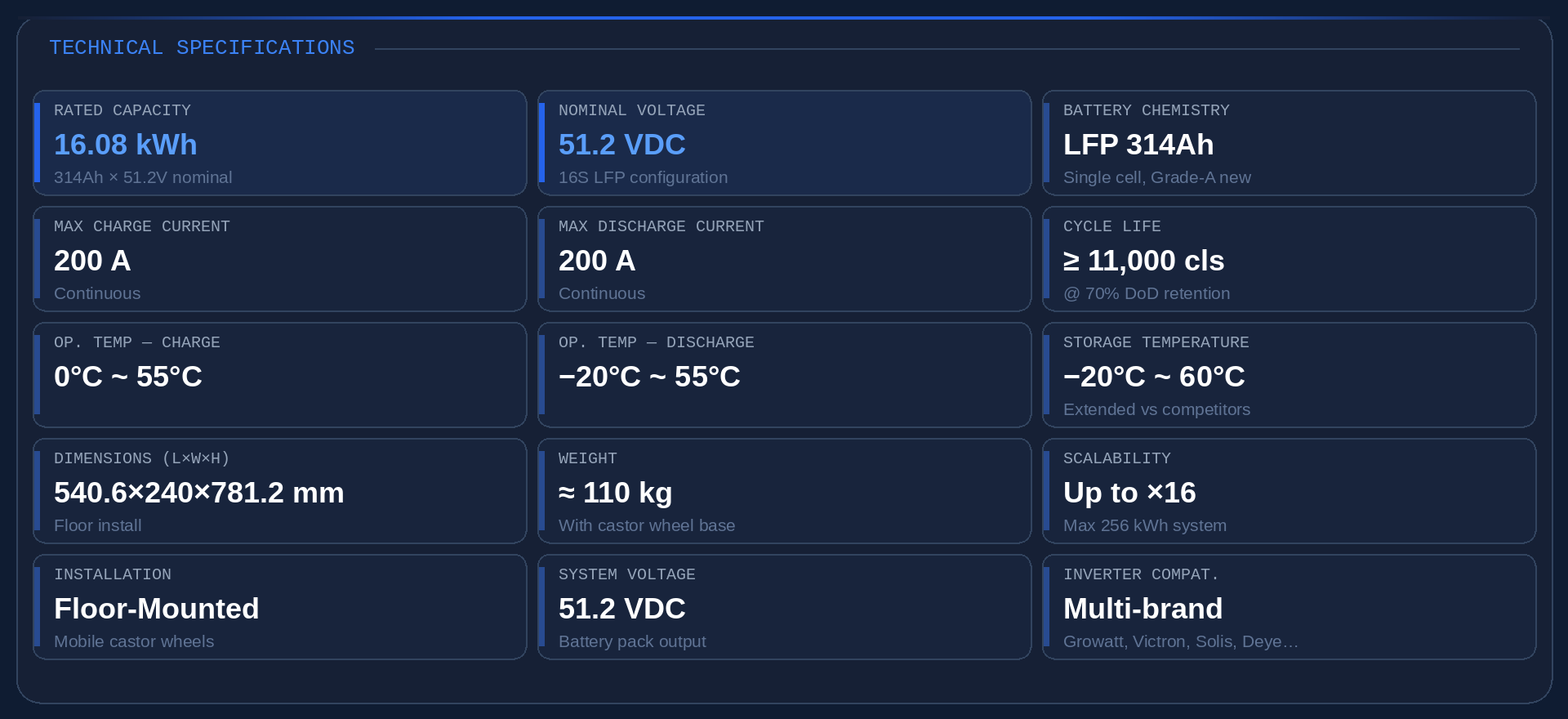
Here are the full specifications from the product listing.
| Specification | Detail |
|---|---|
| Brand | HiTHIUM |
| Series | MaxPower Residential Energy Storage |
| Chemistry | LiFePO4 (lithium iron phosphate) |
| Cell technology | 314Ah LiFePO4 cells |
| Rated capacity | 16.08kWh |
| Rated voltage | 51.2V DC |
| Max charge and discharge current | 200A / 200A |
| Scalability | Up to 16 units in parallel, 256kWh total |
| Installation type | Floor mounted |
| Dimensions | 540.6 x 240 x 781.2mm |
| Weight | About 110kg |
| Warranty | 10 years |
| Price | ₦2,650,000 (was ₦2,800,000) |
Note from the listing: the HeroEE 16 is a battery pack. It needs a compatible inverter to work, and does not run appliances on its own.
What 16.08kWh of Storage Means in Daily Use
Watt-hours tell you how much work a battery can do. Multiply volts by amp-hours to get the number. Here, 51.2V times 314Ah gives about 16,077Wh, which the listing rounds to 16.08kWh.
You will not use every watt-hour in practice. Inverters lose some power, and we suggest keeping a reserve for long-term battery health. For planning, we work with about 14,000Wh of real AC energy from a full charge.
Why the 200A Rating Matters for This Pack
The 200A rating sets a ceiling on power. At 51.2V, 200A equals about 10,240W. That means the HeroEE 16 can pair with inverters up to roughly 10kVA on its own.
Go past that figure and the battery cannot deliver the full load alone. Add a second unit in parallel, and the combined current rating rises with it.
How Long Does This Battery Run Your Home?
Runtime depends on your load. We use 14,000Wh as a safe planning figure. Divide 14,000 by the watts your home draws.
| Load profile | Typical draw | Approximate runtime |
|---|---|---|
| Lights, fans, TV, router | 300W | About 46 hours |
| Add a fridge | 380W | About 37 hours |
| Add a washing machine (occasional) | 500W average | About 28 hours |
| Add one 1.5HP air conditioner | 1,400W | About 10 hours |
| Add two air conditioners plus base load | 2,700W | About 5 hours |
| Small office: computers, printer, lights | 1,000W | About 14 hours |
A Sample Load for a Family Home
Take a fridge, five fans, ten LED bulbs, two TVs, a router, and a washing machine running two hours daily. Together they draw about 480W on average, with the washing machine adding a short spike.
Your battery covers that load for close to 29 hours without any solar input. Add one air conditioner running at night, and runtime drops to 8 or 10 hours. That still covers a full overnight outage.
What You Save Against Grid Tariffs and Generator Fuel
Band A grid customers now pay between ₦209.50 and ₦225 per kWh, based on current NERC tariff schedules. Charging the HeroEE 16 fully from the grid costs roughly ₦3,370 to ₦3,618 at those rates.
A petrol generator sized for the same load burns far more per kWh once you count fuel, servicing, and downtime. Solar charging cuts that grid or fuel cost to close to zero once your panels are paid off.
LiFePO4 Compared With Lead-Acid
We compare the HeroEE 16 with a typical tubular lead-acid bank of similar rated capacity. This comparison comes up in almost every consultation we run.
| Feature | LiFePO4 (HeroEE 16) | Tubular lead-acid |
|---|---|---|
| Usable depth of discharge | 80 to 90 percent | About 50 percent |
| Cycle life | 2,000 and higher | 500 to 1,000 |
| Weight for similar capacity | About 110kg for 16.08kWh | Often double, for less usable energy |
| Maintenance | Minimal | Periodic water top-up, terminal cleaning |
| Gas emission during charging | None | Hydrogen gas, needs ventilation |
A lead-acid bank rated near 16kWh only gives you about 8kWh of safe usable energy. The LiFePO4 pack gives you closer to 13 to 14kWh usable from the same rated figure. That is the main reason the higher upfront price evens out over time.
Best Uses for a Large Battery Like This
This battery suits any hybrid or off-grid solar system built around a 48V architecture. The listing names full-house supply, small commercial projects, and off-grid energy security.
Family Homes With Air Conditioning
Most 4 and 5-bedroom homes in Lagos and Abuja need this size to run air conditioning through the night. One HeroEE 16 covers one AC unit comfortably, and two units in parallel free you to run two.
Guest Houses and Small Hotels
Guest rooms need steady power for AC, water heaters, and lighting regardless of who is checking in that week. This LiFePO4 battery gives one or two rooms a full night of backup, and the system scales as occupancy grows.
Schools, Clinics, and Small Factories
Schools need lighting and fans through long school days. Clinics need refrigeration for medicines that cannot fail, and small factories need steady power for light machinery.
All three fit within the HeroEE 16 parallel scaling path, up to 256kWh across 16 units.
Pairing This Battery With Solar and an Inverter
A battery pack alone stores power. You still need panels to fill it and an inverter to use it. Get these three parts matched, and the system runs for years without surprises.
Choose the Right Inverter Size
Pick a 48V hybrid inverter rated close to the battery’s 10.2kW output ceiling. Our Deye 12kW single-phase hybrid inverter fits well here. It uses the full current the HeroEE 16 can safely deliver.
For lighter homes, a smaller inverter such as the Solis 5kW 48V hybrid inverter still pairs correctly. It simply will not draw the battery’s full current rating.
How Many Solar Panels You Need
Lagos gets about 4.5 peak sun hours a day. One Jinko 590W solar panel adds close to 2,000Wh on a good day. Refilling a fully drained HeroEE 16 in a single day needs about seven panels at full output.
Most homes split the load across two days of sun. Four to five panels often suffice once the battery holds a working reserve.
Use an MPPT charge controller. It draws more usable energy from the array than a basic PWM unit.
Correct Charge Settings
Set the inverter to a lithium battery profile before first use. Never select a lead-acid or flooded profile, since the charge curve differs and can undercharge the pack over time.
Confirm your installer configures the charge current within the 200A limit. Going past that figure repeatedly can shorten the life of the cells, even with a protective BMS in place.
When One Unit Is Not Enough
Heavy households running two or more air conditioners need more capacity. Add a borehole pump and a full kitchen, and the safer plan is two HeroEE 16 units in parallel from day one.
Retrofitting a second unit later works too, since the system supports up to 16 units without a redesign.
Want a ready-made system instead? See our 10kVA complete solar system package or the 20kVA complete solar system. Both are built around lithium banks at this scale.
You can also browse our full lithium-ion battery range.
Safety, Standards, and Certification
LiFePO4 is one of the safest lithium chemistries available. Battery University lists its thermal runaway point near 270 degrees Celsius. It calls the chemistry very safe, even when fully charged.
The listing describes multi-dimensional safety design with no fire and no explosion under normal use.
Industrial battery packs of this scale are commonly tested against IEC 62619. That is the international safety standard for stationary lithium storage, and we can supply the HiTHIUM certificate for your unit.
Wiring at this power level must meet Nigerian rules. NEMSA enforces technical standards for electrical installations nationwide. We recommend COREN-registered installers for every job at 16kWh and above.
Who Should Buy This Battery
This battery suits you if your home or business needs a full night of backup, including AC. It also suits you if you already run, or plan to install, a 48V hybrid inverter.
It fits well if you want a system that can grow without starting over. It also fits if you value a 10-year warranty over a cheaper short-term option.
It may not suit you if your load stays under 500W and you only need lights and a fan. It also may not suit you if your inverter runs on 12V or 24V rather than 48V. The same is true if your budget cannot stretch past a smaller starter battery yet.
In that case, our smaller FIVESTAR 12.8V 200Ah lithium battery is the better starting point. We can help you plan an upgrade path from there.
Mistakes to Avoid When Buying This Battery
We see the same errors again and again. Avoid them and you protect your investment.
Buying the Battery Before the Inverter
The inverter decides how much of the battery’s power you can actually use. Confirm your inverter’s voltage and current rating first, then confirm the battery matches it.
Skipping the Parallel Wiring Rules
Linking multiple battery units needs correct communication cabling, not just power cables. Skipping this step can cause units to charge unevenly. Always use an installer familiar with HiTHIUM’s setup.
Ignoring Floor Load and Space
At about 110kg, the HeroEE 16 needs a solid, level floor. Check the dimensions against your plant room before delivery day. This avoids rearranging a tight space at the last minute.
Forgetting the QR Code Check
HiTHIUM includes a QR code on every genuine unit for traceability. Scan it on delivery and confirm the result before you sign off. Counterfeit lithium packs do circulate in some markets.
Overlooking the Written Warranty Terms
A 10-year warranty should state what it covers, including any minimum capacity guarantee. Ask us for the written terms before you pay, not after a fault appears years down the line.
Price, Warranty, and Delivery
Our price is ₦2,650,000, reduced from ₦2,800,000. The battery is in stock now, and a 10-year warranty covers it.
We deliver across Lagos and to every state.
Prices move with the naira, so please confirm the amount before you pay. Need help spreading the cost? Read about our solar equipment financing plans.
Want full system pricing? We publish real 2026 figures. Start with the cost of solar power in Nigeria, then read the cost of solar panels in Nigeria.
Order Your Battery Today
Add the battery to your cart on this page, or talk to our team first. We will check your load, your inverter, and your roof space before you pay. That saves you from buying the wrong size.
Call or WhatsApp 0814 596 4127. You can also email info@mindseyesolar.com or visit us at Plot 4b Greenlite Estate, Ibeju Lekki, Lagos.
Prefer to book a site visit? Use our contact page for a free consultation.
Exploring more options? Browse our complete solar package range, or read the Mindseye Solar blog for more guides like this one.
Frequently Asked Questions About LiFePO4 Batteries
What does LiFePO4 mean?
LiFePO4 stands for lithium iron phosphate, a lithium-ion battery chemistry known for strong safety and long cycle life. It is now the standard choice for solar storage, electric vehicles, and marine power systems.
Is LiFePO4 better than regular lithium-ion?
For solar storage, yes. It is more thermally stable than other lithium chemistries, with a thermal runaway point near 270 degrees Celsius. It also handles deep, frequent cycling better, which suits Nigeria’s unstable grid.
How much does a LiFePO4 battery cost in Nigeria?
At Mindseye Solar, the HiTHIUM HeroEE 16 LiFePO4 battery costs ₦2,650,000, reduced from ₦2,800,000. It is in stock in Lagos, carries a 10-year warranty, and we deliver nationwide. Confirm the price before paying, since it can change.
How long does a LiFePO4 battery last?
This chemistry typically manages 2,000 cycles or more, depending on depth of discharge and temperature, according to Battery University. That translates to roughly 8 to 10 years of daily use for most Nigerian households.
Can a LiFePO4 battery run an air conditioner?
Yes. A single HeroEE 16 unit can carry one 1.5HP air conditioner with normal loads for roughly 8 to 10 hours. Plan for two units in parallel to run two or more air conditioners together.
What inverter should I use with a LiFePO4 battery?
Use a 48V hybrid inverter rated up to about 10kW to match the battery’s 200A current limit. Our Deye 12kW single-phase hybrid inverter is a strong match, and smaller inverters still work for lighter loads.
Is LiFePO4 safe to install indoors?
Yes, when installed by a qualified technician. Battery University rates LiFePO4 as one of the safest lithium chemistries, safe even when fully charged. Floor mounting on a solid, level surface is required for units this size.
What warranty comes with a LiFePO4 battery like the HeroEE 16?
The HiTHIUM HeroEE 16 carries a 10-year warranty through Mindseye Solar. Keep your receipt and follow the correct charging profile from day one. Ask us for the written terms, including any capacity guarantee, before you buy.
Can I connect multiple LiFePO4 battery units together?
Yes. The HeroEE 16 supports up to 16 units in parallel, reaching a combined 256kWh. Correct communication cabling between units is required, so use an installer familiar with HiTHIUM’s setup.