

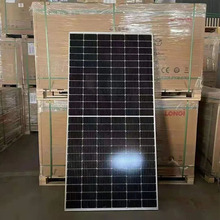

Description
620W Solar Panels: The Powerful, Proven Choice for Nigerian Roofs
High electricity bills, grid collapse, and rising generator fuel costs all point to the same fix: fewer, better panels doing more work per square metre of roof.
I have been specifying these 620W solar panels on jobs across Lagos for exactly that reason, and they have not let a single client down yet.
The Trina Solar Vertex N Shield is the panel behind that reliability, a 620W solar panel built on N-Type TOPCon cell technology, engineered for homeowners, estates, factories, and commercial sites that need real output, not just a wattage number on a label.
What Makes These 620W Solar Panels Different
I will be direct with you. Most panels on the Nigerian market promise a wattage figure and quietly underdeliver once installed. These 620W solar panels are not that kind of product.
They combine ultra-efficient N-Type silicon with a heavy-duty dual-glass build, a pairing that extracts more usable wattage from a smaller roof footprint than standard panels.
They also hold up better in extreme heat, cloudy skies, and hazy harmattan conditions, three things every Nigerian installation has to deal with sooner or later.
Key Features at a Glance
- 620W maximum power output, 23.0 percent module efficiency
- N-Type TOPCon monocrystalline cells, 132-cell configuration
- Bifacial dual-glass design, 75 percent plus or minus 5 percent bifaciality rating
- Certified to withstand 55mm hail at 33.9 m/s
- IEC 61730-2 Class A+A fire rating
- 12-year workmanship warranty, 30-year linear power guarantee
- Compatible with Deye, SunSynk, and Growatt hybrid inverters
- Operating range of negative 40°C to positive 85°C
N-Type TOPCon Cell Technology Explained
Built on Trina Solar’s 210mm wafer platform, the cells inside these 620W solar panels resist heat-related performance loss far better than older P-Type designs I used to install years ago.
The temperature coefficient of power sits at negative 0.29 percent per degree Celsius, meaning output falls more slowly as the panel heats up through a hot afternoon.
That translates directly into more usable kilowatt-hours across a Nigerian dry season, when panel surface temperatures routinely climb well past lab test conditions.
Bifacial Dual-Glass Design: Power From Both Sides
Heat-strengthened glass on both the front and back lets these 620W solar panels harvest light from two directions at once.
Beyond direct overhead sun, the rear glass captures light reflecting off concrete rooftops, light-coloured tiles, or ground-mounted racking beneath the array.
| Backside Power Gain | Total Output |
|---|---|
| Base rating | 620W |
| Plus 5% bifacial gain | 651W |
| Plus 10% bifacial gain | 682W |
That extra generation is pulled from light your roof was already reflecting away. Fewer panels are needed to hit a target system size, which lowers balance-of-system costs and shortens your overall payback period.
Built for Nigerian Weather
- Hail resistance: certified to withstand direct impact from 55mm hail travelling at 33.9 m/s, cutting hail-related replacement risk by more than half versus standard panels
- Mechanical load: rated for a positive surface load up to 5,400 Pa and a negative wind uplift load up to 2,400 Pa
- Fire safety: IEC 61730-2 Class A+A, EN13501-1 Class B, and UL61730 Type 30 certified
- Environmental resistance: certified against potential-induced degradation, light-induced degradation, ammonia exposure, salt mist, and blowing dust
I have fitted these 620W solar panels on exposed rooftops through two full rainy seasons now, and the dual-glass build has handled every one of those stress points without a single field failure reported back to me.
Inverter Compatibility
A low-voltage, high-current design lets you string more of these 620W solar panels together without exceeding the maximum DC input voltage most hybrid inverters allow.
The panel pairs cleanly with single-phase and three-phase hybrid inverters, including Deye, SunSynk, and Growatt systems, cutting both installation time and cabling cost.
For larger residential or commercial arrays, these 620W solar panels pair particularly well with our Alpsolar 11kW 48V hybrid inverter.
Warranty You Can Rely On
| Warranty Element | Coverage |
|---|---|
| Workmanship warranty | 12 years |
| Linear power output guarantee | 30 years |
| Maximum first-year degradation | 1.0 percent |
| Annual degradation, years 2 to 30 | 0.4 percent |
| Guaranteed output at year 30 | 87.4 percent of original rated power |
That 30-year figure is not a marketing nicety. It is the exact number I show clients when they ask whether these 620W solar panels are still worth it a decade or two down the line, and the maths holds up every time.
Certifications Behind These 620W Solar Panels
Certified under IEC61215, IEC61730, and UL61730, the core international standards governing solar module design and safety. The full standard scope is available directly through the International Electrotechnical Commission.
Manufactured under ISO 9001, ISO 14001, ISO 14064, and ISO 45001 certification. More detail on Trina Solar’s manufacturing standards is available on the official Trina Solar website.
Who Should Choose These 620W Solar Panels
- Residential rooftops with limited space needing a large system in fewer panels
- Commercial and office buildings wanting a durable, low-maintenance panel
- Utility-scale and ground-mount installations over reflective surfaces, where bifacial gain is highest
- Factories and industrial sites with high ambient heat and heavier mechanical load requirements
How These 620W Solar Panels Compare to Standard Panels
A standard 400W polycrystalline panel typically runs 18 to 19 percent efficiency. These 620W solar panels run at 23.0 percent efficiency, converting meaningfully more sunlight into usable electricity from the same surface area. Reaching a given system size, a 5kVA array, for example, needs fewer total panels and less roof space than a standard-efficiency alternative.
That gap widens further with the bifacial rear-side gain. A standard monofacial panel captures only front-side light, full stop.
These 620W solar panels add another 5 to 10 percent on top of their base rating from reflected light alone. Combined, the efficiency and bifacial advantages typically mean 15 to 20 percent less roof area needed to hit the same total system wattage compared to a standard panel of equivalent base capacity.
Getting the Most Out of These Panels
Tilt and orientation. A south-facing or near-equatorial tilt angle between 10 and 15 degrees captures the most consistent annual output across most Nigerian locations.
Because these 620W solar panels are bifacial, mounting height matters too. A slightly elevated rack allows more reflected light to reach the rear glass than a panel mounted flush against the roof.
String sizing. The 40.24V maximum power operating voltage and 1,500V DC maximum system voltage give installers flexibility in how many panels can be wired into a single string before reaching an inverter’s input ceiling. A qualified installer calculates this against your specific inverter’s rated MPPT window before finalising your layout.
Surface reflectivity. To capture the higher end of the bifacial gain range, closer to the 10 percent figure that pushes output to 682W, a lighter-coloured or reflective mounting surface underneath the array makes a measurable difference compared to a dark rooftop membrane.
Cleaning schedule. Dust accumulation, especially during Harmattan season, reduces output on any panel. Rainy-season rinsing supplemented by occasional manual cleaning during dry months keeps these 620W solar panels performing closer to their rated efficiency year-round.
How Many 620W Solar Panels Do You Need?
Panel count depends on your target system size, not just available roof space. As a rough guide using this panel’s 620W rating:
| Target System Size | Approximate Panel Count |
|---|---|
| 3.5kVA system | 6 to 7 panels |
| 5kVA system | 8 to 10 panels |
| 10kVA system | 16 to 18 panels |
These figures assume standard sun-hour averages for southern Nigeria and do not yet account for site-specific shading, roof orientation, or inverter MPPT limits, which is why I always recommend a proper site assessment before finalising an order of these 620W solar panels.
Bulk and Commercial Order Pricing
For installers, EPC contractors, and commercial buyers ordering these 620W solar panels in volume, we offer tiered pricing above standard retail quantities.
A typical residential order of 8 to 12 panels is priced at the standard rate, while orders of 50 panels or more for commercial and utility-scale projects qualify for a discounted per-unit rate, reflecting the lower per-panel logistics cost at scale.
If you are quoting a commercial or industrial project and need pricing for a specific quantity of these 620W solar panels, reach out directly with your project size, and we will provide a formal quote within one business day, along with a confirmed lead time based on current stock levels.
A Note on Panel Wattage Claims in the Nigerian Market
Nigeria’s open solar market includes a meaningful volume of panels with wattage labels that do not match their actual tested output, particularly among unbranded or grey-market imports.
A panel labelled 620W that only delivers 560W under test conditions silently undersizes an entire system, and the buyer rarely finds out until performance falls short months later.
Every panel we sell, including these 620W solar panels, is sourced with a verifiable chain of custody back to Trina Solar’s manufacturing facilities.
The wattage figures on this page match what independent testing confirms, not just what is printed on the label.
If a competing quote offers what looks like the same panel at a noticeably lower price, it is worth asking directly for proof of sourcing and an independent test certificate before assuming it is a genuine equivalent.
Why Buy These 620W Solar Panels From Mindseye Solar
We stock these 620W solar panels as genuine, traceable units sourced directly through Trina Solar’s authorised supply chain, not grey-market imports with unverifiable wattage claims.
Every panel we sell carries its full manufacturer warranty, honoured locally, not just on paper. We also do not sell these 620W solar panels in isolation without checking they will actually work with your setup.
If you are pairing them with an existing inverter, tell us the model and we will confirm voltage and MPPT compatibility before you order, not after installation day when a mismatch is far more expensive to fix.
Delivery and After-Sales Support
Orders are fulfilled from our Lagos warehouse, with delivery available across Lagos, Abuja, Port Harcourt, and other major Nigerian cities.
For bulk orders destined for commercial or industrial sites, we can arrange direct freight coordination and staggered delivery schedules to match your installation timeline.
Should a warranty claim ever arise, whether for a workmanship defect or a performance shortfall against the 30-year linear guarantee, our team handles the claim process directly with Trina Solar on your behalf, so you are not left navigating an overseas manufacturer’s claims process alone.
We keep a rolling stock of these 620W solar panels at our Lagos warehouse specifically to avoid the long lead times that come with ordering direct from overseas on a per-project basis.
That means most residential and small commercial orders can be fulfilled within days of confirmed payment, not weeks.
Price and Availability
These 620W solar panels are priced at ₦133,000, down from ₦138,000, and currently in stock. Pricing on imported panels can shift with naira-dollar exchange rate movements, so confirm current stock and pricing before placing a bulk order.
View this panel and order now.
Not sure how many panels your system needs? See our guides on the cost of solar panels in Nigeria and the cost of solar power in Nigeria, or browse our complete solar package catalog for a fully matched setup built around these 620W solar panels.
Frequently Asked Questions
How much do these 620W solar panels cost in Nigeria?
These 620W solar panels are priced at ₦133,000 each, down from the standard ₦138,000, with tiered discounts available on bulk orders of 50 panels or more for commercial and utility-scale projects.
How many 620W solar panels do I need for a 5kVA system?
A standard 5kVA system typically needs 8 to 10 of these 620W solar panels, depending on your site’s sun-hour average and any shading on the roof. A proper site assessment confirms the exact count for your home.
Are these 620W solar panels compatible with my existing inverter?
They pair cleanly with single-phase and three-phase hybrid inverters, including Deye, SunSynk, and Growatt systems. Share your inverter model with us and we will confirm voltage and MPPT compatibility before you order.
What makes these 620W solar panels better than standard panels?
These 620W solar panels run at 23.0 percent efficiency, well above the 18 to 19 percent typical of standard polycrystalline panels, and add a further 5 to 10 percent bifacial gain from reflected light, meaning fewer panels cover the same target system size.
How long do these 620W solar panels last?
They carry a 12-year workmanship warranty and a 30-year linear power guarantee, with output still guaranteed at 87.4 percent of original rated power at year 30.
Can these 620W solar panels withstand Nigerian weather conditions?
Yes. They are certified to withstand 55mm hail at 33.9 m/s, rated for a 5,400 Pa surface load, and certified against potential-induced degradation, ammonia exposure, salt mist, and blowing dust, conditions common across Nigerian installations.
Site Assessment: What We Check Before You Order
Before I confirm a quantity of these 620W solar panels for any client, I walk through a short checklist that saves everyone time and money later.
Roof orientation and shading come first. A roof facing within 30 degrees of true south, with no tall trees or neighbouring structures casting shadow across the array during peak sun hours, gets the full benefit these 620W solar panels are rated for.
Partial shading on even a few cells can drag down the output of an entire string, so this step is never optional.
Roof structure and load capacity come next. These panels, combined with their mounting rails, add real weight to a roof, and the 5,400 Pa positive load rating only protects the panel itself, not a roof deck that was never designed to carry additional structural weight.
For older buildings or unconventional roof types, a structural check before installation avoids a costly surprise.
Finally, I confirm available string length against your inverter’s MPPT input range. Getting this wrong means either underutilising your 620W solar panels or risking inverter shutdown from exceeding its rated voltage window, both expensive mistakes to fix after the array is already mounted.
Final Thoughts From the Field
After two full rainy seasons and multiple harmattan stretches, my honest verdict stands: these 620W solar panels deliver exactly what their datasheet promises, consistently, without the underperformance surprises cheaper, unverified panels tend to produce months after installation.
If you are ready to build a system around genuine, traceable 620W solar panels, view the full product listing and current pricing here, or reach out to our team directly for a system sized around your actual roof and household load.
Call or WhatsApp us on 0814 596 4127, or visit mindseyesolar.com to get started.