
Description
7 Powerful Reasons Jinko Solar 615W Is a Smart Upgrade for Nigerian Solar Systems
Choosing a solar panel is not only about buying the highest wattage available. The panel has to work well with the inverter, use available roof or ground space efficiently, withstand the local environment, and continue producing useful energy for years.
That is why the Jinko Solar 615W panel deserves close attention when planning a residential, commercial, or larger solar installation.
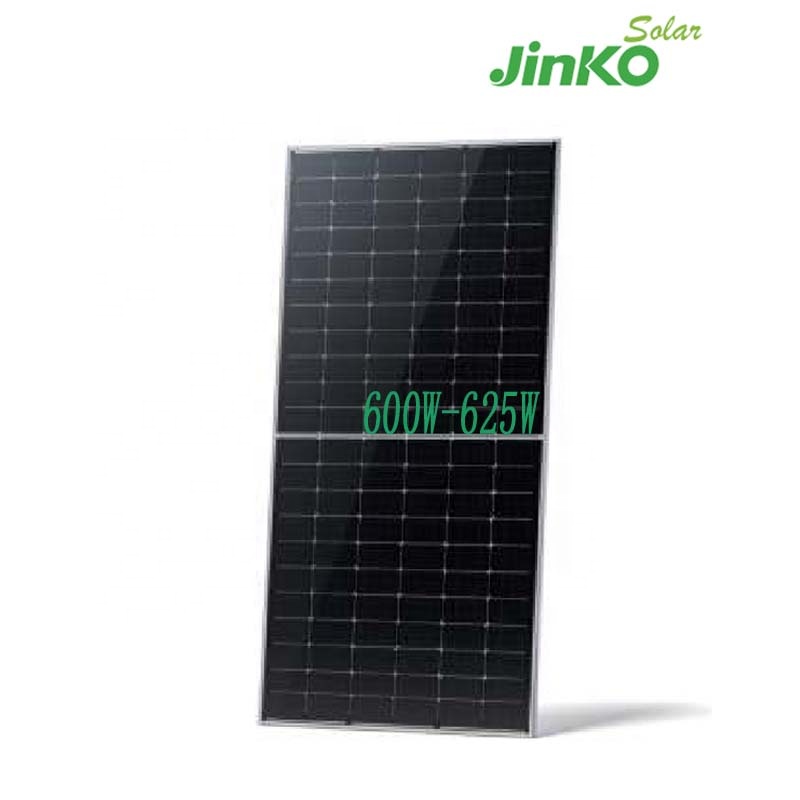
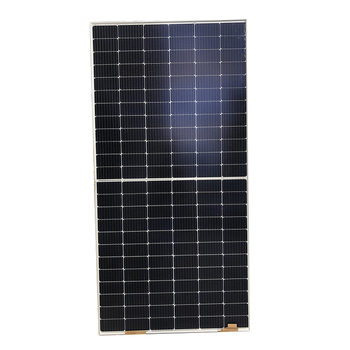
The Jinko Solar 615W Tiger Neo N-Type bifacial module combines high power output with modern N-Type cell technology and dual-glass construction. The product listed by Mindseye Solar is rated at 615W, with a stated module efficiency of 22.58%.
For Nigerian buyers, the practical question is simple. Can a high-output module reduce the number of panels required while providing dependable long-term performance?
In the right design, the answer can be yes.
What Makes Jinko Solar 615W Different?
The biggest attraction is its 615W rated output.
A single panel can contribute 0.615kW of DC capacity under standard test conditions. Six panels, for example, provide 3.69kWp of installed DC capacity.
Ten panels provide 6.15kWp, while twenty panels provide 12.3kWp.
That higher output can be valuable when roof space is limited. Instead of filling an available roof with a larger number of lower-wattage modules, a designer can use fewer high-output panels while maintaining a similar system capacity.
The Jinko Solar 615W panel is also a bifacial module, which is one of the main reasons the Jinko Solar 615W stands out in high-output PV projects.
A bifacial panel can receive useful light from both its front and rear sides when the installation allows reflected light to reach the back of the module.
The actual gain depends on mounting height, ground or roof reflectivity, row spacing, shading, orientation, and other site conditions.
NREL research explains that reflected light can improve the energy yield of bifacial technology, but the result depends heavily on the installation environment.
The N-Type cell architecture is another important feature of the Jinko Solar 615W.
N-Type modules are designed to provide strong efficiency and low degradation characteristics compared with many older conventional panel designs.
This matters because a solar project should be evaluated over its operating life, not only by its output on the day of installation.
Why 615W Matters for Roof Space
Solar installation space is often a practical limitation.
A customer may have a roof that can accommodate only a certain number of modules. In that situation, panel wattage becomes important.
For example, six 615W modules give 3.69kWp.
If a project used 450W modules instead, it would require more panels to reach a similar DC capacity.
More panels can mean more mounting rails, clamps, cable runs, connectors, installation labour, and roof area.
This does not mean the highest-wattage panel is automatically the best choice.
Panel dimensions, weight, inverter limits, current limits, roof structure, and installation access must also be considered.
For commercial rooftops, the space-saving advantage can become even more significant.
A business that wants to add solar generation without using every available roof section may benefit from higher power density.
Jinko Solar 615W and Nigerian Weather Conditions
Nigeria has strong solar resources, but solar equipment operates under challenging environmental conditions.
High temperatures, dust, humidity, rain, and occasional harsh weather all affect how a PV system performs.
A good solar panel should therefore be selected with more than its headline wattage in mind.
Temperature coefficients, mechanical construction, junction-box protection, cell technology, and warranty coverage all matter.
The listed Jinko Solar 615W module has an operating temperature range of -40°C to +85°C.
Its published temperature coefficient for maximum power is approximately -0.29% per degree Celsius.
In practical terms, panel output normally falls as cell temperature rises above the reference condition.
Good system design should account for this rather than assuming the panel will continuously deliver its laboratory-rated 615W.
This is particularly important in hot Nigerian locations.
Proper mounting and airflow behind rooftop modules can help manage operating temperatures. Panels should not be installed in a way that unnecessarily traps heat.
Bifacial Technology Explained Simply
The front of a normal solar panel receives direct sunlight.
A bifacial module can also make use of suitable light reaching the rear surface.
Imagine a panel mounted above a bright surface. Sunlight hits the ground, roof, or another reflective surface and some of that light travels upward toward the back of the module.
The rear cells can convert part of that additional light into electricity.
The Jinko Solar 615W module has a stated bifacial factor of up to 80 ± 5%.
That figure describes the relationship between rear-side and front-side cell performance under defined test conditions.
It does not mean every installation will automatically produce 80% more electricity.
Actual bifacial gain can be much lower or higher depending on site design.
A panel mounted very close to a dark roof with little rear exposure will generally have less opportunity to benefit from reflected light than a well-spaced ground-mounted system over a reflective surface.
NREL has also highlighted the importance of albedo, mounting configuration, shading, and system design when evaluating bifacial PV performance.
For additional technical background, see NREL’s photovoltaic technology research.
N-Type Technology and Long-Term Value
The solar market has moved strongly toward N-Type cell technologies because they can offer high efficiency and improved degradation characteristics.
For a buyer, degradation is important.
A solar panel is expected to produce electricity for decades. The amount of energy produced in year one matters, but so does the amount it can continue producing many years later.
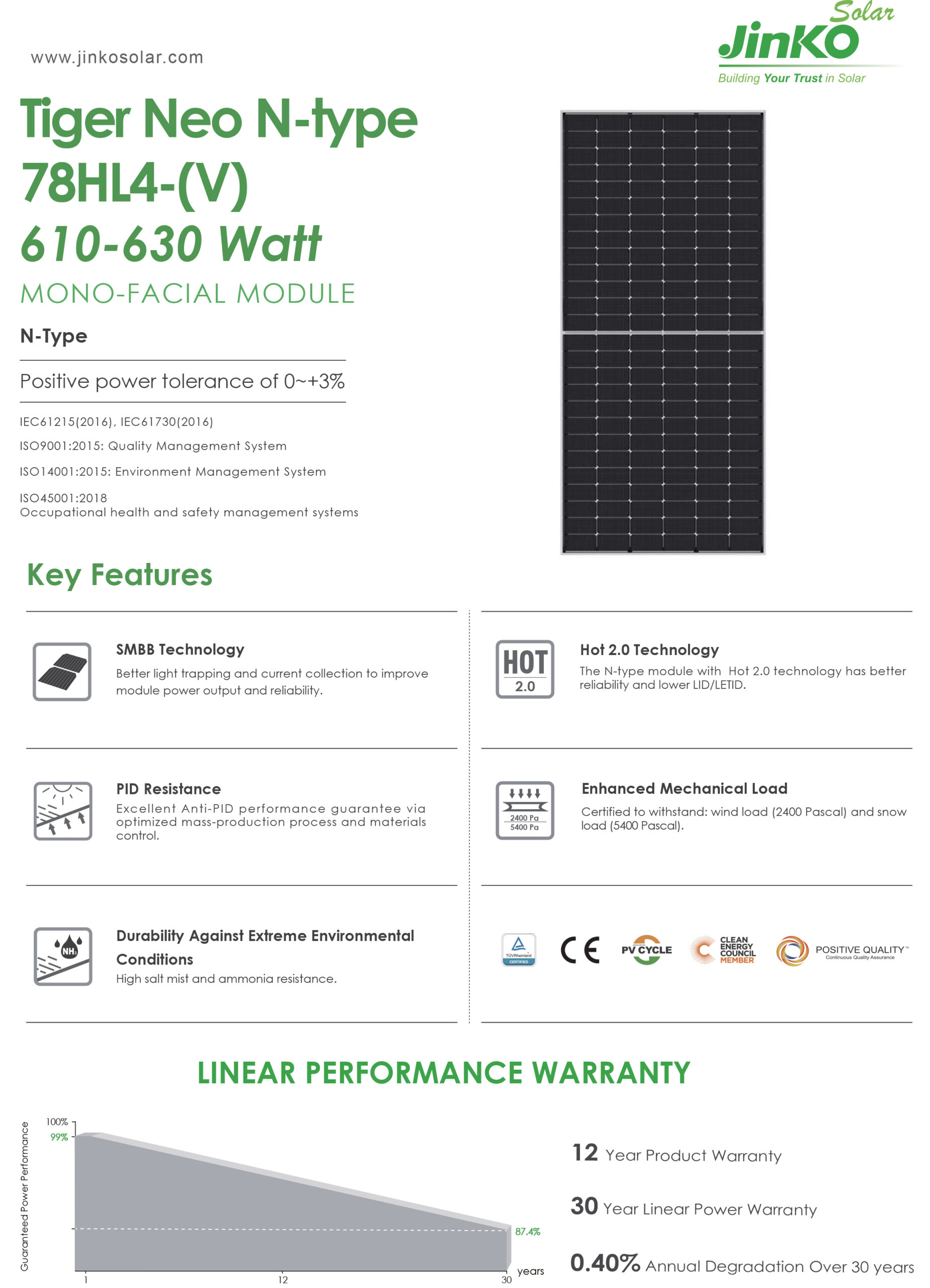
The Jinko Solar 615W product is positioned as a high-efficiency N-Type module.
Its combination of high initial output, modern cell architecture, and long-term performance warranty makes it relevant for buyers who are thinking beyond the installation date.
A solar investment should be assessed using expected energy production, system losses, maintenance, financing, battery requirements, inverter efficiency, and electricity consumption.
The panel is only one part of the complete system.
Why Dual-Glass Construction Matters
The Jinko Solar 615W module uses a dual-glass construction that supports the Jinko Solar 615W’s long-term outdoor application.
Instead of relying on a conventional glass-and-backsheet arrangement, the module uses glass on both sides.
Dual-glass construction can provide a robust enclosure for the cells and can be useful in demanding environments.
The listed module uses 2.0mm glass on the front and rear, with an anodized aluminium frame.
The mechanical design matters because panels remain outdoors for years.
Wind pressure, handling during installation, thermal cycling, moisture, and mechanical stress can all affect equipment.
A strong module does not remove the need for proper installation.
The mounting structure must be correctly engineered, clamps must be installed at the manufacturer’s specified locations, and the roof or ground structure must be capable of supporting the system.
Jinko Solar 615W for Residential Solar Systems
For a home, the right Jinko Solar 615W panel count depends on electricity consumption, available roof space, inverter capacity, battery size, desired backup duration, and budget.
A homeowner with a 5kW hybrid inverter might consider a PV array around or above the inverter’s recommended DC input range, subject to the inverter manufacturer’s voltage, current, and PV oversizing limits.
For example:
- 6 × 615W = 3.69kWp
- 8 × 615W = 4.92kWp
- 10 × 615W = 6.15kWp
These figures are DC nameplate capacity, not guaranteed AC energy output.
The actual design must check the panel’s Voc and Isc against the inverter’s maximum PV voltage and current.
Series string design also has to account for the lowest expected temperature because open-circuit voltage changes with temperature.
This is where professional system design becomes valuable.
A panel with excellent specifications can still perform poorly if its string voltage, current, shading, orientation, or inverter compatibility is wrong.
Jinko Solar 615W for Commercial Installations
Commercial users usually care about energy production, available roof area, operating costs, reliability, and return on investment.
A 615W module can help increase installed DC capacity without requiring the same number of panels as lower-output modules.
This can simplify some large installations, although the larger module size and weight can also make handling more demanding.
For a warehouse, office, hotel, school, factory, or commercial building, the design team should evaluate roof loading, access routes, fire requirements, inverter configuration, cable routes, maintenance access, and future expansion.
Commercial systems should also be evaluated using actual electricity consumption data.
Installing more solar capacity is not automatically better if the system cannot use, store, export, or otherwise benefit from the additional generation.
How Many Jinko Solar 615W Panels Do You Need?
There is no universal panel count because every solar system has different energy requirements.
For a quick capacity calculation:
| Number of Panels | Nominal DC Capacity |
|---|---|
| 4 | 2.46kWp |
| 6 | 3.69kWp |
| 8 | 4.92kWp |
| 10 | 6.15kWp |
| 12 | 7.38kWp |
| 16 | 9.84kWp |
| 20 | 12.30kWp |
| 24 | 14.76kWp |
| 30 | 18.45kWp |
These figures are useful for preliminary planning only.
They do not represent the energy a system will produce each day.
Daily energy production depends on peak sun hours, weather, temperature, shading, orientation, tilt, soiling, wiring losses, inverter efficiency, battery losses, and other factors.
For a Nigerian installation, a proper site assessment should be used before purchasing a large quantity of panels.
Jinko Solar 615W and Inverter Compatibility
The panel’s electrical specifications are just as important as its 615W rating.
The listed module has a Vmp of 40.60V and Voc of 48.88V.
Its Imp is 15.15A and Isc is 15.90A.
Those numbers must be compared with the inverter’s MPPT voltage range, maximum PV voltage, maximum MPPT current, and short-circuit current limits.
For a series string, voltage increases as panels are connected in series. Current remains approximately the same.
For parallel strings, current increases while voltage remains approximately the same.
This is why you should never select a panel count simply by dividing inverter wattage by panel wattage.
The electrical design has to work within the inverter’s actual limits.
If you are building a hybrid solar system, the battery bank also matters.
A large PV array feeding a small battery can have a different operating profile from a system designed for daytime loads and grid support.
Installation Considerations
The performance of a solar panel is strongly influenced by installation quality.
Keep panels clear of avoidable shade.
Even partial shading can affect string performance, depending on the system architecture and bypass-diode behaviour.
Use suitable mounting structures and follow the manufacturer’s specified clamp zones.
Do not drill the frame unless the manufacturer specifically permits the method.
Cable management is also important.
Solar cables should be routed to reduce abrasion, water exposure, and unnecessary loops.
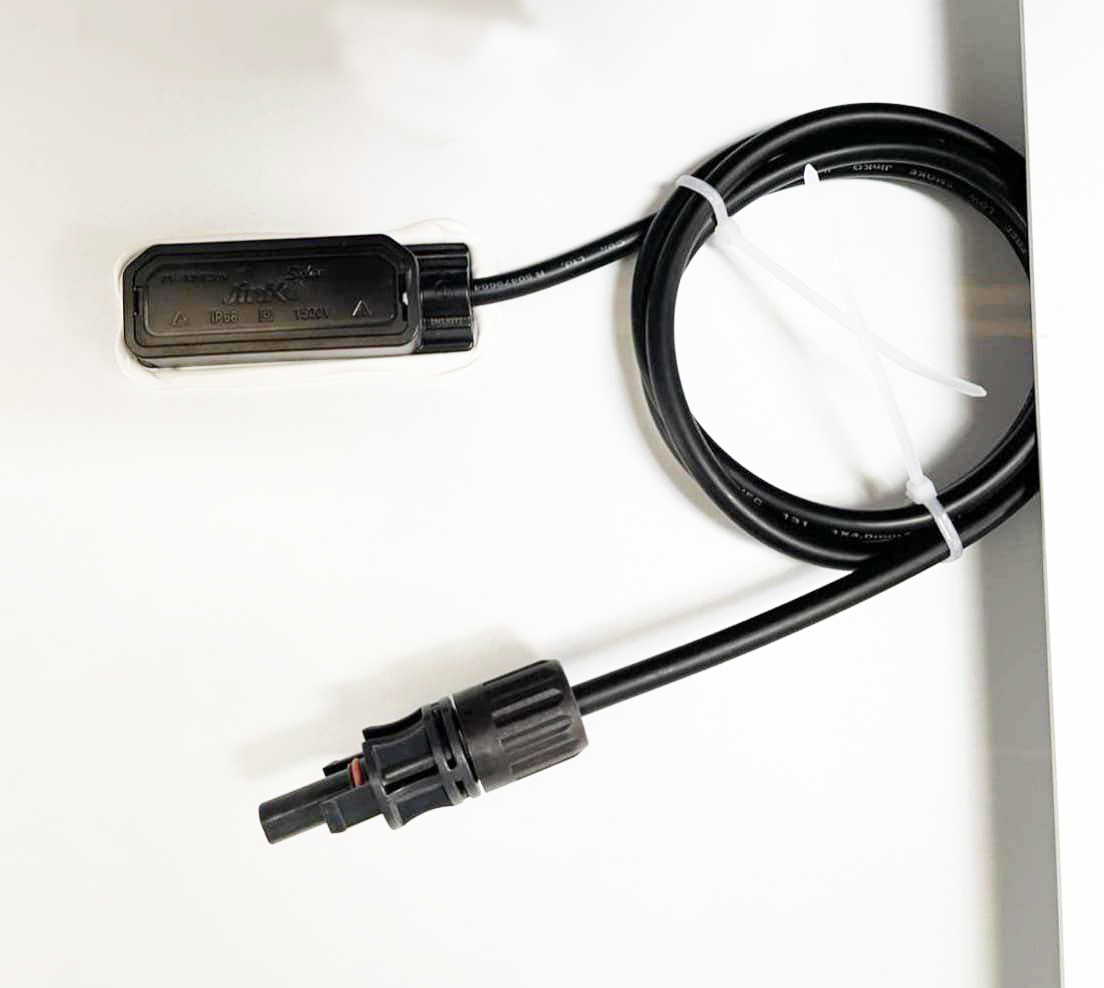
Connectors should be compatible and properly mated.
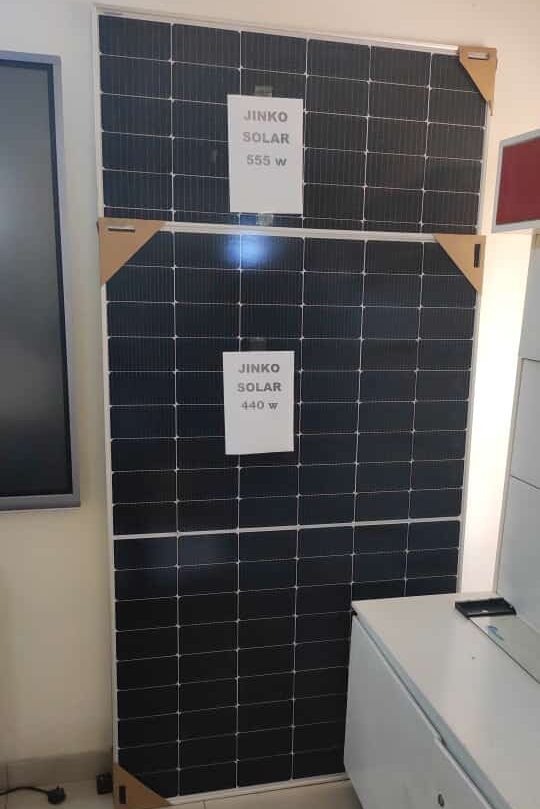
Because the Jinko Solar 615W panel is a large-format module, installers should also plan safe handling.
The weight and dimensions make two-person handling or appropriate lifting equipment sensible for many installations.
Cleaning and Maintenance
Solar panels require relatively little routine maintenance, but low maintenance does not mean zero maintenance.
Dust and dirt can reduce the amount of sunlight reaching the cells.
In dusty areas, periodic inspection and cleaning may help maintain output.
The cleaning schedule should depend on local conditions rather than an arbitrary calendar.
A dusty industrial site may need more attention than a rainy residential location.
Avoid aggressive cleaning methods that can damage glass, coatings, frames, or electrical components.
Follow the manufacturer’s cleaning recommendations and isolate equipment appropriately where required.
Inspect mounting hardware, cable condition, connectors, and visible signs of damage during scheduled maintenance.
Warranty and Long-Term Planning
Warranty terms are a major part of solar purchasing decisions.
The Mindseye Solar product listing states a 12-year product warranty and a 30-year linear performance warranty for this module.
Buyers should review the exact warranty document for the model being purchased, including the applicable conditions, exclusions, claim process, and geographical terms.
A warranty is more useful when the buyer can identify the supplier, product model, serial numbers, purchase documentation, and installation records.
For large commercial projects, keep a proper equipment register.
Record module model numbers, inverter serial numbers, installation dates, and maintenance activities.
Why Buy Jinko Solar 615W From Mindseye Solar?
The Jinko Solar 615W panel is a strong option for customers looking for high-output modules for residential, commercial, and larger solar projects.
Mindseye Solar provides the product listing, technical specifications, and purchasing information for customers in Nigeria.
You can view the current product details and availability on the Jinko Solar 615W product page.
If you are comparing panel wattages before making a purchase, the solar panel price guide for Nigeria provides useful context on current panel pricing and how wattage affects value.
You can also compare it with the Jinko 590W Tiger Neo panel when deciding which module best suits your available space and system design.
For customers considering another high-output option, compare the Jinko Solar 615W with other available solar PV products rather than selecting a panel based only on price.
The goal is to build a system that balances generation, reliability, available space, inverter capacity, battery storage, installation quality, and total project cost.
Frequently Asked Questions
Is Jinko Solar 615W suitable for Nigeria?
Yes, the Jinko Solar 615W can be used for Nigerian residential, commercial, and utility-style PV projects when the electrical and mechanical design is appropriate.
Local heat, dust, shading, roof structure, and installation conditions still need to be considered.
How much electricity can one 615W panel generate per day?
A 615W rating does not mean the panel produces 615W continuously.
Daily energy depends on solar irradiance and system conditions.
A simplified estimate can be made by multiplying 0.615kW by equivalent peak sun hours, then allowing for system losses.
Is Jinko Solar 615W bifacial?
Yes.
The listed Jinko Solar 615W model is a bifacial N-Type module.
Its rear-side contribution depends on installation conditions such as mounting height, surface reflectivity, spacing, shading, and orientation.
Can I use Jinko Solar 615W with a 5kVA inverter?
Possibly, but the answer depends on the inverter’s PV input specifications rather than its AC rating alone.
Check the inverter’s maximum PV voltage, MPPT operating range, maximum PV current, and allowable PV oversizing.
How many panels are needed for 10kWp?
Ten kilowatts divided by the Jinko Solar 615W’s 0.615kW rating gives about 16.26 panels.
A practical array would therefore require 17 panels to exceed 10kWp, subject to the inverter and system design.
Seventeen panels provide 10.455kWp of nominal DC capacity.
Does bifacial mean the panel always produces 20% more?
No.
Bifacial performance depends on the installation.
The rear side needs access to useful reflected light.
Roof colour, mounting height, spacing, shading, ground reflectivity, and other factors can materially change the result.
Is 615W better than a 550W panel?
Not automatically.
A 615W module provides higher output per panel, which can reduce panel count for a target DC capacity.
However, the best choice depends on panel dimensions, inverter compatibility, available space, price, logistics, and the overall system design.
Final Verdict
The Jinko Solar 615W panel is built for buyers who want high power density, modern N-Type cell technology, bifacial capability, and long-term solar generation from the Jinko Solar 615W platform.
Its 615W rating can help reduce panel count for a given project size.
Its bifacial design can provide additional generation where the installation gives the rear side useful reflected light.
Its electrical specifications also make it suitable for carefully engineered high-voltage PV strings.
For Nigerian solar projects, the most important lesson is not to judge a panel by wattage alone.
Combine the panel’s electrical characteristics with the inverter, battery, roof, mounting system, cable design, expected solar resource, maintenance plan, and project budget.
If those elements are designed correctly, the Jinko Solar 615W can be a powerful component in a dependable solar energy system.
Recommended external resources
For technical verification and authoritative background, I recommend keeping these as normal external links in the published article: