
Description
7 Powerful Reasons a Solar Generator for Home Is a Smart Backup Choice
A solar generator for home use should do more than simply switch on when the grid goes off. It should provide stable electricity, protect everyday electronics, charge efficiently from solar, and give you enough battery storage to keep essential loads running.
That is exactly where a 1500W transformer-based system can fit.
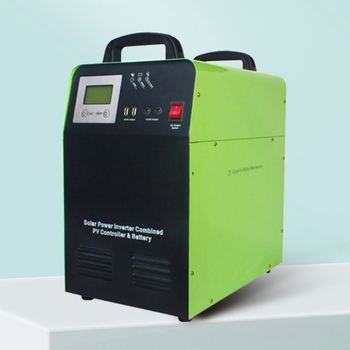
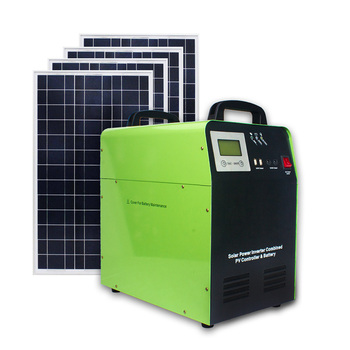
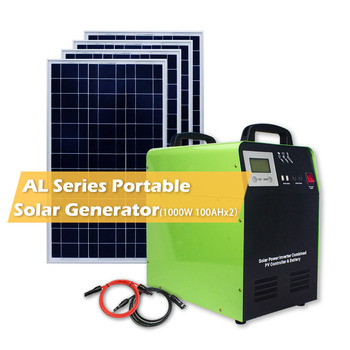
This solar generator for home applications combines a 1500W pure sine wave inverter, a built-in transformer, a 30A MPPT solar charge controller, AC charging, and two 12V 100Ah gel batteries in one compact power solution.
If your goal is to keep lights, fans, televisions, computers, networking equipment, chargers, and other moderate loads operating during outages, this solar generator for home offers a practical starting point.
What Makes This Solar Generator for Home Different?
The main advantage is integration.
Instead of buying an inverter, charger, solar controller, batteries, cables, and other components separately, this solar generator for home package brings the core power system together.
The 1500W inverter produces pure sine wave AC electricity. Pure sine wave output is widely used for electronics because the waveform is closer to conventional utility electricity than modified-sine-wave output.
The built-in transformer also supports high surge handling. That matters when an appliance briefly draws more power during startup.
The system uses a 24V battery configuration.
With two 12V 100Ah batteries connected in series, the nominal stored energy is about 2.4kWh. Actual usable energy depends on battery condition, discharge depth, conversion losses, temperature, and the connected load.
For buyers comparing a solar generator for home backup, understanding this difference between rated capacity and usable energy is important.
Key Specifications at a Glance
| Specification | Details |
|---|---|
| Rated inverter output | 1500W |
| System voltage | 24V DC |
| AC output | 230V, 50Hz, single phase |
| Inverter type | Transformer-based pure sine wave |
| Solar charge controller | 30A MPPT |
| Recommended solar input | Approximately 720W to 800W |
| Solar controller working range | 36V to 105V Vmp |
| Maximum solar open-circuit voltage | 150V Voc |
| Battery configuration | 2 × 12V 100Ah gel batteries |
| Charging options | Solar and AC grid |
| Display | LCD monitoring |
| Typical use | Home, office, backup and selected off-grid applications |
You can view the detailed specifications and current availability on the 1500W Transformer-Based Solar Generator product page.
Why Pure Sine Wave Output Matters
A solar generator for home should not only produce electricity. It should produce electricity that is suitable for the equipment you intend to run.
The pure sine wave inverter in this system is designed to deliver a clean AC waveform.
That makes the unit suitable for common electronics such as televisions, computers, routers, chargers, fans, and other compatible appliances.
The U.S. Department of Energy explains that inverters convert the direct-current electricity generated by solar photovoltaic systems into alternating-current electricity used by most household appliances.
You can read the Department of Energy’s Solar Photovoltaic System Design Basics for additional technical information.
For sensitive equipment, always check the equipment manufacturer’s power requirements.
A 1500W inverter is not automatically suitable for every device simply because the device plugs into a 230V outlet.
A good solar generator for home setup therefore starts with a load assessment.
Add the running wattage of the appliances you intend to operate and leave reasonable headroom for startup surges.
1500W Output for Essential Loads
The 1500W rating gives this solar generator for home use a clear operating range.
It is designed around essential and moderate loads rather than heavy whole-house appliances.
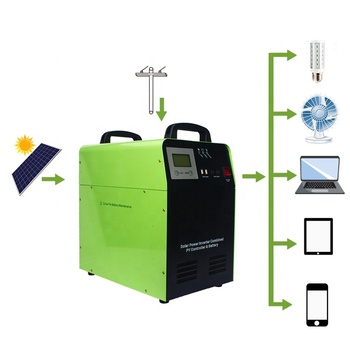
Suitable examples can include LED lighting, televisions, Wi-Fi routers, laptops, desktop computers, phone chargers, fans, small energy-efficient refrigerators, sewing machines, and selected small workshop tools.
The actual combination depends on the wattage of each appliance.
Ten LED bulbs using 10W each do not place the same demand on the inverter as a refrigerator compressor, pump, or power tool.
This is why appliance wattage matters more than the number of appliances alone.
For example, you might run several LED lights, a router, a television, a laptop, and fans at the same time while remaining within the inverter’s rated capacity.
A refrigerator may also be possible, but its startup surge should be considered.
A solar generator for home use should be planned around your essential loads rather than an unrealistic list of every appliance in the building.
Two 12V 100Ah Gel Batteries
Battery storage determines how long your solar generator for home can continue supplying power when solar production is low or unavailable.
This configuration uses two 12V 100Ah gel batteries.
When connected as a 24V battery bank, the nominal energy calculation is:
24V × 100Ah = 2,400Wh, or approximately 2.4kWh.
That figure is the battery bank’s nominal energy.
It should not be treated as guaranteed usable AC energy.
In practice, inverter efficiency, battery discharge limits, battery age, temperature, and the actual load all affect runtime.
For example, a modest load will generally run for much longer than a load approaching the inverter’s 1500W rating.
This makes the system particularly useful when your priority is keeping essential services available instead of attempting to run high-consumption appliances continuously.
Gel batteries are sealed and maintenance-free compared with conventional flooded lead-acid batteries.
They are commonly used in backup power and solar applications, but correct charging settings, ventilation, installation, and temperature management still matter.
For another battery option, see the Deka 12V 200Ah Gel Deep Cycle Battery from Mindseye Solar.
30A MPPT Solar Charging
The solar charge controller is one of the most important parts of a solar generator for home system.
This unit uses a 30A MPPT controller.
MPPT, or Maximum Power Point Tracking, allows the controller to continuously adjust the operating point of the solar array to extract available power efficiently within its operating limits.
The built-in controller supports a recommended solar input of approximately 720W to 800W for the 24V system.
The stated best Vmp range is 36V to 105V, with a minimum solar voltage of 36V and maximum solar Voc of 150V.
These figures are important.
Solar panels should not be connected simply because their combined wattage appears acceptable.
The panel voltage, open-circuit voltage, operating voltage, current, temperature, and wiring configuration must all remain within the controller’s limits.
For that reason, confirm the panel specifications and final series or parallel arrangement before installation.
If you want a larger solar array, a different solar generator for home configuration may be more appropriate.
Using 200W Solar Panels
The system can accommodate up to four 200W panels under the recommended 800W solar input described for this configuration.
Four 200W panels provide:
4 × 200W = 800W
Actual daily energy production will vary.
Solar output changes with sunlight intensity, weather, panel orientation, shading, temperature, dust, and installation conditions.
The U.S. Department of Energy notes that solar production can be affected by factors including time of day, clouds, shadows, rain, and dirt. Its solar integration guidance also explains the relationship between solar generation and energy storage.
That principle is important when sizing a solar generator for home installation in Nigeria.
A panel’s nameplate rating is its maximum rated output under specified test conditions, not a guarantee that the panel will deliver that power continuously.
For a larger solar panel option, explore the Jinko 590W Solar Panel from Mindseye Solar.
Solar and AC Charging
A major benefit of this solar generator for home system is charging flexibility.
During suitable daylight conditions, the MPPT controller can charge the battery bank from solar panels.
When grid electricity is available, the AC charger provides another charging route.
This dual-charging arrangement is useful for backup applications because you are not dependent on one charging source.
The Department of Energy explains that combining solar generation with storage allows energy produced at one time to be used later, including when solar production has fallen.
Read the Department of Energy’s Solar Integration and Energy Storage Basics for more information.
For households dealing with irregular grid supply, that flexibility can make a solar generator for home more practical than a battery-only backup system.
LCD Monitoring for Everyday Use
An LCD display makes it easier to monitor the system without relying on guesswork.
The display can provide information such as system voltage, charging status, and load power.
These readings help you understand whether the battery is charging, whether a load is active, and how heavily the inverter is being used.
Monitoring becomes particularly useful when you are learning the actual consumption pattern of your home.
For example, you may discover that your lighting and networking equipment consume relatively little power while a refrigerator, pump, iron, kettle, or other heating appliance causes a much larger increase in demand.
That information helps you manage your solar generator for home system more effectively.
What Can This Solar Generator for Home Power?
The system is designed for essential household and small-office loads.
Typical compatible loads can include:
- LED or CFL lighting
- Televisions up to approximately 42 inches, depending on actual wattage
- Wi-Fi routers and modems
- Laptops
- Desktop computers
- Ceiling fans
- Standing fans
- Phone and device chargers
- Small energy-efficient refrigerators
- Sewing machines
- Small workshop tools
- Sound systems and home entertainment equipment
These examples are not a promise that every listed appliance can run simultaneously.
Always add the actual wattage of the devices you plan to operate.
Also consider compressor and motor startup currents.
A solar generator for home should be treated as a power-management system.
The more carefully you select essential loads, the longer your stored energy can last.
How Long Will the Batteries Last?
Runtime depends on the load.
The 2.4kWh nominal battery capacity provides a useful reference point, but the inverter cannot deliver every stored watt-hour to your appliances because energy is lost during battery discharge and DC-to-AC conversion.
A simple planning approach is to compare your estimated load with the battery’s nominal energy.
For example, a 300W combined load represents a much lighter demand than a 1000W load.
Real runtime will differ because batteries are not perfectly efficient and lead-acid battery capacity can vary with discharge rate and operating conditions.
The battery’s age and condition also matter.
If you need long overnight runtime for refrigerators, pumps, air conditioners, electric cookers, water heaters, or other high-demand appliances, you may need a larger battery bank and inverter.
That is when moving beyond a small solar generator for home system into a larger hybrid solar installation becomes appropriate.
Solar Generator for Home vs a Larger Solar System
A compact solar generator for home is not the right answer for every property.
A compact system is most useful when the objective is to power selected essential loads.
A larger hybrid system is more appropriate when you want to operate several high-power appliances or reduce generator dependence across a larger portion of the building.
For example, Mindseye Solar also offers a 1kVA 12V Complete Solar System Installation Package for smaller essential-load applications.
For larger requirements, the 10kVA 48V Complete Solar System Package combines a higher-capacity inverter, a larger solar array, and lithium battery storage.
The difference is not simply the inverter rating.
Larger systems generally require larger battery capacity, more solar generation, appropriate protection, correctly sized cables, and careful system design.
Choosing between these configurations starts with your actual load profile.
Who Should Buy This System?
This solar generator for home is a practical option for people who want backup power for essential electronics without immediately investing in a large whole-building solar installation.
It can suit apartments, homes, small offices, shops, remote workspaces, and other locations where moderate electrical loads are the priority.
It can also be useful for customers who want to begin with a manageable backup system and expand later after understanding their energy consumption.
The right question is not simply, “How many appliances can this solar generator for home run?”
The better question is:
“Which appliances are essential, how much power do they consume, and for how many hours do I need them?”
That approach produces a more realistic solar design.
Installation and Safety Considerations
Solar and battery systems should be installed by a qualified electrical professional.
Correct cable sizing, fusing, circuit protection, earthing, battery connections, solar polarity, and overcurrent protection are important.
The solar input must also remain within the MPPT controller’s voltage and current limits.
Never assume that adding more panels will automatically improve performance.
Exceeding the controller’s voltage limits can damage equipment.
The same principle applies to batteries.
The battery bank must match the inverter’s voltage requirements and charging characteristics.
Before installation, confirm the final panel configuration, battery specifications, cable sizes, protection devices, and expected load.
Why Solar Plus Storage Makes Sense
Solar panels generate electricity when sunlight is available.
Batteries make it possible to store some of that energy for later use.
The Department of Energy explains that storage can help solar energy remain useful when the sun is no longer shining and can provide backup power during electrical disruptions.
That is the fundamental reason a solar generator for home can be more useful than solar panels alone for backup applications.
Instead of treating solar panels and batteries as separate products, think of them as parts of one energy system.
The panels generate energy.
The MPPT controller manages solar charging.
The battery stores energy.
The inverter converts stored DC energy into usable AC electricity.
Each component has a specific job.
Buying Guide: What to Check Before Ordering
Before buying a solar generator for home, check five things.
1. Confirm Your Essential Loads
List the appliances you actually need during a power outage.
Do not begin with the maximum number of appliances you can think of.
Start with necessities.
2. Check Appliance Wattage
Look at the rating label of each appliance.
Running wattage and startup requirements can be different, especially for refrigerators, pumps, motors, and other inductive loads.
3. Estimate Required Runtime
Decide how many hours you want your essential equipment to operate.
A system designed for three hours of backup is different from one expected to operate overnight.
4. Check Solar Compatibility
Confirm that the planned solar panels remain within the MPPT controller’s voltage, current, and power limits.
5. Confirm the Exact Battery Specification
Check the battery capacity and configuration supplied with the exact product version before ordering.
This five-step process can prevent the common mistake of buying a system based only on the inverter’s headline wattage.
If you are unsure, provide your appliance list to a solar professional for a proper load assessment.
Frequently Asked Questions
Is a Solar Generator for Home the Same as a Petrol Generator?
No.
A solar generator for home is an electrical energy system that uses batteries, an inverter, and solar charging.
A petrol generator produces electricity through an engine and fuel.
The operating characteristics, maintenance requirements, noise levels, and energy sources are different.
Can This Solar Generator for Home Run an Air Conditioner?
A 1500W inverter is generally intended for essential and moderate loads.
Air conditioners can have substantial running and startup demands, so compatibility depends on the specific air-conditioner rating and starting current.
Do not assume that every air conditioner will operate from this system.
Can I Use Four 200W Solar Panels?
The product specification supports up to approximately 800W of solar input for the 24V system.
Four 200W panels equal 800W.
However, the panel voltage and Voc must also remain within the MPPT controller’s limits.
Can the Batteries Charge From Both Solar and Grid Power?
The system supports both solar and AC charging.
Charging behavior and priority depend on the inverter’s configuration.
Is This Solar Generator for Home Suitable for a Small Office?
Yes, provided the office’s combined load remains within the system’s operating limits.
Laptops, networking equipment, lighting, monitors, chargers, and other moderate loads can be considered after checking their actual wattage.
How Much Solar Power Should I Install?
For this configuration, the stated recommended solar input is approximately 720W to 800W.
A four-panel 200W array reaches 800W, but the exact panel arrangement should be checked against the controller’s voltage limits.
Can I Expand the Battery Bank Later?
Do not assume that expansion is supported simply because additional batteries have the same voltage.
Battery expansion must be compatible with the inverter, charger, battery chemistry, age, capacity, wiring, and manufacturer’s specifications.
Confirm compatibility before adding batteries.
Is This System Suitable for Off-Grid Use?
It can be used for selected off-grid applications, provided the solar array and battery bank are correctly sized for the expected loads and daily energy demand.
Where Can I Buy This System?
You can view the current product details, specifications, availability, and ordering information on the Mindseye Solar product page.
Final Thoughts
A properly sized solar generator for home use can provide a practical way to keep essential appliances and electronics running when grid power is unavailable.
This 1500W transformer-based model combines pure sine wave output, a 30A MPPT controller, AC and solar charging, LCD monitoring, and a 24V battery bank in one integrated package.
Its strongest use case is essential-load backup rather than attempting to power every high-consumption appliance in a home.
If your requirements include lights, fans, television, internet equipment, computers, chargers, and selected small appliances, this solar generator for home can be considered as part of a carefully planned backup strategy.
Recommended External Resources
For readers who want to understand solar technology beyond the product itself: