
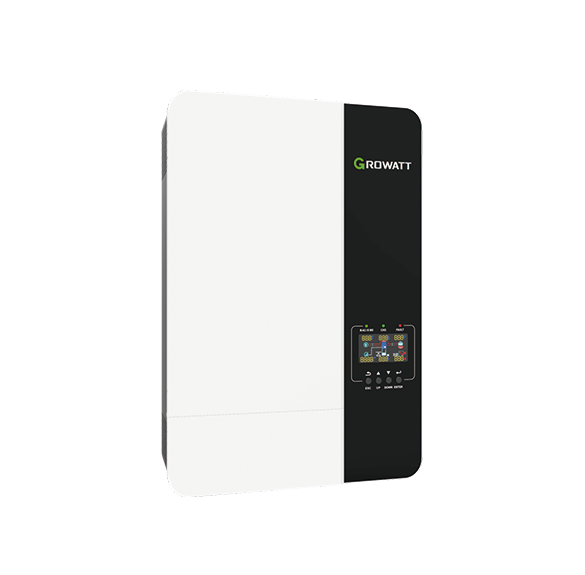
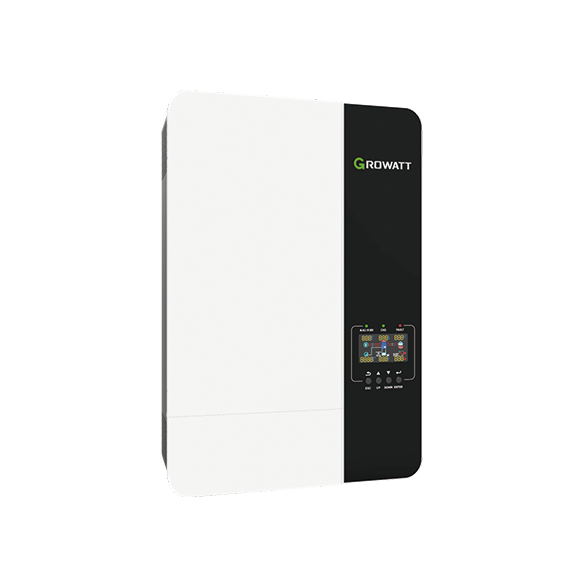
Description
6 Powerful Benefits of a Reliable Growatt Hybrid Inverter for Nigerian Homes and Businesses
Power interruptions can disrupt work, refrigeration, internet connectivity, security systems, home entertainment, and everyday routines.
A well-designed solar power system can reduce that dependence by combining solar generation, battery storage, and utility or generator input.
The Growatt hybrid inverter is built around that kind of flexible energy management. This 6kW class inverter is intended for systems where the owner wants solar energy to do more than simply generate electricity during daylight hours.
It can work with a battery bank, accept utility or generator input, and manage how available energy is delivered to connected loads.
For homes, offices, shops, clinics, small businesses, and other facilities, the Growatt hybrid inverter can serve as the central power conversion and control device.
It converts DC electricity from the battery or solar system into AC electricity for ordinary appliances and equipment.
The Growatt hybrid inverter is also a practical choice when a system needs room for future expansion.
The SPF 6000 ES Plus platform supports parallel operation, allowing multiple units to be combined for greater capacity. Growatt lists support for up to six units in parallel on its official product page.
What makes this Growatt hybrid inverter different?
A solar installation is more than a collection of panels.
The inverter determines how power from the panels and batteries is converted, managed, and supplied to loads.
The Growatt hybrid inverter brings several functions into one unit. Instead of installing a separate inverter and solar charge controller for a typical setup, this type of system combines power conversion and MPPT solar charging in one enclosure.
The official Growatt specifications for the SPF 6000 ES Plus list a 6,000VA/6,000W rated output, 48V battery architecture, pure sine wave output, two independent MPPT trackers, and up to 8,000W of maximum PV array power.
That combination makes the Growatt hybrid inverter suitable for system designs that need meaningful solar input without immediately moving into a much larger commercial inverter class.
1. 6,000W output for substantial everyday loads
The first advantage is its 6kW rated output.
Six thousand watts gives a properly designed installation enough inverter capacity for many residential and small commercial applications.
However, inverter capacity should not be confused with battery capacity.
A 6kW inverter can deliver power at its rated level, but the battery bank must also be capable of supplying the required current for the intended load.
The Growatt hybrid inverter uses a 48V battery system, which is a useful architecture for a 6kW class installation.
At higher power levels, a 48V battery bank generally makes more sense than trying to achieve the same output from a low-voltage battery bank.
For example, a customer may want to run lighting, televisions, computers, networking equipment, refrigeration, fans, pumps, and selected air-conditioning loads.
The correct combination depends on the simultaneous load, startup surge, battery capacity, and solar generation.
Before installation, calculate the actual running watts and startup requirements of the appliances.
This prevents the common mistake of buying an inverter based only on the nameplate capacity of one appliance.
2. Dual MPPT technology helps improve solar harvesting
Solar panels rarely produce their maximum rated output throughout the day.
Irradiance changes with weather, panel temperature, time of day, orientation, and shading.
MPPT, or Maximum Power Point Tracking, helps the solar controller operate the PV array at an electrical point that extracts useful power under changing conditions.
The Growatt hybrid inverter uses two independent MPPT trackers on the SPF 6000 ES Plus platform.
Growatt lists an MPPT operating range of 120VDC to 450VDC, a maximum PV open-circuit voltage of 500VDC, and up to 16A input current per MPPT in the referenced specification.
Two MPPT inputs can be particularly useful when the roof has different panel orientations or when the array is divided into separate strings.
The Growatt hybrid inverter should still be installed with correct string calculations.
The installer needs to check panel open-circuit voltage, operating voltage, current, temperature effects, and the inverter’s maximum PV limits.
Never select the panel quantity simply by adding panel wattages together.
String voltage and current are equally important.
3. Battery flexibility for different system designs
Battery storage is what allows solar energy generated during the day to be used later.
The U.S. Department of Energy explains that batteries can store solar electricity for use when sunlight is unavailable.
The Growatt hybrid inverter supports a 48V battery architecture and can be paired with lithium or lead-acid battery technologies, subject to model compatibility and correct configuration.
Lithium batteries are increasingly popular because they can provide high usable energy in a compact package and generally require less routine maintenance than traditional lead-acid batteries.
Lead-acid batteries can still make sense for some budget-focused installations when correctly sized and maintained.
The important point is to match the battery to the inverter, load profile, charging requirements, and expected operating pattern.
When selecting a battery, look beyond the advertised amp-hour number.
Check nominal voltage, usable energy, maximum continuous discharge current, recommended depth of discharge, battery management system requirements, communication compatibility, and warranty terms.
A properly matched battery allows the Growatt hybrid inverter to perform much more effectively as part of a complete energy system.
4. Pure sine wave output for modern electronics
The quality of AC output matters because many modern appliances use electronic power supplies, motors, control boards, and sensitive digital circuits.
A pure sine wave inverter produces an AC waveform designed to closely replicate utility electricity.
The SPF 6000 ES Plus documentation identifies the output waveform as pure sine wave.
The Growatt hybrid inverter can therefore be considered for homes and businesses running computers, televisions, networking equipment, refrigerators, lighting, electronics, and other ordinary AC loads, provided the total load remains within the system’s design limits.
This does not mean every appliance can automatically be connected without calculation.
Air conditioners, pumps, freezers, compressors, and other motor-driven equipment can have high starting currents.
A professional installer should assess both continuous load and surge requirements before commissioning the system.
5. Backup flexibility when the grid is unavailable
For many Nigerian households and businesses, energy resilience is one of the main reasons for installing solar.
The Growatt hybrid inverter can be integrated with utility input and, depending on the model and configuration, generator input.
Growatt lists dual AC inputs and an integrated transfer switch for the SPF 6000 ES Plus.
This creates several operating possibilities.
Solar can supply loads when sufficient sunlight is available.
Excess available energy can be directed toward battery charging according to the configured operating mode.
The battery can then support loads when solar production falls.
The Growatt hybrid inverter can also be configured around different priorities, depending on the installation and battery strategy.
For a business, that flexibility can reduce generator runtime.
For a home, it can provide a more predictable backup arrangement for essential circuits.
The exact operating behavior depends on the selected model, firmware, wiring, battery type, and configuration.
Installation should follow the applicable Growatt manual.
6. Expandable capacity for growing energy demand
Energy requirements often increase after the original solar installation.
A home may add another freezer, air conditioner, borehole pump, workstation, or entertainment system.
A business may add computers, refrigeration equipment, printers, networking hardware, or additional lighting.
Instead of replacing the entire inverter immediately, a scalable design can provide another path.
The Growatt hybrid inverter platform supports parallel operation.
Growatt states that up to six SPF 6000 ES Plus units can operate in parallel for capacity expansion.
Parallel operation is not simply a matter of connecting AC outputs together.
It requires compatible units, correct communication wiring, appropriate protection, synchronized settings, and professional commissioning.
When properly designed, however, parallel capability can make a solar installation easier to expand as energy demand grows.
Solar panel sizing for a 6kW inverter
Panel sizing should be based on the inverter’s PV limits and the customer’s energy consumption.
For the SPF 6000 ES Plus, Growatt lists a maximum PV array power of 8,000W.
That means an installer could design a PV array approaching that level, provided the voltage, current, string configuration, temperature limits, and other electrical requirements remain within the manufacturer’s specifications.
For example, 12 panels rated at 600W would provide a nominal 7.2kWp array.
Sixteen panels rated at 500W would also provide 8kWp nominal capacity.
The actual energy produced will vary.
Solar panels do not generate their nameplate wattage continuously.
Weather, panel temperature, dust, shading, orientation, tilt, cable losses, and system efficiency all affect production.
A good design therefore considers daily energy consumption rather than simply matching panel watts to inverter watts.
The Growatt hybrid inverter can be paired with different PV array sizes within its specified limits, giving installers flexibility when designing systems for Nigerian homes and businesses.
Choosing the right 48V battery capacity
Battery sizing is equally important.
A 48V 100Ah battery has a nominal energy capacity of approximately 4.8kWh before accounting for usable depth of discharge and system losses.
A 48V 200Ah battery provides approximately 9.6kWh nominal energy.
These figures are energy capacity, not guaranteed runtime.
For example, a load averaging 2kW does not automatically run for 4.8 hours from a 4.8kWh battery.
Conversion losses, battery limits, usable depth of discharge, temperature, battery age, and inverter consumption affect actual runtime.
If a customer wants longer backup, the system designer may increase battery capacity rather than simply increasing inverter capacity.
The Growatt hybrid inverter is therefore best viewed as one component in a complete energy design.
Solar capacity determines how quickly the battery can recharge during suitable sunlight, while battery capacity determines how much stored energy is available after solar production declines.
What can a 6kW system power?
A 6kW inverter can support a substantial collection of household or small-business loads, but the final appliance combination must be calculated.
A possible residential load profile could include LED lighting, televisions, refrigerators, freezers, fans, computers, internet equipment, phone chargers, a washing machine, and selected air-conditioning loads.
A small office could use the Growatt hybrid inverter for computers, monitors, networking equipment, printers, lighting, fans, refrigeration, and other moderate loads.
The key is simultaneous demand.
If connected equipment totals 3kW during normal operation, the inverter has considerable headroom below its 6kW rating.
If the same installation regularly approaches or exceeds 6kW, the designer should consider load management or a larger system.
Motor loads deserve particular attention because their starting demand can be significantly higher than their normal running consumption.
Growatt hybrid inverter for Nigerian homes
Nigeria’s power environment makes energy storage especially relevant for households that want predictable backup.
A properly designed Growatt hybrid inverter installation can combine solar panels, a 48V battery bank, utility power, and, where supported, generator input.
For a Lagos home, the system may be designed around essential loads rather than attempting to power every appliance simultaneously.
This can reduce the required battery size and make the overall project more affordable.
For example, essential circuits might include lighting, refrigeration, internet equipment, security systems, televisions, fans, and selected sockets.
Heavy loads can be scheduled when solar production is strong or when grid power is available.
Growatt hybrid inverter for offices and SMEs
Small businesses have different energy priorities.
A short outage can interrupt POS systems, internet connectivity, computers, refrigeration, CCTV systems, and customer service.
The Growatt hybrid inverter can be used as the core of a backup system designed around these critical loads.
For an office, a professional energy audit should identify the computers, network equipment, printers, lighting, cooling equipment, and other devices that need priority during outages.
The battery should then be sized around the required backup duration.
This approach is more effective than simply buying the largest possible battery.
A smaller, properly managed essential-load system can sometimes deliver better value.
Smart monitoring and energy management
Monitoring is increasingly important in modern solar installations.
Growatt lists WiFi and GPRS remote monitoring support for the SPF 6000 ES Plus, allowing compatible communication accessories to provide visibility into system performance.
The Growatt hybrid inverter display can also provide useful information about operating status, charging, battery condition, and power flow, depending on the specific model and configuration.
Monitoring helps users identify unusual behavior early.
A sudden change in solar production could indicate shading, dirt, a connection problem, or another issue requiring inspection.
For a commercial installation, remote monitoring can also help the operator understand energy patterns and make better decisions about load scheduling.
Built-in protection and safe installation
Solar power systems involve significant DC and AC electrical energy.
Correct protection is therefore essential.
The inverter includes protection functions, but an installation still needs appropriately selected breakers, isolators, surge protection, grounding, cables, connectors, and other balance-of-system equipment.
The Growatt hybrid inverter should be installed according to the manufacturer’s manual and applicable electrical standards.
Do not treat the inverter’s internal protection as a replacement for proper system-level protection.
A professional installer should verify cable sizes, breaker ratings, earthing, polarity, PV string voltage, battery connections, ventilation, and commissioning settings.
Growatt hybrid inverter versus a conventional inverter setup
A conventional backup arrangement may use an inverter, a separate solar charge controller, a battery bank, and additional switching equipment.
A Growatt hybrid inverter can combine several of these functions in one platform.
That can simplify system architecture and reduce the number of major components that need to be coordinated.
However, the best solution depends on the project.
A large commercial installation may require different architecture, three-phase equipment, external charge controllers, or a more advanced energy management system.
For a residential or small commercial 48V system, the 6kW class can be a practical middle ground between small backup systems and larger commercial installations.
Installation considerations before buying
Before purchasing a Growatt hybrid inverter, collect accurate information about the site.
First, calculate the customer’s maximum simultaneous load.
Second, identify high-starting-current appliances such as pumps, compressors, refrigerators, freezers, and air conditioners.
Third, determine the desired backup duration.
Fourth, inspect the roof or ground area available for solar panels.
Fifth, confirm whether the customer wants lithium or lead-acid storage.
Sixth, calculate the PV string configuration according to the exact inverter model.
Seventh, decide which circuits should remain powered during an outage.
These steps prevent oversizing or undersizing.
The Growatt hybrid inverter should be selected only after the full system has been evaluated, rather than treating the inverter as an isolated product.
Maintenance and long-term performance
Solar systems are relatively low-maintenance, but they are not maintenance-free.
Panels should be kept reasonably clean, especially in dusty environments.
Battery terminals and connections should be inspected according to the battery manufacturer’s instructions.
The inverter should have adequate ventilation, and its cooling openings should not be blocked.
The Growatt hybrid inverter should also be checked periodically for fault codes, abnormal temperatures, unusual sounds, loose connections, or unexpected changes in performance.
Remote monitoring can make this easier because performance data can be reviewed without waiting for a complete system failure.
Preventive maintenance is generally less disruptive than emergency repairs.
Is this Growatt hybrid inverter suitable for you?
The answer depends on your energy requirements.
It can make sense if you need a 6kW class inverter, want a 48V battery architecture, require integrated MPPT solar charging, and want the option of expanding capacity through parallel operation.
It may be particularly relevant for medium-sized homes, offices, shops, clinics, and small commercial facilities with a carefully managed load profile.
It may not be the right choice for a project that requires three-phase output, very large commercial loads, or specialized grid-interactive functions that are not supported by the exact model being considered.
Always confirm the exact model number and current datasheet before ordering.
Why buy from Mindseye Solar?
Choosing the inverter is only one part of a successful solar installation.
The panel configuration, battery capacity, protection equipment, cabling, mounting, commissioning, and load management all influence the final result.
Mindseye Solar supplies solar equipment and provides system design and installation support for residential and commercial applications in Nigeria.
You can view the current Growatt 6000W Hybrid Solar Inverter product page and check the listed availability, specifications, and current price.
You can also explore Mindseye Solar’s wider solar energy solutions for complete systems and related equipment.
For smaller backup requirements, compare the 1kVA 12V complete solar system to see how a compact lithium-based system differs from a 6kW installation.
For larger requirements, the 10kVA 48V complete solar system provides an example of how inverter capacity, solar PV, and battery storage can be combined for higher-demand applications.
Frequently asked questions
Is a Growatt hybrid inverter suitable for a 48V battery?
Yes.
The referenced SPF 6000 ES Plus specifications use a 48VDC battery architecture and support lithium and lead-acid battery types.
Battery compatibility should always be confirmed against the exact model and battery manufacturer’s requirements.
How much solar can the inverter handle?
For the SPF 6000 ES Plus, Growatt lists up to 8,000W of maximum PV array power.
The installer must still comply with the specified PV voltage, current, MPPT range, and open-circuit voltage limits.
Can multiple units be connected?
Yes.
Growatt states that up to six SPF 6000 ES Plus units can operate in parallel for capacity expansion, subject to correct installation and configuration.
Does the inverter produce pure sine wave AC?
Yes.
The referenced SPF 6000 ES Plus specification identifies its output waveform as pure sine wave.
Can it work with lithium batteries?
Yes.
The referenced specifications support lithium and lead-acid battery types.
Exact battery communication and configuration requirements should be checked before installation.
Does it support monitoring?
Growatt lists WiFi and GPRS remote monitoring support for the SPF 6000 ES Plus, using compatible communication accessories.
Is a 6kW inverter enough for a house?
It can be enough for many medium-sized homes if the simultaneous load is properly managed.
The correct answer depends on the home’s appliances, their running and starting power, and the desired backup strategy.
How many solar panels do I need?
There is no single number.
Panel wattage, total PV capacity, panel voltage, current, string configuration, available roof space, daily energy consumption, and the inverter’s PV limits all matter.
Can it replace a generator completely?
It can reduce or, in a properly sized off-grid system, potentially eliminate routine generator use for the supported loads.
However, the result depends on solar production, battery capacity, weather, load demand, and system design.
Final thoughts
A good solar installation should be designed around how you actually use electricity.
The Growatt hybrid inverter offers a combination of 6kW output, 48V battery support, dual MPPT tracking, pure sine wave output, flexible AC input options, monitoring capability, and parallel expansion on the referenced SPF 6000 ES Plus platform.
The most important step is not simply choosing a powerful inverter.
It is matching the inverter to the solar array, battery bank, appliances, protection equipment, and expected daily energy consumption.
If you are planning a new solar installation in Nigeria, start with a load assessment and determine which appliances must remain operational during outages.
Then size the battery for the required backup period and size the solar array for the desired charging and daily energy production.
Once those figures are established, the Growatt hybrid inverter can be evaluated against the exact electrical requirements of the project.
For the latest product information, consult the manufacturer’s documentation and the product listing before purchase.
Growatt’s official product page for the SPF 6000 ES Plus and Growatt’s official downloads centre provide access to current product documentation, datasheets, and manuals.
For educational background on photovoltaic systems, inverters, and storage, the U.S. Department of Energy’s solar photovoltaic system guide and Solar Integration: Inverters and Grid Services Basics are useful authoritative resources.
The result should be a solar system that is not merely large on paper, but correctly engineered for the loads it is expected to serve.