

Description
Deye 10kWh Lithium Battery: The Powerful, Reliable Choice for 2026
I get asked constantly which battery to step up to once a 5kWh unit is no longer enough, and the Deye 10kWh lithium battery is almost always my answer.
It is weatherproof. It is built for genuine expansion. It carries the kind of warranty that tells you the manufacturer trusts its own engineering.
This guide walks through exactly what the Deye 10kWh lithium battery offers, pulled straight from the official RW-F10.2 datasheet, and why it has become the default step-up choice for homes and small businesses outgrowing a single small battery.
What Is the Deye 10kWh Lithium Battery
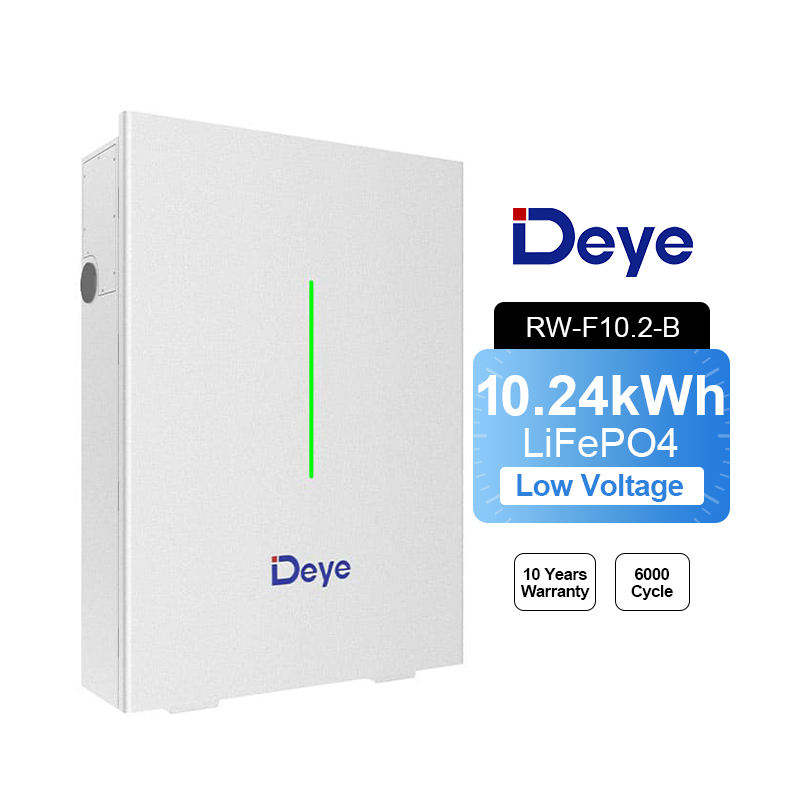
The Deye 10kWh lithium battery, sold as the RW-F10.2, is a low-voltage lithium iron phosphate (LiFePO4) energy storage unit built for residential and commercial solar systems.
It carries 10.2kWh of nominal energy at 51.2V, housed in a weatherproof IP65-rated enclosure, and comes backed by a 10-year manufacturer warranty.
Unlike older lead-acid banks, this unit uses cobalt-free LFP cells, a chemistry chosen specifically for thermal stability, safety, and a long working life.
That combination matters in Nigeria, where heat and inconsistent grid supply punish weaker battery chemistries fast.
Why I Recommend the Deye 10kWh Lithium Battery to Clients
Every installer has a battery they reach for when a job needs real capacity without real compromise. For me, the Deye 10kWh lithium battery earns that trust through three things: a genuinely weatherproof IP65 enclosure, strong charge and discharge current handling, and a modular design that scales cleanly as a client’s needs grow.
I have installed this unit outdoors in open utility enclosures where a lesser-rated battery would have struggled, and it has handled the exposure without issue. That is the IP65 rating doing real work, not just a number on a spec sheet.
Nominal Energy Versus Usable Energy
A battery’s nominal energy figure only tells part of the story. What actually matters day to day is usable energy, the amount you can draw safely before the battery management system steps in to protect the cells.
The Deye 10kWh lithium battery carries 10.2kWh of nominal energy, and at the recommended 90 percent depth of discharge, delivers 9.2kWh of usable energy in daily operation.
Compare that to a typical lead-acid bank, which safely gives you only half its rated capacity, and the gap in real-world value becomes obvious fast.
Cycle Life: The Number That Decides Long-Term Value
Cycle life is where lithium chemistry earns its higher upfront price. The Deye 10kWh lithium battery is rated for more than 6,000 cycles down to 70 percent end-of-life capacity, tested at 25°C ±2°C with a 0.5C charge and discharge rate.
Run that battery through a full cycle every single day, and you are still looking at over 16 years of theoretical service life, well ahead of any lead-acid or tubular alternative on the market, and exactly the kind of longevity the 10-year manufacturer warranty is built around.
Built-In Protection and Smart Monitoring
Deye did not stop at good cells. The RW-F10.2 includes a built-in 125A 4-pole circuit breaker rated to 60Vdc, giving you a manual isolation point for safe servicing, alongside an intelligent battery management system that monitors cell voltage, current, and temperature continuously.
The unit supports a maximum 1C charge rate and 1.2C discharge rate, meaning it can absorb and release power quickly when your system needs it most, during a sudden cloud cover drop or a heavy evening load spike, for example.
A master LED indicator shows state of charge from 20 to 100 percent plus work state alerts for alarming or protecting conditions, giving you a quick health check without needing to open an app.
Battery modules auto-network with no DIP switch coding required, and the system supports Deye’s remote monitoring and upgrade platform for deeper visibility when you want it.
Scalability: Growing With Your Energy Needs
One battery rarely stays one battery for long. Most of my clients start with a single RW-F10.2 unit and expand as their household or business grows.
The Deye 10kWh lithium battery supports up to 32 units in parallel, delivering a maximum combined capacity of 326kWh.
That range covers everything from a single large home to a full commercial energy storage deployment, without ever needing to change battery brand or chemistry midway through a project.
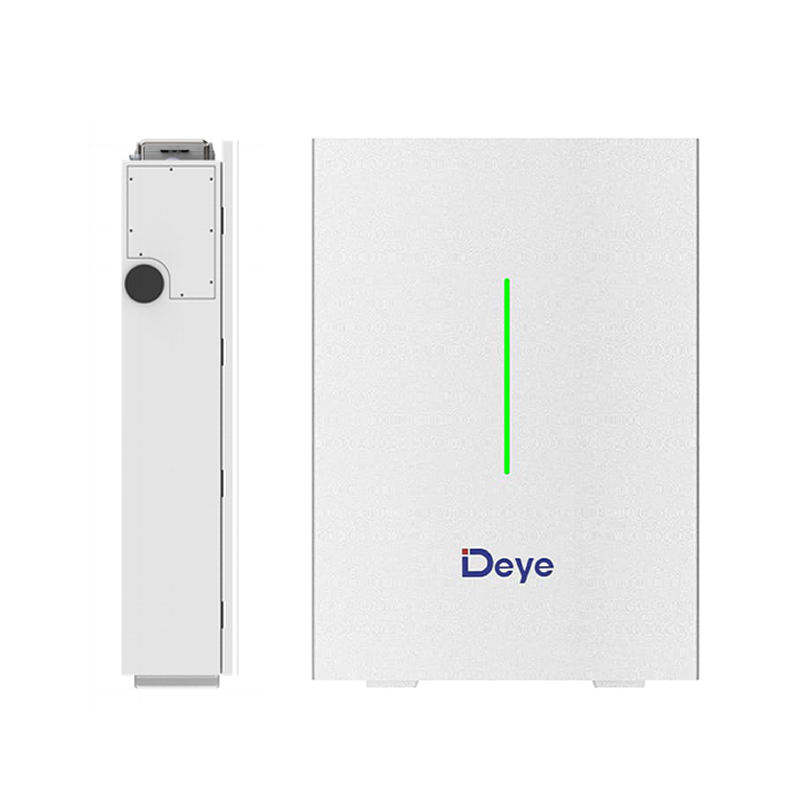
It installs as a flat, slim enclosure, wall-mounted with a bracket or floor-standing with a removable base, saving real installation space compared to bulkier rack formats.
Communication and Inverter Compatibility
The battery communicates with your inverter through CAN 2.0 or RS485 protocols, the industry standard for smart battery management in hybrid solar systems.
A single hybrid inverter rated up to 18kW can manage a full parallel stack, with charge and discharge current up to 350A across the bank and parallel terminals rated to 250A each.
Deye inverters pair with this battery seamlessly, since both speak the same communication language out of the box.
If you are running a different inverter brand, confirm compatibility with your installer before purchase, mismatched communication protocols are one of the most common, and most avoidable, mistakes in solar battery installation.
Installing the Deye 10kWh Lithium Battery
Setup is refreshingly straightforward for a battery of this capacity. The unit supports wall mounting with a wall bracket or floor standing with a removable base, so it fits a utility room, an outdoor enclosure, or a dedicated plant room equally well.
The IP65 protection rating means this battery tolerates dust and water exposure far better than most indoor-only units, a genuine advantage for installations in semi-exposed utility areas common across Nigerian homes and small businesses.
Natural cooling means no active fan and no extra noise in your home, a real point in its favour for installations near living spaces.
Real-World Performance in Nigerian Conditions
Heat is the enemy of most batteries sold in this market. The Deye 10kWh lithium battery is rated to discharge down to negative 20°C and up to 55°C, giving it a wide enough margin to handle the hottest Lagos afternoons without meaningful performance loss.
I have installed this unit in partially covered outdoor enclosures where ambient temperatures regularly climb past 35°C, and the battery management system has handled the thermal load without complaint.
That kind of resilience is exactly what you want from equipment expected to work every single day, whether the grid cooperates or not.
Pricing and Where to Buy
Pricing on the Deye 10kWh lithium battery varies with exchange rates, import costs, and current stock availability.
Reach out to our team directly for the current price and stock status before committing to a purchase, we will confirm the exact figure and talk through sizing for your specific load.
How It Compares to Other Battery Options
If you are weighing lithium against a cheaper tubular bank, our detailed breakdown on lithium versus tubular batteries in Nigeria walks through the real five-year cost difference, not just the sticker price.
If a 10kWh bank is more capacity than your household actually needs, our guide on the Deye 5kWh lithium battery breaks down the smaller step-in option and what it comfortably powers.
And if your power needs extend beyond residential use, our guide to commercial solar battery storage in Nigeria explains how multiple Deye units scale into a full commercial energy storage solution.
Certifications and Safety Standards
Safety certification is not optional when lithium batteries sit inside or near an occupied home. The Deye 10kWh lithium battery carries UN38.3 transport safety certification, IEC 62619 industrial lithium cell safety certification, CE marking, CEI 0-21 grid-connection compliance, and VDE2510-50 stationary battery safety certification.
You can review the full technical requirements behind IEC 62619 directly through the International Electrotechnical Commission for a clearer picture of what that certification actually tests for.
For installation standards specific to Nigeria, NEMSA publishes the electrical codes every solar installer should be following, and COREN maintains the register of certified engineers qualified to sign off on your system.
Warranty and Long-Term Support
A 10-year manufacturer warranty backs the Deye 10kWh lithium battery, covering performance degradation across its rated cycle life, not just outright defects.
That distinction matters, since many cheaper batteries only guarantee against total failure, leaving gradual capacity loss entirely uncovered.
Deye also publishes an energy throughput figure of 32MWh over the warranty period, a useful benchmark for calculating expected lifetime value against your actual daily consumption.
Who Should Choose This Battery
The Deye 10kWh lithium battery suits a larger family home running a fridge, multiple TVs, fans, lighting, and one or two inverter-type AC units overnight.
It also works well for small offices, clinics, or shops needing a genuine full-day backup buffer rather than just a few essential circuits.
If your daily energy use sits meaningfully higher, running several AC units or heavier equipment, pairing two or more units in parallel gives you the headroom without changing battery chemistry or communication protocol.
Sizing a Deye 10kWh Lithium Battery to Your Appliance Load
Getting the most from a Deye 10kWh lithium battery starts with knowing your actual daily energy draw, not guessing at it.
Here is a realistic load breakdown for a larger Lagos household running this battery alongside a matching hybrid inverter.
| Appliance | Wattage | Daily Hours | Daily Energy |
|---|---|---|---|
| Refrigerator and freezer | 200W | 24 hrs (cycling) | 2.4kWh |
| 1HP inverter AC | 900W | 6 hrs (night) | 5.4kWh |
| LED TVs (2) | 100W each | 6 hrs | 1.2kWh |
| Ceiling fans (4) | 75W each | 8 hrs | 2.4kWh |
| LED lighting (15 points) | 10W each | 6 hrs | 0.9kWh |
| Router and modem | 20W | 24 hrs | 0.48kWh |
Add that up and you land close to the 9.2kWh usable capacity this battery delivers at its recommended depth of discharge, a comfortable fit for a larger household running one AC unit through the night.
Add a second AC unit to the mix, and pairing two Deye 10kWh lithium battery units in parallel becomes the sensible move.
Maintenance Tips to Extend Battery Life
A lithium battery needs far less hand-holding than a lead-acid bank, but a few habits still go a long way toward protecting your investment.
Keep the installation area reasonably ventilated where possible, even though this unit’s IP65 rating and natural cooling handle heat well on their own.
Avoid installing it in direct, unshaded sunlight where the enclosure surface temperature can climb well above ambient readings.
Check the master LED indicator periodically for any alarm signals, and do not ignore a protecting-state alert, it usually points to a fault worth investigating before it becomes a bigger problem.
If you have Deye’s remote monitoring configured, review it periodically to track state of charge trends and catch any gradual performance drift early.
Finally, avoid running the battery to zero charge repeatedly where avoidable. While the 90 percent depth of discharge rating gives you room to work with, consistently pushing right to the edge of that limit shortens cycle life faster than moderate, well-managed daily use.
Frequently Asked Questions
How many hours can a Deye 10kWh lithium battery power a home?
A Deye 10kWh lithium battery delivers 9.2kWh of usable energy at its recommended depth of discharge, enough to power a fridge, lighting, fans, multiple TVs, and one inverter-type AC unit for roughly 8 to 12 hours, depending on your actual appliance load.
Is the Deye 10kWh lithium battery compatible with any inverter?
It communicates best with inverters supporting CAN 2.0 or RS485 protocols, and pairs seamlessly with Deye hybrid inverters rated up to 18kW per unit. Confirm compatibility with your installer before buying if you are running a different inverter brand.
How long does the Deye 10kWh lithium battery actually last?
Rated for more than 6,000 cycles down to 70 percent end-of-life capacity, this battery can deliver over 16 years of theoretical service under daily cycling, backed by a 10-year manufacturer warranty.
Can I expand my Deye 10kWh lithium battery system later?
Yes. The battery supports up to 32 units in parallel, scaling to a maximum combined capacity of 326kWh, covering everything from a single large home to a full commercial energy storage deployment.
What is the difference between nominal and usable energy on this battery?
Nominal energy is 10.2kWh, the full rated capacity. Usable energy is 9.2kWh, the amount you can safely draw at the recommended 90 percent depth of discharge without triggering battery management system protection.
Is the Deye 10kWh lithium battery suitable for outdoor installation?
Yes. It carries an IP65 protection rating, meaning it tolerates dust and water exposure well, making it suitable for semi-exposed outdoor enclosures as well as indoor utility rooms.
Final Thoughts From the Field
After installing this unit across multiple larger Lagos homes and small businesses, my honest verdict is simple: the Deye 10kWh lithium battery delivers exactly what its datasheet promises, consistently, with the kind of weatherproof build quality that holds up to Nigerian conditions without excuses.
If you are ready to step up from a smaller battery or move away from unreliable backup power entirely, reach out to our team directly for current pricing and a system sized around your actual household load.
Call or WhatsApp us on 0814 596 4127, or visit mindseyesolar.com to get started.