
Description
7 Amazing Reasons to Choose the Ultimate Alpsolar 6kva Inverter at ₦870,000
When you are investing in a solar power system, the inverter is one of the most important components to get right.
Solar panels generate electricity. Batteries store energy. But the inverter manages how that energy becomes usable AC power for your home, office or business.
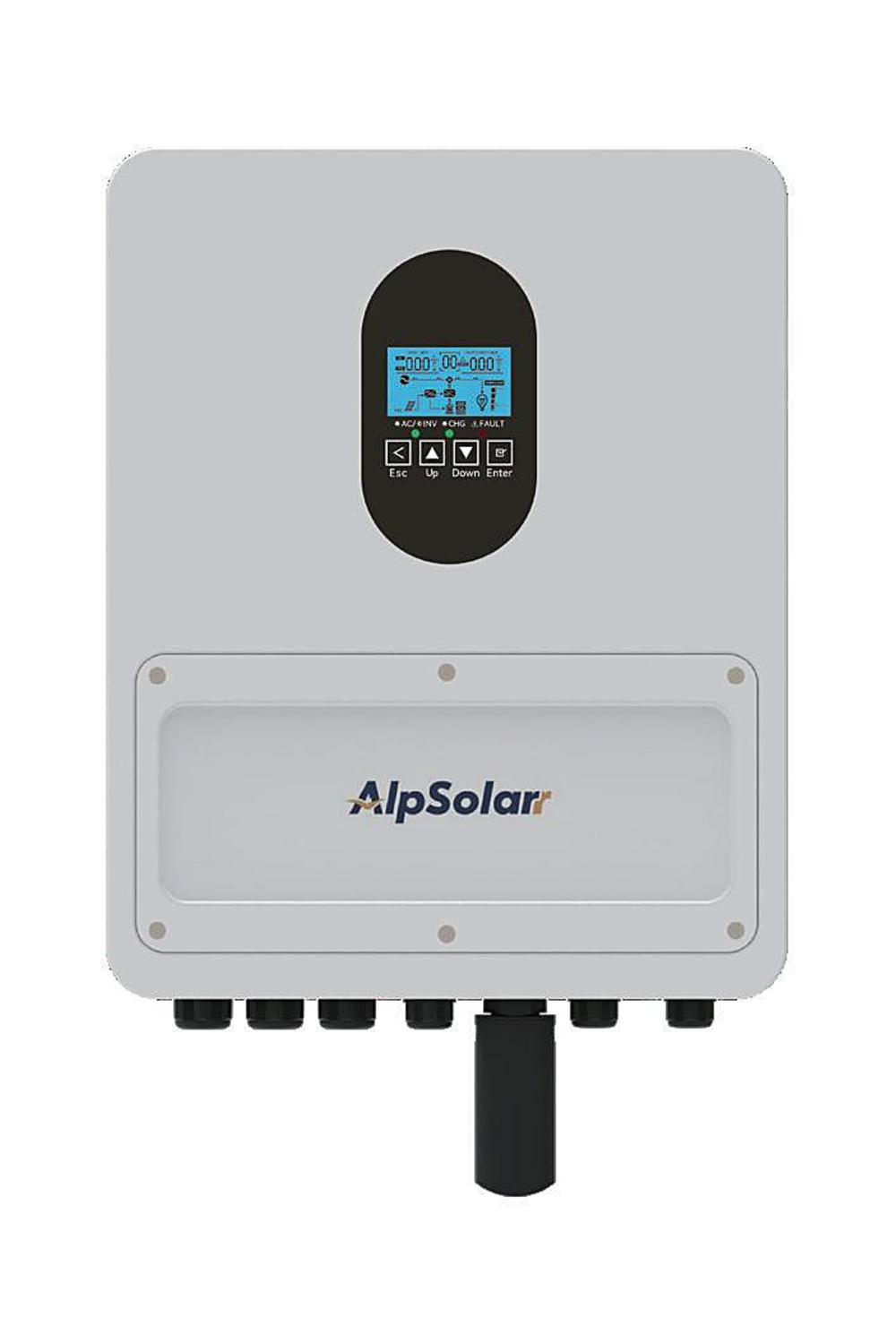
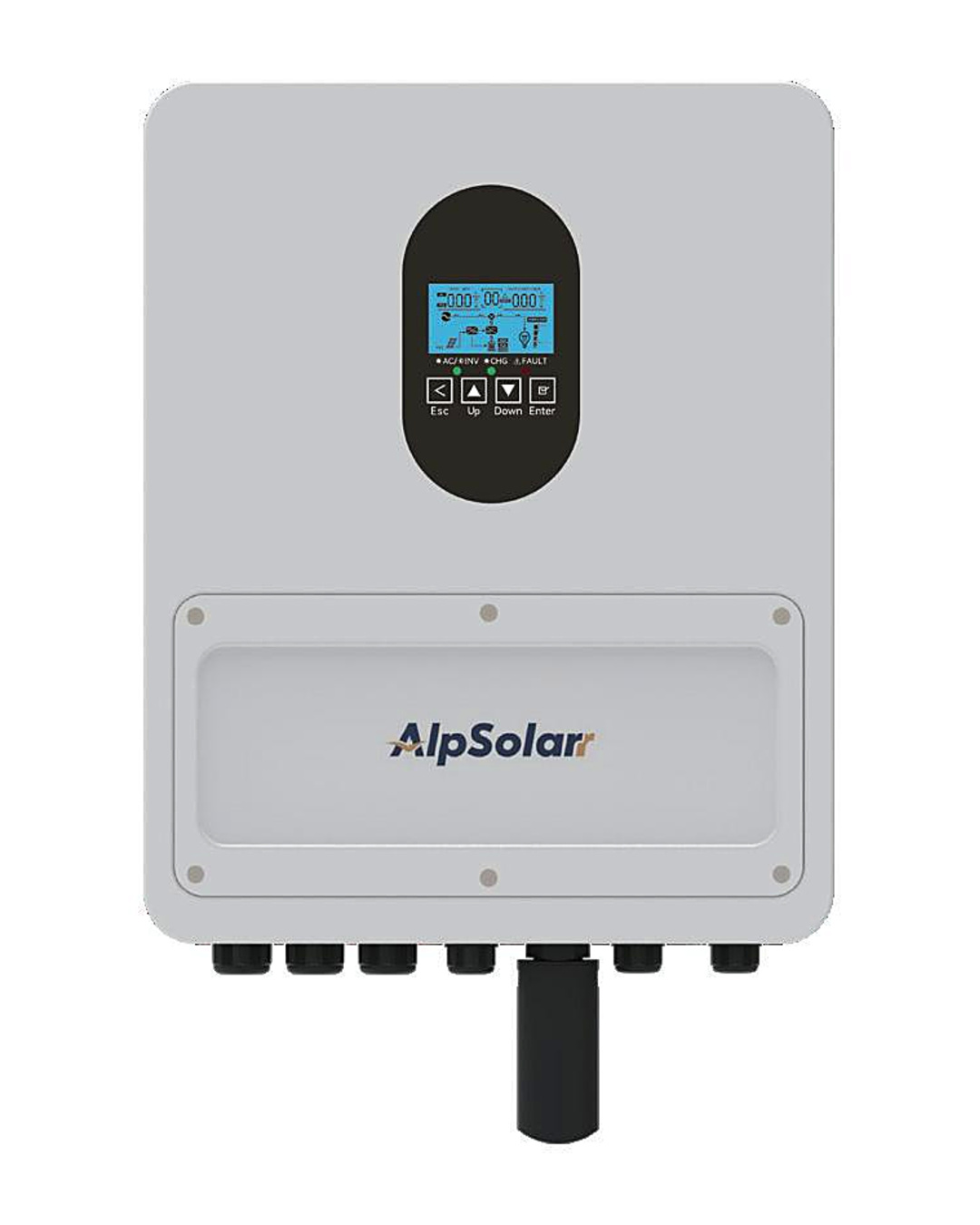
The Alpsolar 6kVA inverter, also known as the Alpsolar Pulse S3 6kW hybrid inverter, is designed for customers who need substantial power capacity with the flexibility to combine solar, batteries, grid electricity and generator power.
At ₦870,000, the Alpsolar 6kW hybrid inverter gives Nigerian homeowners and businesses a 6,000W continuous pure sine wave power platform built around a 48V battery system.
You can view the Alpsolar 6kW 48V Hybrid Inverter at Mindseye Solar.
The Pulse S3 is particularly interesting because it combines a large solar PV input capability, battery-free operation, wide grid voltage tolerance, IP66 protection, intelligent load management and parallel expansion.
For someone planning a serious home or small commercial solar system, those features can make a significant difference.
Alpsolar 6kVA Inverter Price in Nigeria
The listed price of the Alpsolar Pulse S3 6kW hybrid inverter at Mindseye Solar is ₦870,000, reduced from ₦970,000.
| Product | Price |
|---|---|
| Alpsolar Pulse S3 6kW Hybrid Inverter | ₦870,000 |
| Previous Listed Price | ₦970,000 |
| Battery Architecture | 48V |
| Rated Continuous Output | 6,000W |
Solar equipment prices can change because of exchange rates, import costs, stock availability and supplier pricing. It is therefore advisable to confirm the live price before payment.
Check the current Alpsolar 6kW inverter price and availability.
What Is the Alpsolar 6kVA Inverter?
The Alpsolar Pulse S3 is a hybrid inverter designed to manage multiple energy sources within one solar power system.
Depending on the installation and configuration, the system can work with:
- Solar panels
- 48V batteries
- Utility grid electricity
- Generator power
The inverter provides 6,000W continuous pure sine wave AC output, making it suitable for a wide range of residential and light commercial applications.
The 48V architecture also makes it compatible with modern lithium battery systems as well as suitable deep-cycle lead-acid batteries.
For customers who want to start with solar during the day and add battery storage later, the Pulse S3 also supports battery-free operation.
That flexibility is one of the main reasons the 6kva inverter is worth considering for growing solar installations.
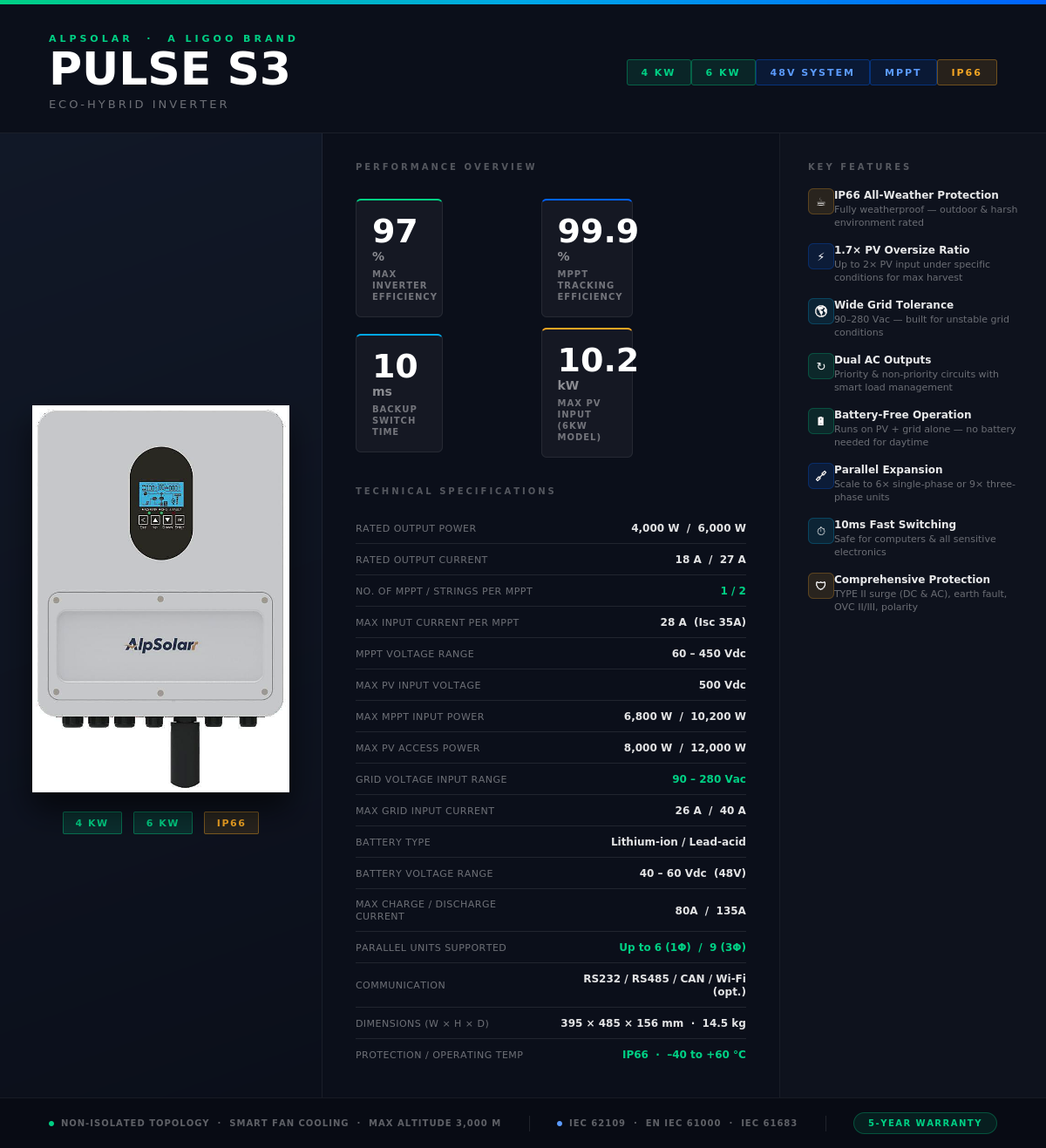
Alpsolar Pulse S3 Technical Specifications
Here are the key specifications to consider before purchasing this 6kva inverter.
| Specification | Alpsolar Pulse S3 6kW |
|---|---|
| Rated Output Power | 6,000W continuous |
| Output Waveform | Pure sine wave |
| Battery System | 48V |
| Battery Voltage Range | 40V to 60V DC |
| Maximum Charging Current | 125A |
| Maximum Continuous Discharge Current | 135A |
| Maximum PV Array Access | 12,000W |
| Maximum MPPT Input Power | 10,200W |
| Maximum PV Open Circuit Voltage | 500V DC |
| MPPT Operating Range | 60V to 450V DC |
| Maximum PV Input Current | 28A |
| Grid Input Range | 90V to 280V AC |
| Maximum Conversion Efficiency | Up to 97% |
| MPPT Efficiency | Up to 99.9% |
| Protection Rating | IP66 |
| Communication | RS232, RS485, CAN |
| Wi-Fi | Optional |
| Parallel Operation | Supported |
| Nominal Output | 220V, 230V or 240V |
| Price | ₦870,000 |
The exact installation should always be designed using the manufacturer’s technical limits, particularly when calculating PV strings and battery current.
1. 6,000W Continuous Output for Demanding Loads
The first major advantage of the Alpsolar 6kva inverter is its 6,000W continuous output.
That gives you considerably more usable capacity than small residential units designed primarily for lighting, televisions and a refrigerator.
A properly designed system can support loads such as:
- Lighting
- Refrigerators
- Chest freezers
- Televisions
- Computers
- Routers
- CCTV systems
- Networking equipment
- Office equipment
- Fans
- Water pumps
- Selected air conditioners
The important word is “selected.”
A 6,000W inverter does not mean you should connect every high-power appliance in your building and turn everything on simultaneously.
Electric cookers, water heaters, pressing irons, kettles, pumps and air conditioners can consume substantial power.
Motor-driven equipment can also require higher starting power than its normal running consumption.
For this reason, an installer should prepare a proper load schedule before recommending the inverter.
2. High Solar Input Capacity Gives You More Design Flexibility
One of the biggest attractions of the Alpsolar Pulse S3 is its substantial solar input capability.
The published specifications provide up to 12,000W of PV array access and up to 10,200W of MPPT input power.
This can be useful because solar panels rarely produce their maximum rated output throughout the entire day.
Actual solar production can be affected by:
- Clouds
- Haze
- Heat
- Dust
- Shading
- Panel orientation
- Time of day
- Weather conditions
The U.S. Department of Energy explains that solar generation varies because of environmental and operating conditions.
See the U.S. Department of Energy guide to solar integration.
A suitably sized PV array can therefore help you capture more useful energy across the day.
However, a larger array must still remain within the inverter’s voltage and current limits.
It is not enough to simply calculate the total wattage of your panels.
The installer must also check the panel’s open-circuit voltage, operating voltage, current and temperature characteristics.
For example, six 615W solar panels provide:
615W × 6 = 3,690W
That gives you a nominal 3.69kWp solar array.
For high-output panels, you can see the Jinko 615W solar panel available from Mindseye Solar.
3. The 48V Battery Architecture Is Suitable for Modern Solar Storage
The Pulse S3 uses a 48V battery architecture and supports lithium-ion and deep-cycle lead-acid battery technologies.
This is important because many modern solar systems are moving toward 48V lithium battery storage.
At a theoretical 6,000W output and 48V battery voltage, the DC current is roughly:
6,000W ÷ 48V = 125A
Real-world current will vary because of inverter efficiency and battery voltage.
This calculation demonstrates why battery selection, cable sizing and protection are extremely important.
A battery for a 6kva inverter should not be selected based only on its advertised kWh capacity.
You should also consider its:
- Nominal voltage
- Maximum discharge current
- Usable capacity
- Battery chemistry
- Depth of discharge
- BMS capability
- Communication compatibility
For a larger installation, a suitable 48V lithium battery can provide substantial energy storage.
See the LEOCH 16.08kWh 51.2V LiFePO4 battery from Mindseye Solar.
4. Battery-Free Operation Can Be Useful During the Day
Not every customer wants the same type of solar system.
A homeowner may want overnight backup.
A business operating mainly from 8am to 6pm may primarily want to reduce its dependence on grid electricity and generators during working hours.
The Pulse S3 supports battery-free operation, which can be useful in this type of application.
A suitably configured system can use available solar power to supply daytime loads without depending on a battery for that operation.
This gives customers another way to approach solar investment.
You can design a system around daytime solar generation first and introduce battery storage when extended backup becomes necessary.
For businesses with significant daytime electricity consumption, this can be a useful strategy.
Energy storage becomes especially important when you want to shift solar energy from periods of strong sunlight to periods when solar production is low.
The Department of Energy provides a useful overview in its Solar Integration and Energy Storage guide.
5. Wide Grid Voltage Tolerance Helps With Unstable Utility Supply
Many Nigerian homes and businesses deal with inconsistent grid electricity.
Availability is one issue.
Voltage quality is another.
The Alpsolar Pulse S3 is specified for a 90V to 280V AC grid input range, giving it a broad operating window for utility input.
That can be useful where grid voltage fluctuates within the inverter’s permitted limits.
However, this feature should not be misunderstood.
A wide voltage tolerance does not eliminate the need for good electrical protection.
A properly installed system should still have appropriate:
- AC breakers
- DC breakers
- Surge protection
- Isolation devices
- Earthing
- Properly sized cables
The incoming electrical supply should also be assessed before the inverter is installed.
6. IP66 Protection Adds Another Layer of Environmental Protection
The Alpsolar Pulse S3 carries an IP66 enclosure rating.
IP ratings are covered by IEC 60529, which defines degrees of protection provided by enclosures against the ingress of solids and water.
You can read about the standard on the International Electrotechnical Commission website.
An IP66 enclosure can be particularly useful in environments where dust and water exposure are concerns.
That makes the feature relevant to many solar installations in Nigeria.
However, IP66 does not mean the inverter should simply be installed anywhere outdoors.
A suitable installation location should still provide:
- Adequate ventilation
- Appropriate mounting
- Reasonable protection from unnecessary direct weather exposure
- Easy access for maintenance
- Compliance with the manufacturer’s installation instructions
Good installation practice remains essential.
7. Parallel Operation Makes Future Expansion Possible
Your electricity requirements today may not be the same several years from now.
A family may add appliances.
A shop may add refrigeration.
An office may add more computers and networking equipment.
A business may expand its operating space.
The Pulse S3 supports parallel operation, allowing compatible units to be combined for larger capacity.
That means the initial inverter installation can potentially form part of a larger system later.
This can be especially useful for businesses that expect their electricity demand to grow.
Parallel installations must be designed correctly. Communication wiring, configuration, synchronization and electrical protection all need to follow the manufacturer’s requirements.
6kVA vs 6kW: Is There a Difference?
This is an important point for anyone searching for a 6kva inverter.
Kilowatts and kilovolt-amperes are related, but they are not identical measurements.
kW refers to real power.
kVA refers to apparent power.
The relationship between them depends on power factor.
For the Alpsolar Pulse S3 discussed in this article, the manufacturer’s technical specifications identify the unit as a 6,000W inverter.
Therefore, when designing the system, always use the actual electrical specifications rather than relying only on the “6kVA” description used in product searches and everyday retail language.
This is particularly important for motors, pumps, compressors and other equipment that can have significant starting or reactive power requirements.
How Many Solar Panels Can a 6kVA Inverter Handle?
There is no universal number because the answer depends on the exact panel being installed.
The Pulse S3 specifications include:
Maximum PV array access: 12,000W
Maximum MPPT input power: 10,200W
Maximum PV open-circuit voltage: 500V DC
MPPT operating range: 60V to 450V DC
Maximum PV current: 28A
These specifications must all be considered when designing the solar array.
For example, a panel may have a suitable wattage but an unsuitable voltage or current configuration.
That is why professional PV string calculations are important.
The installer needs to determine:
- Number of panels per string
- Total string voltage
- Maximum open-circuit voltage
- Operating voltage
- Array current
- Total PV capacity
- Temperature effects
The panel arrangement should remain within the inverter’s electrical limits.
What Can the Alpsolar 6kVA Inverter Run?
A properly designed 6kva inverter system can support a wide range of appliances.
| Load | Suitability | Main Consideration |
|---|---|---|
| LED lighting | Excellent | Low consumption |
| Television | Excellent | Check combined load |
| Refrigerator | Suitable | Compressor startup |
| Chest freezer | Suitable | Compressor startup |
| Fans | Excellent | Moderate to low demand |
| Computers | Excellent | Good critical load |
| Routers | Excellent | Very low consumption |
| CCTV | Excellent | Suitable for backup circuits |
| Networking equipment | Excellent | Useful critical load |
| Water pump | Suitable with design | Starting current |
| Air conditioner | Suitable with design | Running and startup load |
| Electric cooker | Depends | High power demand |
| Water heater | Depends | High continuous demand |
The goal should be to identify your critical loads and build the system around them.
For example, during a grid outage, you may want the refrigerator, CCTV, internet, lighting and office equipment to remain active while disconnecting less important high-power appliances.
How Large Should the Battery Be?
Battery sizing depends on energy consumption and required backup time.
Suppose your critical loads consume an average of 2,000W and you want approximately five hours of theoretical backup.
The basic energy calculation is:
2,000W × 5 hours = 10,000Wh
That equals 10kWh.
However, this is not the final battery size.
You also need to account for:
- Inverter losses
- Battery efficiency
- Recommended depth of discharge
- Battery reserve
- Temperature
- Battery age
- Actual load variation
The U.S. Department of Energy distinguishes between storage power capacity and energy capacity. Power describes how much electricity can be delivered at one time, while energy capacity describes how much energy can be stored.
This is why a 6kW inverter does not automatically require a 6kWh battery.
The battery should be sized according to your actual energy requirements.
Alpsolar 6kVA Inverter Compared With Other 6kW Options
Customers looking for a 6kva inverter may also compare the Alpsolar Pulse S3 with other products in the same general output class.
| Feature | Alpsolar Pulse S3 | Growatt 6000W Hybrid | Deye 6kW Hybrid |
|---|---|---|---|
| Output class | 6kW | 6kW | 6kW |
| Battery architecture | 48V | 48V | 48V |
| Hybrid operation | Yes | Yes | Yes |
| Lithium battery support | Yes | Yes | Yes |
| Solar input | High | Model dependent | High |
| Parallel capability | Yes | Model dependent | Yes |
| Current listed price | ₦870,000 | Check product page | Check product page |
You can compare the products directly on Mindseye Solar:
Growatt 6000W Hybrid Solar Inverter
The appropriate inverter depends on the project requirements rather than the headline wattage alone.
Why Oversizing the Solar Array Can Make Sense
Solar panels have a rated output based on controlled test conditions.
Real production changes throughout the day.
For example, a 615W solar panel will not continuously produce 615W from morning to evening.
Production may be lower during early morning and late afternoon, and weather conditions can also affect output.
This is one reason an appropriately designed PV array can sometimes be larger than the inverter’s AC output rating.
The important requirement is to remain within the inverter’s specified PV voltage, current and power limits.
With the Alpsolar Pulse S3, the large PV input capability gives the installer greater flexibility when designing the array.
Smart Load Management
One of the most practical concepts in solar system design is load prioritization.
Not every electrical device needs to operate during an outage.
A household could place these on its essential circuit:
- Refrigerator
- Freezer
- Lighting
- Internet router
- CCTV
- Television
- Fans
Meanwhile, high-consumption appliances can be placed on a separate non-essential circuit.
A small business might prioritize:
- POS systems
- Computers
- Networking equipment
- Security systems
- Refrigeration
- Essential lighting
This approach can significantly improve the practical performance of your solar system because the battery is not being drained by unnecessary loads.
The 6kva inverter can therefore form the center of a carefully organized backup power system rather than simply supplying every appliance simultaneously.
Monitoring and Communication
A modern solar inverter is much more useful when the user can monitor the system.
The Pulse S3 supports communication interfaces including:
- RS232
- RS485
- CAN
- Parallel communication
Optional Wi-Fi monitoring is also available according to the listed specifications.
Monitoring can provide valuable information about system operation, depending on the monitoring solution being used.
You may be able to see information such as:
- Solar generation
- Battery status
- Grid availability
- Load consumption
- Charging activity
- Discharging activity
That information helps homeowners and businesses understand how their solar system is performing.
Where the Alpsolar Pulse S3 Can Be Used
Homes
The Alpsolar 6kVA inverter can be used as the center of a residential hybrid solar system powering essential circuits and selected high-demand appliances.
Duplexes
Larger residential properties can benefit from 6kW-class inverter capacity, particularly where several refrigerators, freezers, pumps, entertainment systems and office loads are involved.
Small Businesses
Retail shops, offices, salons, workshops and professional businesses can use hybrid solar systems to reduce reliance on generators and utility electricity.
Offices
Computers, routers, printers, CCTV equipment and networking infrastructure can be placed on carefully designed critical-load circuits.
Clinics
The inverter can be considered for general electrical loads in clinics and similar facilities.
However, life-critical medical equipment requires specialized electrical design, redundancy and appropriate professional engineering. It should never be connected simply because the inverter has sufficient headline wattage.
Common Mistakes When Buying a 6kVA Inverter
Choosing Based Only on Price
The lowest inverter price does not necessarily produce the lowest total project cost.
Battery capacity, PV panels, protection equipment, cables and installation all contribute to the final system.
Ignoring Battery Discharge Current
A battery can have a large kWh rating but still be unsuitable if it cannot provide the current demanded by the inverter and connected loads.
Ignoring PV Voltage
The number of panels should never be calculated from wattage alone.
String voltage is critical.
Using Undersized Cables
A 48V system delivering several kilowatts can involve significant DC current.
Correct cable sizing is therefore essential.
Connecting Every Appliance to the Backup Output
Critical and non-critical loads should be separated where appropriate.
Ignoring Surge Protection
Solar installations should incorporate suitable electrical protection as part of the overall design.
How to Get the Best From Your Alpsolar 6kVA Inverter
The inverter is only one part of the complete solar system.
To get the best result, make sure the installer properly designs:
PV array: Correct panel quantity and string configuration.
Battery: Correct voltage, usable capacity and discharge-current capability.
Cables: Properly sized according to current, distance and installation conditions.
Protection: Correct AC and DC breakers, isolators, surge protection and earthing.
Loads: Critical and non-critical appliances separated where appropriate.
Monitoring: Correct communication and monitoring setup.
When these components work together, the inverter becomes the foundation of an integrated energy system.
Frequently Asked Questions About the Alpsolar 6kVA Inverter
How much is the Alpsolar 6kVA inverter in Nigeria?
The listed price is ₦870,000, reduced from ₦970,000 at the time of writing.
Is the Alpsolar Pulse S3 a 6kW inverter?
Yes. The model discussed here has a 6,000W continuous output rating.
Is it a 48V inverter?
Yes. It uses a 48V battery architecture.
Can I use a lithium battery?
Yes. The inverter supports lithium-ion batteries as well as compatible deep-cycle lead-acid batteries.
Can the inverter operate without a battery?
Yes. The Pulse S3 supports battery-free operation for suitable configurations.
How much solar can it accept?
The published specifications provide up to 12,000W PV array access and 10,200W maximum MPPT input power, subject to the inverter’s voltage and current limits.
What is the maximum PV voltage?
The published maximum PV open-circuit voltage is 500V DC, with an MPPT operating range of approximately 60V to 450V DC.
Can it run an air conditioner?
It can support suitably sized air-conditioning loads, but the air conditioner’s actual running and startup characteristics must be considered before installation.
Can multiple units be connected?
Yes. The Pulse S3 supports parallel operation for system expansion when installed according to the manufacturer’s requirements.
Is the Alpsolar inverter suitable for outdoor installation?
The unit has an IP66 enclosure rating, but installation should still follow the manufacturer’s environmental, mounting and ventilation requirements.
Get the Alpsolar 6kVA Inverter
Buy or check the current Alpsolar 6kW 48V Hybrid Inverter price at Mindseye Solar