
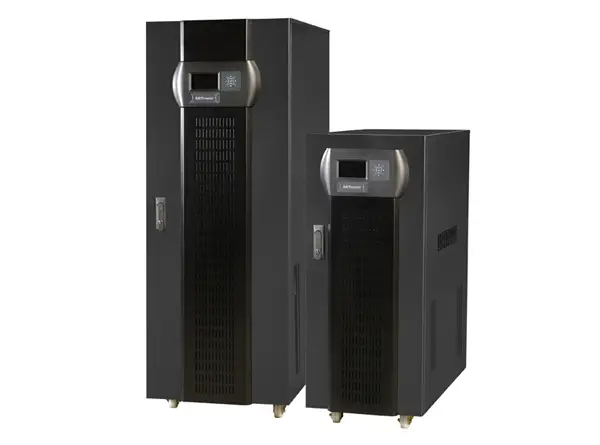
Description
UPS Backup Power in Nigeria: 7 Proven Reasons the Huawei 60kVA Is the Ultimate Choice
A single power spike can wipe out a server rack in seconds. A single voltage sag can shut down a diagnostic scanner mid-scan. This is the daily risk that Nigerian data centers, clinics, and factories live with, and it’s exactly the risk a proper UPS is built to remove.
I want to walk you through why the Huawei UPS5000-A-60KTTL-H has become one of the most trusted commercial backup power units we install, and why it might be the right fit for your facility too.
What a UPS Actually Does for Your Business
A UPS, short for Uninterruptible Power Supply, sits between the grid and your critical equipment. Its job is simple to state but hard to do well: keep power flowing, clean and stable, no matter what the grid is doing on the other side of the wall.
In Nigeria, that job matters more than almost anywhere else. Voltage swings, frequency drift, and outright blackouts are a daily fact of life. A weak system shrugs at a small dip and fails at a big one. A well-built one handles both without your equipment ever noticing the difference.
That’s the gap the Huawei 60kVA UPS is designed to close.
Understanding the Huawei UPS5000-A-60KTTL-H
This is a 60 kVA, 54 kW three-phase online UPS, and the word “online” is doing a lot of work in that sentence. Online double-conversion topology means the system never simply switches to battery when the grid fails. It continuously converts incoming AC power to DC, then back to a clean, stabilized AC output.
The result is zero transfer time. Your equipment sees no gap, no flicker, no restart, when the grid drops out.
Core Technical Specifications
| Specification | Detail |
|---|---|
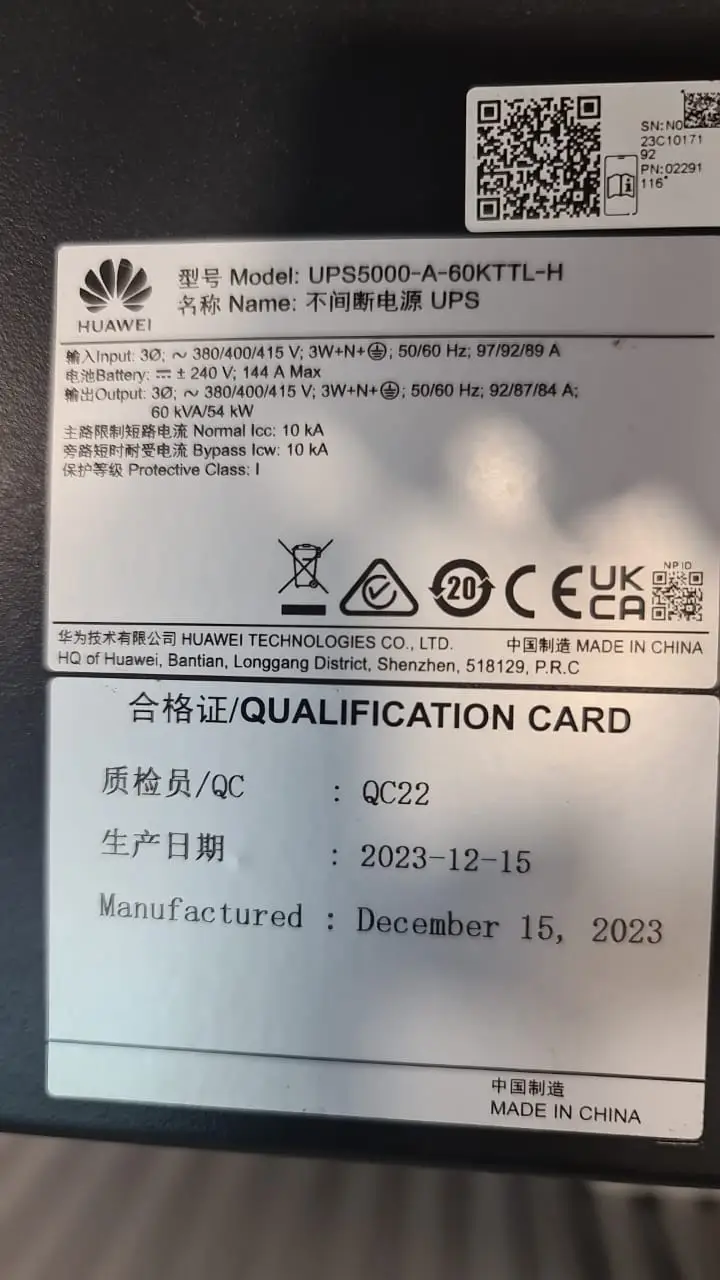
| Model | UPS5000-A-60KTTL-H |
| Rated Capacity | 60 kVA / 54 kW |
| Topology | Online Double-Conversion, Three-Phase |
| AC Input Voltage | 3-Phase, 380/400/415 VAC, 3W+N+PE |
| Input Frequency | 50/60 Hz |
| Rated Input Current | 97/92/89 A |
| AC Output Voltage | 3-Phase, 380/400/415 VAC, 3W+N+PE |
| Rated Output Current | 92/87/84 A |
| Battery System Voltage | Plus/minus 240 VDC, 144 A max |
| Short Circuit Withstand | 10 kA (normal and bypass lines) |
| Protective Class | Class I |
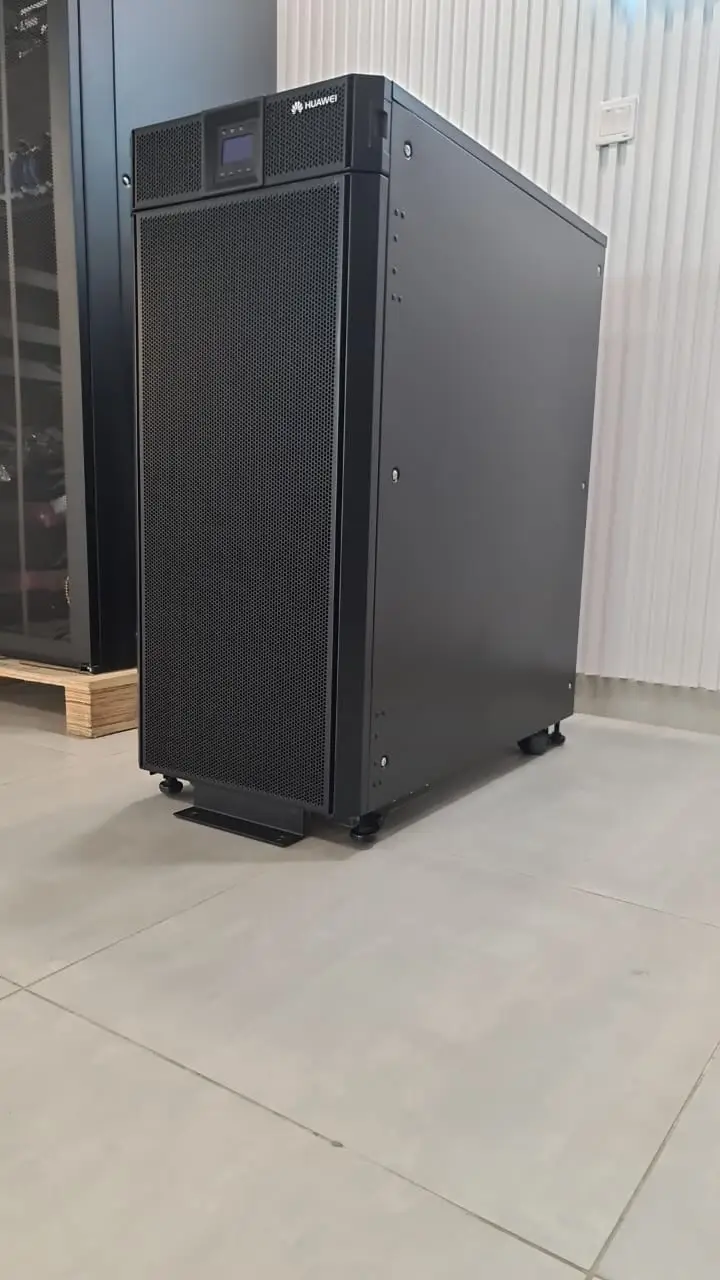
| Form Factor | Free-standing floor tower, caster wheels, floor anchoring brackets |
Every one of those numbers matters, but a few deserve a closer look.
Why the 10 kA Short-Circuit Rating Is a Big Deal
Most budget backup units quietly skip past their short-circuit withstand rating in the sales pitch. Huawei doesn’t, and for good reason. A 10 kA rating on both the normal and bypass lines means the unit can absorb a genuine fault event without collapsing.
In a factory with heavy motor loads, or a data center with dozens of racks pulling current simultaneously, this rating is the difference between a contained fault and a facility-wide outage. It’s engineered stability, not marketing language.
Battery Flexibility Built for Long Backup Windows
The plus/minus 240 VDC battery bus supports long external battery banks, which means your backup runtime isn’t capped by whatever battery ships in the box. You can size the battery bank to your actual runtime need, whether that’s 15 minutes to bridge a generator start, or several hours for a facility that can’t tolerate any downtime at all.
This is a genuinely important distinction from cheaper backup units, where battery expansion is either impossible or an afterthought.
The LCD Panel: Small Feature, Big Operational Value
The integrated front panel LCD gives your facilities team real-time visibility into voltage, current, load percentage, battery health, and any active alarms. This sounds minor until the day a technician catches a battery health warning three weeks before it would have become an outage.
Monitoring isn’t a luxury on equipment this critical. It’s how you catch problems while they’re still cheap to fix.
Built to Survive Harsh Nigerian Operating Environments
The UPS5000-A series is enclosed in an industrial-grade metal chassis engineered for high thermal dissipation. That matters in Nigeria, where ambient heat inside an equipment room can climb well past what the same unit would ever experience in a temperate climate.
A unit that overheats de-rates its output, or worse, shuts down entirely, right when you need it most. This chassis is built specifically to avoid that failure mode.
Who Actually Needs a UPS This Powerful
Not every business needs a 60 kVA unit. But for the right facility, nothing smaller will do the job properly.
Enterprise and cloud data centers rely on this class of equipment to protect high-density server racks and network switching equipment, where even a millisecond of instability can corrupt data or crash a service.
Telecom infrastructure depends on continuous power for central switches and base station control centers. A dropped connection here doesn’t just annoy a customer, it can break an entire regional network segment.
Industrial and manufacturing facilities use this system to protect automated assembly lines, CNC machinery, and high-precision testing instruments, equipment where a power hiccup can ruin an entire production run.
Healthcare systems are perhaps the highest-stakes use case of all. Imaging systems, diagnostic centers, and laboratory instrumentation cannot tolerate an unplanned restart mid-procedure. A patient’s safety can depend on it.
If your business falls into any of these categories, a UPS at this capacity isn’t overkill. It’s the baseline.
How This UPS Compares to a Basic Backup Setup
A lot of businesses in Nigeria still run on line-interactive backup units or, worse, no backup power at all, just a generator with a manual changeover switch. That approach leaves a real gap: the seconds or minutes between grid failure and generator startup, when equipment is running on nothing at all.
Online double-conversion units close that gap completely. The Huawei 60kVA doesn’t wait for anything. It’s already converting power continuously, so there’s no failure window to worry about.
For any facility running equipment that genuinely cannot tolerate downtime, this distinction isn’t a nice-to-have. It’s the entire point of the purchase.
Total Cost of Ownership: Why the Math Works in Your Favor
A UPS this size is a serious investment, and it should be evaluated as one. But the total cost of ownership picture looks different once you factor in what a single unplanned outage actually costs.
For a data center, a server crash can mean hours of recovery time, corrupted transactions, and reputational damage with clients. For a hospital, a failed diagnostic scan can mean rescheduling a patient and repeating an expensive procedure. For a factory, a ruined production run can cost more in wasted materials than the unit itself.
High conversion efficiency under both light and full load also keeps your ongoing electricity and cooling costs down, since a less efficient unit wastes more energy as heat, and that heat then needs to be removed by your air conditioning system too.
When you add it all up, a properly specified UPS tends to pay for itself in avoided downtime alone, often well within its first two or three years of service.
Efficiency Ratings and What They Mean for Your Electricity Bill
Not all backup power equipment is built the same when it comes to running costs. Every watt lost to inefficiency during conversion becomes heat, and that heat then has to be pulled back out of the room by your air conditioning system. This creates a double cost: wasted electricity going in, and extra cooling load going out.
The Huawei 60kVA unit is engineered for high conversion efficiency across both light and full load conditions, which matters more than it might sound. A facility rarely runs its full-rated load around the clock. Most of the time, equipment is drawing somewhere between 30 and 70 percent of capacity, so a unit that only performs well at 100 percent load is quietly wasting money most of the day.
Over a year of continuous operation, the difference between a mediocre efficiency curve and a strong one can add up to a meaningful line item on your electricity bill, often enough to offset a real share of the unit’s purchase price within its first few years alone.
What Happens During a Real Grid Failure: A Walkthrough
It helps to picture the actual moment this equipment earns its keep. Imagine a factory floor running CNC machinery, and the grid drops without warning, a common enough event on the Nigerian grid.
With a basic setup, generator and manual changeover, there’s a gap. The generator needs to start, stabilize, and be switched in, and that process takes anywhere from several seconds to over a minute. During that window, every piece of equipment on the line is running on nothing.
With the Huawei 60kVA installed, that gap simply doesn’t exist. The unit was already converting power continuously before the grid failed, so connected equipment never sees the outage at all. The generator can still start up in the background to relieve the battery bank for an extended outage, but the transition happens without a single flicker on the production floor.
That’s the practical difference between “backup power” in the loose sense, and genuine continuity of supply.
Maintenance and Expected Lifespan
Like any serious piece of electrical equipment, this unit performs best with a basic maintenance routine rather than a “set and forget” approach. Battery health should be checked periodically, since batteries are typically the first component to degrade, well before the core electronics.
Ventilation around the unit should be inspected regularly too, dust accumulation in the intake or exhaust pathways is one of the more common, avoidable causes of thermal derating over time in Nigerian installations. A clean, well-ventilated equipment room adds real years to the unit’s service life.
With reasonable maintenance, this class of equipment is typically built for a service life of 10 to 15 years before major component replacement becomes necessary, batteries aside, which usually need replacement on their own separate cycle depending on how heavily they’re used.
Installation, Certification, and Getting It Right the First Time
A UPS this size isn’t a plug-and-play appliance. It needs to be sized correctly against your actual load, wired to the correct three-phase input, and commissioned by someone who understands both the equipment and Nigerian electrical code requirements.
We always recommend installation through COREN-certified technicians, and confirmation that your setup meets the electrical safety standards enforced under NEMSA.
It’s also worth knowing that this class of equipment is designed and tested against international standards like IEC 62040-3, the global benchmark for backup power performance and testing.
Ask your installer whether the equipment you’re being quoted actually meets that standard, not every unit on the Nigerian market does.
Getting the installation right the first time avoids the two most common failure points we see in the field: incorrect battery bank sizing for the intended runtime, and inadequate ventilation around the unit’s thermal management system.
Pairing This UPS With the Right Power Ecosystem
A UPS doesn’t operate in isolation. For facilities also running solar and battery storage as part of their overall power resilience strategy, it’s worth understanding how this equipment fits alongside a broader commercial solar battery storage setup, and how the two systems can be designed to work together rather than as separate, disconnected investments.
If you’re still mapping out your facility’s full power resilience plan, our guide on the cost of solar power in Nigeria is a useful starting point for understanding how backup power investments compare across different technologies and budgets.
Warranty, Support, and Local Availability
One of the most overlooked risks with imported commercial power equipment is what happens after the sale. A powerful spec sheet means little if there’s no local support when something needs attention.
We stock the Huawei UPS5000-A-60KTTL-H with local warranty backing and technical support based in Nigeria, not routed through an overseas call center with no understanding of local grid conditions. When you’re protecting a data center or a hospital wing, the speed of getting a technician on-site matters just as much as the quality of the equipment itself.
Before committing to any commercial power equipment purchase, it’s worth asking directly: who locally is responsible for warranty claims, and how quickly can a technician actually reach your site if something goes wrong.
Get the Huawei 60kVA UPS for Your Facility
We stock and install the Huawei UPS5000-A-60KTTL-H for data centers, clinics, factories, and telecom sites across Nigeria, with sizing and battery configuration matched to your actual load, not a generic recommendation.
See the full specification and get a quote on the Huawei 60kVA Online UPS product page, or reach out directly for a site assessment.
Call/WhatsApp: 0814 596 4127 Visit: mindseyesolar.com
Frequently Asked Questions
What does a UPS actually protect against?
A UPS protects connected equipment against voltage spikes, sags, frequency instability, and complete power outages. An online double-conversion system like the Huawei 60kVA does this with zero transfer time, so equipment never experiences a gap in clean power.
How is a 60kVA UPS different from a smaller unit?
A 60kVA UPS supports significantly heavier loads, entire server racks, factory floors, or hospital equipment wings, rather than a single device or small office. It also typically includes more robust short-circuit protection and longer battery expansion options.
Does this UPS work with solar and battery storage systems?
Yes. A UPS can be integrated alongside a solar and battery storage setup as part of a broader power resilience strategy, with each system covering a different layer of protection, instant transfer from the unit and extended runtime from the battery bank.
How long can the Huawei 60kVA UPS run on battery power?
Runtime depends on the external battery bank size, since the plus/minus 240 VDC bus supports long-backup configurations. Runtime can be sized anywhere from a short bridge to generator startup, to several hours, depending on your facility’s needs.
Who should install a commercial UPS like this one?
Installation should always be handled by COREN-certified technicians familiar with three-phase commercial electrical systems and NEMSA compliance requirements, to ensure correct sizing, wiring, and long-term warranty protection.
Is a 60kVA UPS overkill for a small business?
For a small office, likely yes, a smaller unit would suffice. But for data centers, clinics, telecom infrastructure, and manufacturing facilities running heavy or safety-critical loads, this capacity is often the appropriate baseline, not an oversized choice.
What makes online double-conversion UPS technology better than standard backup?
Standard backup setups, like a generator with a manual changeover, leave a gap between power failure and backup engaging. Online double-conversion UPS technology continuously converts power, eliminating that gap entirely and protecting equipment with zero transfer time.