
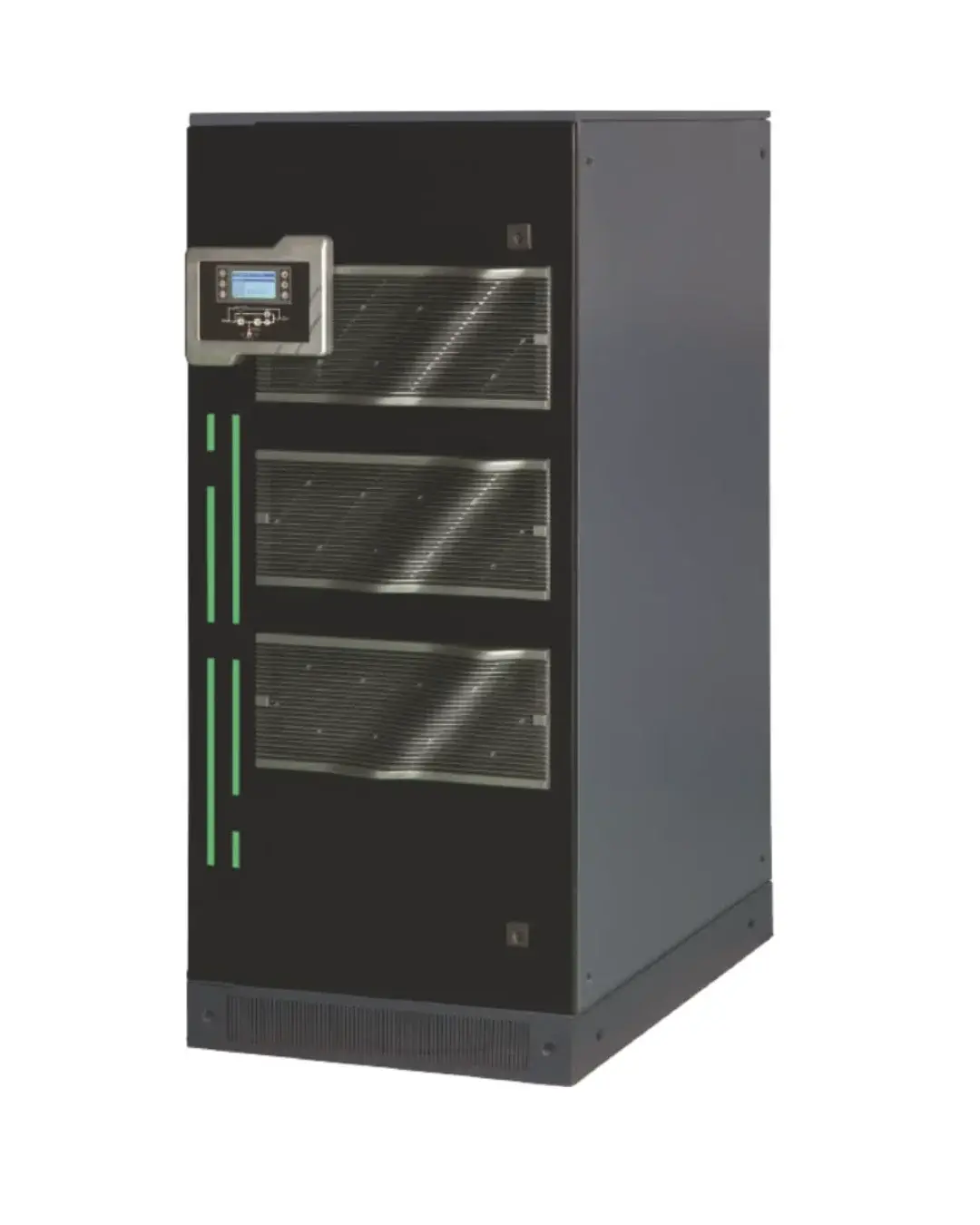
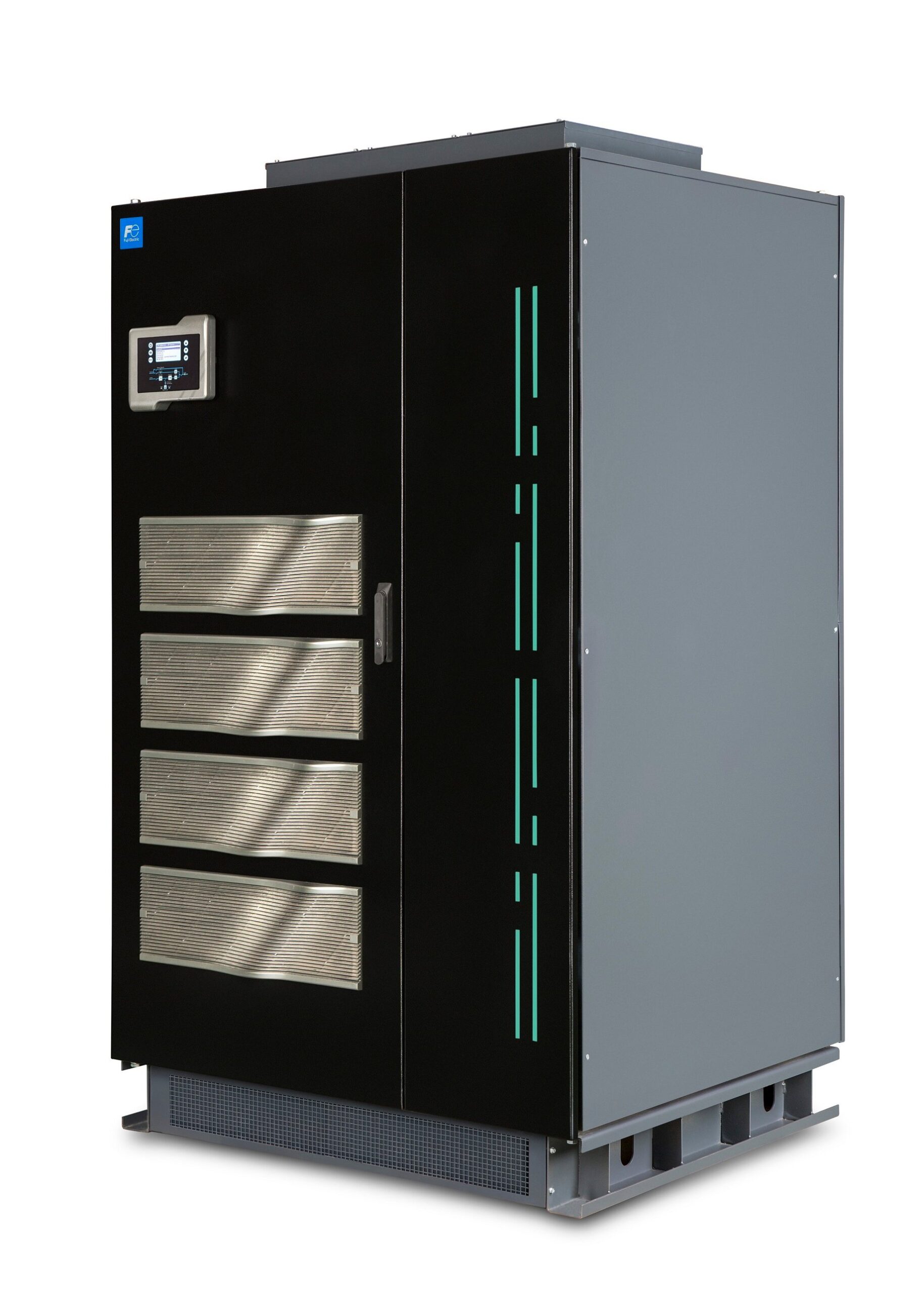
Description
Online UPS Nigeria: Ultimate Fuji Falcon 8500 60kVA Power Protection
Power inconsistencies do not knock before they arrive. A single voltage spike can wipe out a server in seconds. A brief grid dropout can corrupt a hospital’s patient records.
For any facility running equipment that cannot afford a blip, an online UPS is not a luxury. It is the difference between a business that keeps running and one that starts over.
We work with clinics, data centers, and manufacturing plants across Lagos, Abuja, and Port Harcourt. The question we hear most often is simple. Which UPS actually protects equipment the way the brochure promises?
This guide answers that question in full. We use the Fuji Electric Falcon 8500 60kVA three-phase online UPS as our working example, priced at ₦16,500,000 and currently in stock, because it represents exactly what a serious commercial-grade online UPS should deliver.
What Is an Online UPS, and Why Does the Distinction Matter?
An online UPS is also called a double-conversion UPS. It is fundamentally different from the offline and line-interactive units sold for basic home electronics.
According to the international IEC 62040-3 standard, which classifies UPS systems by how they handle incoming power, a true online UPS is rated VFI. That stands for Voltage and Frequency Independent.
In plain terms, the output of an online UPS is completely unaffected by whatever chaos is happening on the incoming grid supply. Your equipment never feels the disturbance at all.
Here is the practical difference. An offline or line-interactive UPS normally passes grid power straight through to your equipment. It only switches to battery power once it detects a problem.
That switch, however fast, still takes a few milliseconds. During that window, sensitive electronics can experience a micro-interruption.
A genuine online UPS never does this. It continuously converts incoming AC power to DC, then regenerates a brand new, clean AC sine wave for your equipment.
Your load never actually touches raw grid power at all. This is precisely why hospitals, data centers, and industrial facilities specify a true online UPS rather than cheaper alternatives.
The equipment they protect simply cannot tolerate even a few milliseconds of instability.
Inside the Fuji Electric Falcon 8500: A True 60kVA Online UPS
The Falcon 8500 60kVA 400V three-phase online UPS is engineered specifically for facilities where downtime is not an inconvenience. It is a financial and safety emergency.
Here is what sets this online UPS apart technically.
IGBT-Based Double Conversion With Zero Transfer Time
The Falcon 8500 uses advanced IGBT switching. IGBT stands for Insulated-Gate Bipolar Transistor, a component that allows fast, efficient power conversion.
It continuously rectifies incoming utility power into DC. It then regenerates a pure, conditioned sine wave on the output side.
Because the inverter is always live and always supplying the connected load, transfer time between grid and battery power is exactly zero milliseconds. There is no switch to make.
The equipment was never connected to raw grid power in the first place. This single feature eliminates the server reboots, communication drops, and control system faults common on lesser UPS technology.
True Galvanic Isolation
Built into the Falcon 8500 is a heavy-duty internal isolation transformer. This provides genuine galvanic isolation between the input and output circuits.
It shields sensitive electronics from common-mode electrical noise, ground loops, and harmonic distortion. A transformerless design would let these problems pass straight through.
For hospitals running MRI and CT imaging equipment, this isolation is not a nice-to-have. It is often a hard requirement.
Space Vector Modulation for Higher Efficiency
The unit’s DSP microprocessor control uses Space Vector Modulation, known as SVM, to optimize how power is switched internally.
In practical terms, this means less wasted energy as heat. It also means lower running costs on your utility bill.
The internal components run cooler under sustained load too. That translates into a longer operational lifespan for the whole system.
A Wide Input Window That Protects Your Batteries
The Falcon 8500 tolerates a wide input voltage and frequency window before it needs to draw on battery power at all.
On Nigeria’s grid, voltage sags and surges are a daily reality, not an occasional event. This wide tolerance band matters enormously here.
A cheaper UPS that switches to battery mode at the slightest grid fluctuation burns through battery cycles fast. The Falcon’s wide window significantly extends the working life of whatever battery bank sits behind it.
Advanced Battery Management for Multiple Chemistries
This unit supports high-voltage deep-cycle AGM, gel, and LiFePO4 battery banks. Temperature compensation and smart multistage recharging are both built in.
If you already run an AGM bank and want to migrate to lithium later, this online UPS is ready for that. See our guide on lithium versus tubular batteries in Nigeria for the full comparison.
You will not need a new UPS to make that switch.
Regenerative Load Compatibility
Facilities running medical elevators or robotic automation lines generate regenerative braking energy. This is power that flows backward into the system momentarily.
The Falcon 8500 includes integrated braking capability specifically to handle this. Many competing UPS units simply do not offer it.
Remote Monitoring You Can Actually Use
The multi-language digital LCD interface pairs with remote monitoring over SNMP, Modbus, and RS-485.
A facilities team can watch the UPS from a centralized dashboard. There is no need to walk to the equipment room for every status check.
Who Actually Needs a 60kVA Online UPS?
Not every business needs this level of protection. We will tell you honestly if a smaller or different system suits your load better during a consultation.
But for the sites below, a true online UPS at this capacity is close to a non-negotiable requirement.
Hospitals, Diagnostics, and Healthcare Centers
Medical imaging equipment needs perfectly clean, isolated power. This includes CT scanners, MRI sub-systems, ultrasound machines, and digital X-ray units.
ICU life-support monitors, respirators, and surgical theater equipment carry the same requirement. A power interruption here is not a technical inconvenience. It is a patient safety event.
Diagnostic pathology labs and automated blood analyzers depend on this stability too. Cold-chain pharmaceutical and vaccine refrigeration systems need continuous power to avoid spoiling temperature-sensitive stock.
Data Centers, Servers, and Telecom Base Stations
Enterprise server racks, blade servers, and storage enclosures are all vulnerable to brief power events. A genuine online UPS eliminates that risk entirely.
This extends to core telecom Base Transceiver Stations and mobile switching centers. High-density Network Operations Centers, routers, switches, and SAN storage units all qualify too.
Fiber optic terminal equipment and critical cloud infrastructure round out this category.
Corporate Headquarters and Office Complexes
Centralized IT backbones, server rooms, and surveillance control rooms handling CCTV and access control all benefit from this level of protection.
Executive elevator electronics and smart building management systems fall into the same bracket. So do emergency escape lighting and security command hubs.
Departmental workstations supporting high-volume operations round out the list.
Commercial Printing and Industrial Manufacturing
Multi-color offset presses, commercial digital printers, and finishing machines represent significant capital investment. A power spike can damage any of them in an instant.
CNC cutting machines and industrial PLC controllers carry the same exposure. Automated bottling and packaging lines, plus SCADA process instrumentation, all depend on the same clean, continuous power this online UPS provides.
Online UPS vs. Line-Interactive vs. Offline: A Straight Comparison
| Feature | Offline UPS | Line-Interactive UPS | Online UPS (Falcon 8500) |
|---|---|---|---|
| IEC 62040-3 classification | VFD | VI | VFI |
| Transfer time | 4 to 10 milliseconds | 2 to 4 milliseconds | 0 milliseconds |
| Output waveform under grid stress | Passes grid noise through | Partial regulation | Fully regenerated, always clean |
| Galvanic isolation | Rare | Rare | Standard on Falcon 8500 |
| Suited for | Home electronics, basic office use | Small offices, light commercial | Hospitals, data centers, industrial plants |
| Battery cycling frequency | High | Moderate | Low, thanks to wide input window |
This table explains why a hospital or data center manager will not consider anything below a true online UPS. The cost difference upfront is real.
But so is the cost of a single ruined MRI coil or a corrupted patient database.
Battery Runtime and Backup Planning
The Falcon 8500 is a UPS unit, not a battery bank itself. Backup runtime depends entirely on the external battery configuration paired with it.
Most UPS systems are designed for a brief bridge to generator power. For facilities wanting several hours of runtime instead, pairing this online UPS with a high-capacity LiFePO4 bank changes that entirely.
See our commercial solar battery storage comparison for sizing options. This is especially relevant for telecom BTS sites and hospital wings.
A generator start delay of even a minute or two is unacceptable in those settings.
How to Choose the Right UPS Capacity for Your Facility
Sizing this equipment correctly starts with an honest load audit. Do not guess based on square footage or building size.
List every piece of equipment that must stay powered during an outage. Add up their running wattage, then apply a safety margin of at least 20 to 25 percent for startup surges and future growth.
A hospital wing running two imaging suites, a server room, and emergency lighting draws a very different load than a corporate office running workstations and a few split AC units. Building size alone tells you very little.
Once you know your total critical load in kVA, resist sizing exactly to that number. Equipment lists grow over time.
A new imaging machine, an expanded server rack, or a second production line can all push demand higher. A UPS sized with zero headroom becomes a bottleneck the moment the business grows.
We typically recommend sizing 20 to 30 percent above your current measured load. That is part of why the 60kVA tier is such a common sweet spot for mid-size hospitals, data centers, and manufacturing floors across Nigeria.
It covers today’s load comfortably. It also leaves room for tomorrow’s expansion without forcing a full system replacement.
It is also worth distinguishing continuous load from peak startup load. Motors, compressors, and imaging equipment often draw several times their running wattage for a brief moment at startup.
A UPS undersized for that peak can trip under load exactly when you need it most, even if it looked adequate on paper. Any reputable installer should ask for your full equipment list, including startup characteristics, before recommending a specific capacity.
Pricing and Real Value in Nigeria
The Falcon 8500 60kVA three-phase online UPS is currently priced at ₦16,500,000 in Nigeria, discounted from ₦18,000,000. It is in stock and ready for installation.
That price reflects genuine double-conversion topology. It also reflects true galvanic isolation and industrial-grade build quality.
Some cheaper units use marketing-only “online” claims to describe what is actually a line-interactive design underneath. Always confirm in writing that the unit you are being offered is genuinely VFI-classified under IEC 62040-3.
As covered in the original research on UPS classification standards, some manufacturers use terms like quasi-online or semi-online. These terms exist specifically to blur the distinction and sell a cheaper topology at true online UPS pricing.
Financing the Falcon 8500 Online UPS
A ₦16,500,000 investment is significant, and we understand most businesses do not keep that sitting in cash reserves. Structured financing exists specifically for equipment like this.
Access Bank’s Switch to Solar programme extends to business power infrastructure financing, not just solar panels. FCMB’s Solar Energy Loan covers up to 80 percent of equipment cost with flexible repayment tenors.
Fidelity Bank’s Green Energy Finance scheme has backed larger commercial power installations into the tens of millions of naira. Mindseye Solar also offers direct equipment financing for businesses that prefer a single point of contact from quote through installation.
Spreading this cost over 12 to 36 months often makes far more financial sense than absorbing a single crash-related equipment loss, which can easily exceed the UPS price itself in a single incident.
Installation and Compliance Requirements
Installing a unit of this capacity is not a plug-and-play task. It requires proper three-phase electrical work.
Correctly rated breakers matter here. So does surge protection on both input and output.
Earthing must meet NEMSA electrical safety codes. We strongly recommend confirming your installer is COREN-certified before signing any contract.
Improper installation at this power level carries real safety risk. It can also void the manufacturer warranty entirely.
Why Facilities Choose the Falcon 8500 Over Cheaper Alternatives
We have installed enough of these units to know the pattern. A facility buys a cheaper, lower-classification UPS to save money upfront.
Then it experiences a server crash or equipment fault within the first year. That single fault often costs far more than the price difference would have covered.
The Falcon 8500’s zero transfer time, true isolation, and wide input tolerance are not marketing language. They are the specific engineering features that prevent exactly that scenario.
If your facility runs equipment where even a momentary power event carries real financial or safety consequences, this is the category of online UPS you should be specifying. A lower-tier alternative dressed up in similar language will not deliver the same protection.
Get Your Falcon 8500 60kVA Online UPS Quote
We size every UPS installation around your actual load, battery runtime needs, and site electrical setup. We do not work from a generic price list.
See full specifications and current pricing on the Falcon 8500 60kVA Online UPS product page. You can also explore our wider range of industrial power solutions.
Call or WhatsApp us on 0814 596 4127. You can also visit mindseyesolar.com for a free site consultation.
Frequently Asked Questions
What makes an online UPS different from a regular UPS?
An online UPS continuously converts incoming power to DC and regenerates a fresh AC output. Connected equipment never touches raw grid power.
A regular offline or line-interactive UPS only switches to battery power after detecting a fault. That creates a brief transfer window a true online UPS eliminates entirely.
How much does the Falcon 8500 60kVA online UPS cost in Nigeria?
The Falcon 8500 60kVA three-phase online UPS currently costs ₦16,500,000 in Nigeria, discounted from ₦18,000,000. It is in stock and ready for installation.
What is zero transfer time and why does it matter?
Zero transfer time means the UPS inverter is always supplying power to your equipment. There is no switching delay when grid power fails.
This matters most for hospitals, data centers, and industrial equipment. Even a few milliseconds of interruption can cause a crash or data loss in these settings.
Can this online UPS work with lithium batteries?
Yes. The Falcon 8500 supports AGM, gel, and LiFePO4 battery banks with built-in temperature compensation and smart recharging.
Pairing it with a lithium battery bank, or upgrading to one later, is straightforward.
What size UPS do I need for a hospital or data center?
Sizing depends on your total critical load plus a safety margin for future growth. A proper site assessment is the only reliable way to confirm this.
A generic size chart cannot tell you whether 60kVA is right for your specific equipment list.