
What is the Current Cost of a 5kVA Solar System in Lagos? (2026 Guide)
You’re at home on a Tuesday evening when suddenly, everything goes dark, for the third time this week. Your laptop dies mid-presentation, the ceiling fan stops, and your fridge powers down. You reach for your phone flashlight, already wondering how much food you’ll lose this time.
Sound familiar? If you’re here, you’re likely tired of this routine with NEPA. Maybe you’ve considered solar, but the prices made you hesitate. This guide will help you understand the real cost of a 5kVA solar system in Lagos, possibly your best financial move in 2026.
Let me walk you through everything you need to know, person-to-person, with no technical jargon or sales pitch. I’ll keep things simple and clear, and if I mention any technical terms, I’ll explain them right away so nothing feels confusing or hidden. A straightforward breakdown of what you’ll actually pay and why it might be worth every naira.

Why Everyone in Lagos is Suddenly Talking About 5kVA Systems
Here’s what I’ve noticed over the past year working with hundreds of Lagos homeowners: the 5kVA system has become the sweet spot. Not too small that you’re still running back to NEPA every evening, and not so massive that you need a second mortgage to afford it.
Consider your typical three-bedroom apartment in Lekki or Ikeja. You’ve got your refrigerator, a few ceiling fans, your TV for the evening news, laptops for the kids’ homework, phone chargers, and maybe a standing fan or two. A 5kVA system handles all of that without breaking a sweat. It’s like having a backup generator that doesn’t wake the neighbors, doesn’t guzzle fuel, and actually pays you back over time.
The cost of a 5kVA solar system in Lagos has become more accessible than most people realize, especially when you start thinking about what you’re currently spending on alternatives. But we’ll get to the numbers in a minute. First, let me explain why this matters in 2026.
What Changed This Year That Makes Solar Actually Affordable
Something shifted in early 2026 that caught many people off guard. The CBN’s new import policies on renewable energy equipment have significantly reduced customs duties. What this means for you is that the solar panels, inverters, and batteries that used to cost an arm and a leg are now priced more reasonably.
I watched this happen firsthand. A client who got a quote in December 2025 came back in February 2026 for the same system and saved almost ₦800,000. That’s not a typo. The market responded to policy changes, Chinese manufacturers ramped up production of the exact specifications we need in Nigeria, and suddenly, what seemed impossible became possible.
Add to that the fact that diesel just hit ₦1,400 per liter in some parts of Lagos, and people are doing math they should have done years ago. Running a generator five hours a day for a month costs what? Between ₦150,000 and ₦200,000, depending on your consumption. That’s ₦2.4 million a year. Just burning money. Literally.
The cost of a 5kVA solar system in Lagos suddenly doesn’t look so scary when you realize it pays for itself in less than three years, while a generator just keeps draining your account forever.
Breaking Down the Real Numbers You Need to Know
Let’s talk actual prices, because that’s what you came here for. A complete 5kVA solar system in Lagos right now ranges between ₦3.8 million and ₦6.2 million, depending on what you’re getting. To make it easier, here are the main factors that drive the price up or down:
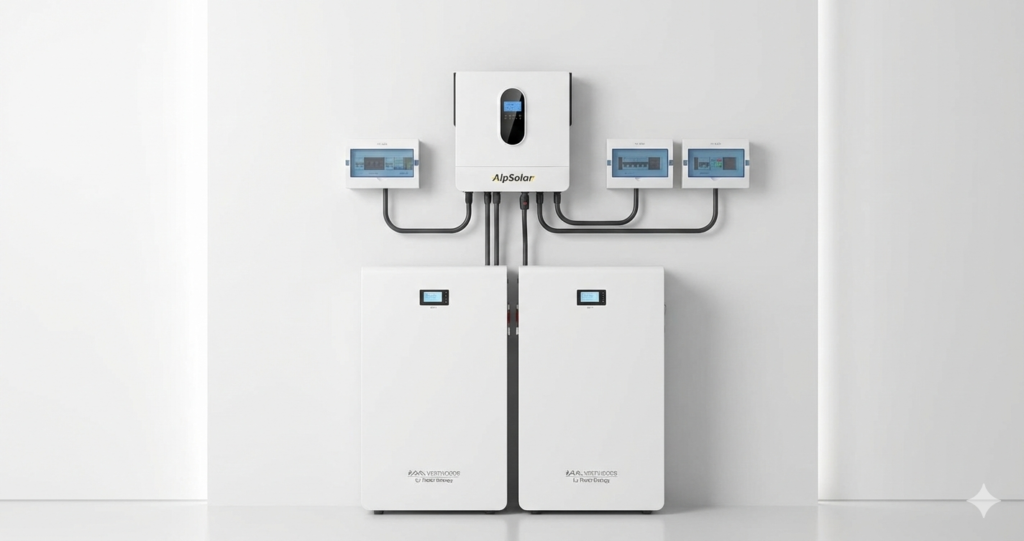
Batteries: This is usually the largest part of your cost, especially if you choose longer-lasting lithium-ion batteries instead of the cheaper but shorter-lived lead-acid type.
Inverter: The quality and brand of your inverter can make a big difference in both price and reliability.
Solar Panels: The number, type, and brand of panels you choose affect both your upfront cost and how much power you generate.
Installation: Labor, roof type, wiring quality, and special needs like hidden cables or structural reinforcement will impact the overall cost.
Accessories and Extras: Things like mounting equipment, surge protectors, and monitoring systems can add to the total but also improve safety and usability.
I know that’s a wide range, so let me break down why.
The basic package, which I honestly don’t recommend unless the budget is extremely tight, comes in around ₦3.8 million to ₦4.5 million. This typically includes a 5kVA inverter, eight 200Ah deep cycle batteries, eight to ten solar panels, and basic installation. It’ll work. You’ll have backup power.
But you’re using older battery technology that might need replacement in four to five years.
The mid-range setup, which is where most smart buyers land, costs between ₦4.8 million and ₦5.5 million. Here’s where you get lithium-ion batteries instead of the traditional lead-acid ones, slightly better quality panels with longer warranties, and professional installation with proper mounting and cable management.
This is the option that makes sense for most families because the lithium batteries alone add five to seven years to your system’s effective lifespan.
The premium package runs from ₦5.5 million to ₦6.2 million, and this is what you get when you want the absolute best. Top-tier panels from manufacturers like Jinko or Canadian Solar, premium hybrid inverters that can switch between grid, solar, and battery seamlessly, and lithium batteries with ten-year warranties.
Is it overkill? For some people, yes. But if you work from home, run a small business from your house, or have medical equipment that absolutely cannot lose power, this is your insurance policy.
What Actually Drives Up the Cost of a 5kVA Solar System in Lagos
People always ask me, “Why does the same system cost ₦4 million from one company and ₦6 million from another?” Great question. Let me tell you where your money actually goes, because not all solar systems are created equal.
The inverter itself accounts for about 25 to 30 percent of your total cost. A quality 5kVA inverter from a reputable manufacturer like Deye or Growatt runs between ₦1.2 million and ₦1.8 million. You might see cheaper options for ₦600,000 or ₦700,000, and I’m telling you right now, walk away.
Those inverters fail within the first year, and then you’re replacing them anyway, except now you’ve wasted money and time.
Batteries are your biggest expense, making up 40 to 50 percent of the total cost. The number you need depends on the type you choose. If you choose modular individual 12.8V 200Ah lithium batteries, you may need eight units at ₦350,000 to ₦450,000 each, totaling ₦2.8 million to ₦3.6 million.
Alternatively, high-capacity integrated systems like 7.5kWh (₦1M-₦1.2M), 10kWh (₦2M-₦2.8M), or 16kWh (₦3M-₦3.5M) batteries mean you might need only one or two units, depending on your power needs and budget.
This is where things get dangerous because mislabeled specifications are rampant in Lagos—I’ve seen “15kWh” batteries that barely deliver 9.6kWh, or “200Ah” units that are actually 120Ah.
Not all lead-acid batteries are knockoffs (brands like Trojan, Monbat, Deka, Fivestar work fine), but they’re being phased out due to the rapid switch to lithium-ion batteries.
Here’s what kills me: cheap batteries at ₦1.3 million seem like bargains until they fail in three years, forcing you to replace them three times over a decade (₦3.9M total) while quality lithium at ₦2.5 million lasts the entire ten years—you literally pay twice for choosing cheap.
Solar panels represent about 15 to 20 percent of your investment. You’ll need eight to twelve panels, depending on efficiency ratings, and quality panels cost between ₦80,000 and ₦140,000 each.
Total panel cost ranges from ₦800,000 to ₦1.4 million. The difference between cheap and quality panels shows up in your electricity bill. Quality panels produce power efficiently for 25 years.
Cheap panels start degrading after five years, producing less power each year until you’re basically running on batteries alone.
Installation and accessories make up the final 10 to 15 percent. Professional installation costs ₦400,000 to ₦800,000 depending on your roof type, how far the panels are from your inverter location, and whether you need additional structural support. Mounting equipment, cables, breakers, surge protectors, and other accessories add another ₦300,000 to ₦500,000.
The Hidden Costs Nobody Tells You About Until It’s Too Late
Let me share something that happened to a client last month. She got quoted ₦4.5 million for her 5kVA system, thought it was a great deal, signed the contract, and then discovered she needed to pay an additional ₦600,000 for things nobody mentioned upfront. Don’t let this happen to you.

Roof reinforcement catches people off guard constantly. Solar panels aren’t heavy individually, but twelve panels plus mounting equipment add significant weight to your roof. If your roof wasn’t designed for this load, you’ll need structural reinforcement. This costs anywhere from ₦150,000 to ₦400,000, depending on what’s required. A good installer checks this during the site survey. A bad one installs the system and hopes for the best.
Electrical panel upgrades surprise homeowners who assume their existing electrical setup is fine. Many Lagos homes, especially older ones, have electrical panels that aren’t compatible with solar integration.
Upgrading your panel to handle the solar input safely costs ₦100,000 to ₦250,000. Not optional if you want a system that doesn’t create fire hazards.
Maintenance contracts are optional but recommended. A good maintenance plan costs ₦120,000 to ₦200,000 annually and includes quarterly inspections, panel cleaning, battery health checks, and inverter software updates.
Some people skip this and regret it when their system underperforms after two years because nobody cleaned the panels or caught a developing battery issue.
Why the Cheapest Quote Might Cost You More in the Long Run
I get it. You see quotes ranging from ₦3.8 million to ₦6.2 million for what seems like the same thing, and your instinct is to grab the cheapest one. Let me tell you why that’s usually a mistake.
Last year, a family in Ajah went with the absolute lowest quote they received: ₦3.6 million for a complete 5kVA system. Great deal, right? Six months later, their inverter failed.
The company that installed it? Gone. Phone numbers disconnected. The office address was actually someone’s apartment. They ended up spending ₦1.4 million on a replacement inverter plus reinstallation, bringing their total to ₦5 million for an inferior system.
Quality components cost what they cost. A genuine Deye 5kVA inverter from an authorized dealer costs ₦900k million to ₦1.2 million. If someone quotes you ₦700,000 for “the same thing,” it’s not the same thing. It’s either a knockoff, refurbished, or doesn’t come with a valid warranty. When it fails, you’re on your own.
The cost of a 5kVA solar system in Lagos reflects real value or real risk. Companies offering significantly below-market prices are cutting corners somewhere. Cheaper batteries that die faster. Panels that degrade quickly. Poor installation that creates safety hazards. No warranty support when things go wrong. You’re not saving money. You’re buying problems.
What You Get for Your Money at Different Price Points
Let me paint you three realistic pictures of what different budgets actually buy you, based on real installations I’ve seen completed in the past three months.
At ₦4.2 million, you’re getting a functional system that solves your immediate power problems. Eight 200Ah lead-acid batteries give you six to eight hours of backup power for essential loads.
Ten 400-watt panels generate enough electricity to keep those batteries charged most days, assuming decent sunlight. A reliable 5kVA inverter handles your home’s power needs. Installation is basic but competent.
Everything works. Your lights stay on during NEPA outages. Your refrigerator keeps running. It’s not fancy, but it solves the problem. Expect to replace those batteries in four to five years, adding another ₦1.5 million to ₦1.8 million to your total investment.
At ₦5.2 million, you’re investing in longevity and performance. Eight lithium-ion batteries with ten-year warranties provide eight to ten hours of backup power.
Twelve high-efficiency 450-watt panels generate more electricity from the same roof space, charging your batteries faster and keeping them topped up even on cloudy days. A premium inverter with smart features lets you monitor your system from your phone, optimize battery charging, and automatically switch between power sources.
Professional installation includes proper cable management, surge protection, and weatherproofing. This system pays for itself faster because it produces more power and requires less maintenance.
At ₦6 million, you’re getting the best available technology. Premium lithium batteries with advanced battery management systems maximize lifespan and performance.
Top-tier panels from manufacturers like Jinko or Canadian Solar come with 25-year warranties and maintain high efficiency for decades.
A hybrid inverter lets you stay connected to NEPA when available while prioritizing solar and battery power, giving you the absolute lowest electricity bills possible. Installation includes aesthetic considerations, hiding cables, matching mounting equipment to your roof color, and ensuring everything looks like it belongs. This is the system you install once and forget about for fifteen years.
The Financing Options That Actually Make Solar Affordable Today
Here’s where things get interesting in 2026. The cost of a 5kVA solar system in Lagos doesn’t have to come out of your pocket all at once anymore.
Several banks now offer green energy loans specifically for solar installations. Access Bank, GTBank, and Zenith Bank have programs where you can finance your solar system over three to five years at interest rates between 12 and 18 percent annually.
Your monthly payment on a ₦5 million system over four years at 15 percent interest works out to about ₦139,000 monthly. Remember, you’re currently spending ₦160,000 to ₦250,000 monthly on conventional energy. You’re saving money from day one while building an asset that belongs to you.
Some solar companies offer in-house financing or payment plans. Pay 40 to 50 percent upfront, then spread the remaining balance over 12 to 18 months with minimal interest.
This option gives you flexibility without involving banks, though you’ll want to read the terms carefully and ensure the company is established and reliable.
Cooperative societies and staff associations increasingly offer solar financing to members. If your workplace has a cooperative, propose a solar financing program.
Members get better rates, the cooperative earns interest, and everyone wins. I’ve seen this work brilliantly in several organizations where groups of employees financed solar systems together, getting bulk discounts and favorable payment terms.
The key is running the numbers honestly. If financing costs you ₦500,000 in interest over four years but you save ₦8 million in energy costs during that same period, you’re still ₦7.5 million ahead. Don’t let interest charges scare you away from a decision that makes financial sense.
Questions You Must Ask Before Signing Any Contract
Before you hand over any money, here are the questions that separate legitimate installers from the ones you’ll regret choosing.
Ask for specific brand names and model numbers for every component. “Quality inverter” means nothing. “Deye SUN-5K-SG04LP3-EU inverter” is specific. If they can’t or won’t provide exact specifications, walk away. You need to verify that what they’re promising is what you’re getting.
Demand to see their actual portfolio of completed installations. Not stock photos from the internet. Real installations with real addresses you can verify.
Good installers are proud to show their work and happy to connect you with previous clients. Sketchy installers make excuses or show you pictures that look suspiciously professional for “their” work.
Get clarity on warranty coverage for every single component. The inverter should have a minimum five-year warranty. Panels need at least a 10-year product warranty and a 25-year performance warranty.
Batteries should come with warranties matching their technology: three to five years for lead-acid, eight to ten years for lithium. Installation workmanship should be guaranteed for at least one year. If something fails in month two because of poor installation, you shouldn’t pay for the fix.
Understand exactly what happens if they go out of business. Who honors the warranties? Can you take your equipment to another company for service? This might seem pessimistic, but the solar industry in Lagos has seen companies disappear, leaving customers stranded. Reputable installers sell equipment from manufacturers with international presence and local representatives who honor warranties regardless of which dealer sold the system.
Ask about their response time for service issues. If your system goes down on a Tuesday morning, are they there by Tuesday afternoon, or do you wait a week? Get this in writing. A system that doesn’t work is worthless, so support response times matter as much as the equipment itself.
Why Timing Your Purchase in 2026 Actually Matters
Here’s something interesting about solar costs this year: they’re influenced by factors that change quarterly, not annually.
Panel prices fluctuate with international shipping costs and currency exchange rates. The naira’s value against the dollar directly impacts what you pay for imported equipment. Right now, in early 2026, we’re in a relatively stable period.
But anyone who watched the exchange rate chaos of late 2025 knows that it can change quickly. If the naira drops significantly, the cost of a 5kVA solar system in Lagos could jump 15 to 20 percent almost overnight.
Chinese manufacturers follow production cycles that affect availability and pricing. Late 2025 saw panel shortages that drove prices up. Right now, inventory levels are healthy, creating competitive pricing. This won’t last indefinitely. When you see good prices and reliable availability, that’s your window.
Government policy changes can impact costs dramatically in either direction. The current favorable import duties could be revised. Tax incentives could be introduced or removed.
Regulations could change. No one knows what next quarter brings, let alone next year. What we know is that conditions right now, in early 2026, are favorable.
Seasonal factors affect installation timelines more than costs, but they’re worth considering. Rainy season installations take longer and can be complicated.
Dry season is easier for installers, meaning they can complete more projects, potentially offering better prices during slower periods. Think strategically about when you schedule installation, even if you buy your system now.
Real Stories from Lagos Homeowners Who Made the Switch
Let me share some real experiences from people who were sitting exactly where you are right now, trying to decide if solar made sense.
Tunde in Ikeja spent ₦5.1 million on his system in October 2025. He was spending ₦190,000 monthly on diesel before solar. Now his monthly energy cost is ₦18,000 for minimal NEPA backup. He’s saved ₦688,000 in four months.
At this rate, his system pays for itself in 30 months. But here’s what he didn’t expect: his property value increased. When he casually mentioned to a neighbor that he was considering selling, offers came in ₦8 million higher than comparable properties without solar.
He’s not selling anymore, but knowing his investment added value beyond just energy savings changed how he thinks about the purchase.
Chioma in Lekki Phase 1 initially balked at the ₦5.8 million quote for a premium system. She was spending ₦220,000 monthly between NEPA and a generator. After installing solar in January 2026, her costs dropped to ₦12,000 monthly.
But the real win was unexpected: her home-based catering business exploded because she could finally run her commercial refrigerators and ovens reliably 24/7. The additional income from being able to accept more orders and operate predictably exceeded her solar savings. She calls her solar installation the best business investment she ever made.
Emeka in Ajah went the budget route at ₦4.1 million with lead-acid batteries. Eighteen months in, he’s kicking himself. His batteries are already showing significant degradation.
He’s getting maybe five hours of backup instead of the original eight. He calculated that he’ll need to replace those batteries within another year, bringing his total investment to ₦5.6 million for a system that still won’t perform as well as the ₦5.2 million lithium option he passed on. His advice to everyone: don’t cheap out on batteries.
What to Expect During and After Installation
Let me walk you through what actually happens when you commit to getting solar, because understanding the process removes a lot of anxiety.
The site survey happens before you pay anything substantial. A technician visits your home, examines your roof structure, measures available space, checks your electrical panel, and assesses any challenges.
This takes one to two hours. You should get a detailed report showing exactly what they plan to install and where. If they skip this step or rush through it, that’s a red flag.
System design comes next. Based on the survey, they design your specific system: how many panels, where they’ll be positioned, battery location, inverter placement, and cable routing. You should approve this design before installation begins.
Ask questions. If something doesn’t make sense, speak up. This is your home and your investment.
Installation typically takes two to four days, depending on complexity. Day one usually involves mounting brackets and panels on your roof.
Day two includes electrical work, installing the inverter and batteries, and running cables.
Days three and four are for testing, commissioning, and teaching you how to use your system. Good installers don’t rush this. They test everything thoroughly and make sure you understand your new system.
The first month after installation is your learning period. You’ll discover your consumption patterns, learn how weather affects production, and figure out the best practices for your specific situation. Don’t panic if things don’t seem perfect immediately. It takes a few weeks to optimize usage patterns and understand your system’s rhythms.
Long-term maintenance is minimal but important. Clean your panels every two to three months. Check battery water levels if you have lead-acid batteries. Monitor your inverter’s display for any error codes.
Schedule annual professional maintenance. That’s it. Solar systems are remarkably low-maintenance compared to generators that need constant attention.
The Bottom Line on What You’re Really Paying For
The cost of a 5kVA solar system in Lagos ranges from ₦3.8 million to ₦6.2 million, but you’re not just buying equipment. You’re purchasing freedom from NEPA’s unreliability. You’re investing in predictable energy costs instead of watching diesel prices climb every month.
You’re adding value to your property. You’re reducing your carbon footprint if that matters to you. You’re gaining peace of mind knowing your refrigerator won’t spoil food, your kids can study without interruption, and your work-from-home setup stays productive.
Think about what you’d pay over the next ten years, continuing your current energy approach. ₦1.92 million to ₦3 million annually adds up to ₦19.2 million to ₦30 million. A ₦5.2 million solar system that lasts fifteen years with minimal maintenance costs, ₦5.2 million plus maybe ₦2 million in maintenance and eventual battery replacement. Total: ₦7.2 million over fifteen years versus ₦28.8 million to ₦45 million for conventional energy.
The question isn’t whether you can afford solar. The question is whether you can afford not to have it.
If you’re sitting there thinking this all sounds good, but you’re still not quite ready to commit, I understand. This is a significant decision. But I encourage you to at least get a proper quote from a reputable installer. Understanding your specific numbers removes the guesswork and lets you make an informed decision.
The cost of a 5kVA solar system in Lagos is substantial, yes. But compared to what you’re currently paying for unreliable power, it’s an investment that pays you back month after month, year after year, while giving you something priceless: reliable electricity when you need it, without the noise, fumes, and frustration of generators or the uncertainty of NEPA.
Your future self, sitting comfortably in a powered home while your neighbors scramble for diesel, will thank you for making this decision in 2026.